
Milk in Tea: Does It Mimic Coffee Flavor?
Quick answer
- Adding milk to tea can alter its flavor profile, making it richer and smoother, but it doesn’t inherently make tea taste like coffee.
- The chemical compounds responsible for coffee’s distinct flavor are largely absent in tea, even with milk.
- Milk’s primary effect is to mellow bitterness and add body, which can mask some of tea’s subtler notes.
- Certain types of tea, like black tea, are more commonly paired with milk and can benefit from its addition.
- The perception of taste is complex and can be influenced by personal experience and expectations.
- While milk changes tea’s taste, it doesn’t replicate the roasted, bitter, and aromatic qualities unique to coffee.
Key terms and definitions
- Astringency: A dry, puckering sensation in the mouth caused by tannins, common in both tea and coffee.
- Bitterness: A fundamental taste sensation that is prominent in coffee and can be present in some teas.
- Acidity: A tart or sharp taste, more characteristic of coffee than tea.
- Aroma: The volatile compounds that contribute to smell and flavor perception, highly distinct between coffee and tea.
- Tannins: Compounds found in tea and coffee that contribute to astringency and can interact with milk.
- Maillard Reaction: A chemical reaction between amino acids and reducing sugars that creates browning and complex flavors, integral to coffee roasting but not tea processing.
- Volatile Organic Compounds (VOCs): Chemical compounds that readily evaporate, contributing to the aroma and flavor of beverages.
- Fat Content: The amount of fat in milk, which influences its texture, mouthfeel, and how it interacts with other flavors.
- Protein Denaturation: The process where proteins in milk change their structure, often due to heat or interaction with other substances, affecting texture.
- Flavor Perception: The complex sensory experience of tasting, influenced by taste buds, aroma, texture, and psychological factors.
How it works
- Milk contains fats and proteins that can coat the tongue, softening the perception of harsh flavors.
- When milk is added to tea, its proteins can bind to tannins, reducing the tea’s astringency.
- The fats in milk add a creamy texture and a richer mouthfeel to the beverage.
- This textural change and reduction in bitterness can make the tea feel more substantial and less sharp.
- The overall flavor profile shifts from the tea’s natural characteristics to a more mellow, rounded taste.
- This mellowing effect is a key reason why milk is often added to robust black teas.
- However, the fundamental chemical compounds that define coffee’s flavor, such as those created during roasting, are not present in tea.
- Therefore, while milk alters tea’s taste, it does not introduce the specific notes associated with coffee.
What affects the result
- Type of Tea: Black teas, with their robust flavors and higher tannin content, are more likely to be perceived as benefiting from milk than delicate green or white teas.
- Type of Milk: Whole milk, with its higher fat content, will create a creamier texture and richer flavor than skim milk. Non-dairy milks like oat or soy can also introduce their own subtle flavors.
- Milk Temperature: Adding cold milk to hot tea can shock the tea and dilute its flavor, while warmed milk integrates more smoothly.
- Brewing Strength: A stronger brew of tea will have more tannins and flavor compounds, which will interact differently with milk than a weaker brew.
- Water Quality: Minerals in your water can affect how tea brews and how its flavors are extracted, which in turn impacts how milk interacts with it.
- Grind Size (if applicable): For teas that might be ground (though less common than coffee), the surface area affects extraction.
- Freshness of Tea: Older tea can lose some of its nuanced flavors, making its interaction with milk less complex.
- Ratio of Milk to Tea: The amount of milk added is crucial; too little may not significantly alter the taste, while too much can overpower the tea.
- Personal Palate: Individual taste preferences and past experiences with both tea and coffee play a significant role in how the combination is perceived.
- Acidity of the Tea: Some teas have a natural acidity that milk can help to balance, similar to how it can mellow coffee.
- Presence of Other Additives: Sugar or sweeteners can further modify the overall taste experience when milk is present.
- The Specific Flavor Compounds: Coffee’s unique flavor comes from hundreds of compounds developed during roasting, which are absent in tea leaves.
When considering what affects the result, remember that non-dairy milks like oat or soy can also introduce their own subtle flavors, adding another layer to how milk interacts with tea.

- NO OILS, NO GUMS: Califia Organic Coconutmilk is made with just four simple ingredients and without oils or gums. Just shake it up and enjoy!
- CERTIFIED USDA ORGANIC: Califia Organic Almondmilk is USDA certified organic with zero additives. No dairy, oil, gums, gluten, soy, and carrageenan. It’s everything you want in dairy-free plant milk and nothing you don’t.
- FOUR SIMPLE INGREDIENTS: Purified water, coconut cream, coconut water, and a pinch of baking soda. This is plant-based dairy-free goodness in its purest form. No oils and no gums. It’s deliciously simple.
- IRRESISTIBLY GOOD: Califia Farms products are made with plant-based ingredients to achieve irresistible goodness in every way––taste, versatility, and all the benefits of being dairy-free.
- DON'T FORGET TO SHAKE: Settling is natural in high-quality plant-based milks so remember to shake well!
Pros, cons, and when it matters
- Pro: Milk can significantly reduce the perceived bitterness and astringency of strong teas, making them more palatable for some.
- Con: Adding milk can mask the delicate and nuanced flavors of high-quality teas, such as certain oolongs or white teas.
- When it matters: For those who find black tea too sharp or bitter on its own, milk is a common and effective solution.
- Pro: The fats and proteins in milk contribute to a richer mouthfeel and a more satisfying, creamy texture.
- Con: For individuals who are lactose intolerant or prefer a vegan diet, dairy milk is not an option, though non-dairy alternatives exist.
- When it matters: When aiming for a comforting, dessert-like beverage, the creaminess milk provides can be highly desirable.
- Pro: Milk can help to balance the flavor profile of tea, creating a smoother and more rounded taste experience.
- Con: The addition of milk introduces calories and fat, which may be a consideration for those monitoring their intake.
- When it matters: For a morning beverage that provides a bit more substance and a less intense flavor than black coffee, milked tea can be a good choice.
- Pro: Milk is a traditional and widely accepted addition to certain types of tea, particularly in many Western cultures.
- Con: The distinct aroma and flavor compounds of coffee are not replicated by adding milk to tea; the fundamental difference remains.
- When it matters: If you are seeking the specific taste profile of coffee, milk in tea will not achieve that goal.
- Pro: Experimenting with different types of milk can lead to new and interesting flavor combinations with various teas.
- Con: Over-reliance on milk can prevent one from appreciating the pure taste of tea in its unadulterated form.
- When it matters: When trying to replicate a specific cultural beverage or personal preference, the role of milk is central.
Common misconceptions
- Misconception: Adding milk to any tea will make it taste like coffee.
- Reality: The fundamental flavor compounds of coffee, largely created during roasting, are not present in tea leaves, regardless of milk.
- Misconception: Milk only makes tea taste “better” by adding sweetness.
- Reality: Milk’s effect is more about reducing bitterness and astringency and adding creaminess, not just sweetness.
- Misconception: All teas are improved by adding milk.
- Reality: Delicate green, white, and herbal teas often have their nuanced flavors overwhelmed by milk.
- Misconception: The chemical reaction of milk in tea is the same as in coffee.
- Reality: While milk interacts with tannins in both, coffee has a more complex acidic and roasted profile that milk interacts with differently.
- Misconception: Milk “neutralizes” tea flavor.
- Reality: Milk modifies and complements tea flavor, rather than simply neutralizing it. It adds its own characteristics.
- Misconception: You must use whole milk for the best effect.
- Reality: While whole milk provides the richest texture, other milk types and non-dairy alternatives can also be used, offering different results.
- Misconception: Milk is added to tea primarily to hide poor quality tea.
- Reality: While milk can soften harshness, it’s often added to high-quality black teas for flavor enhancement and tradition.
- Misconception: The taste of milk in tea is purely about fat content.
- Reality: Milk proteins also play a significant role in texture and flavor interaction.
FAQ
Q: Does adding milk to tea change its color significantly?
A: Yes, milk, especially dairy milk, will lighten the color of tea, making it appear more opaque and less vibrant. The degree of change depends on the tea’s original color and the amount of milk added.
Q: Can milk make tea taste bitter like coffee?
A: No, milk typically reduces bitterness in tea by binding with tannins. Coffee’s bitterness comes from different compounds developed during roasting, which milk does not replicate.
Q: What is the best type of milk to add to tea?
A: For a creamy and rich texture, whole dairy milk is often preferred. However, many people enjoy adding skim milk, half-and-half, or non-dairy alternatives like oat, soy, or almond milk, depending on personal preference.
Q: Does the temperature of the milk matter when adding it to tea?
A: Yes, adding cold milk to hot tea can cool it down too quickly and potentially make the tea taste “watered down.” Warming the milk slightly before adding it can help it integrate more smoothly and maintain the tea’s temperature.
Q: Are there any health benefits to adding milk to tea?
A: Milk adds calcium and vitamin D to your beverage. However, it also adds calories and fat. The health impact depends on the type of milk used and your overall diet.
Q: Can adding milk help with stomach upset from strong tea?
A: The proteins in milk can bind to tannins, which are responsible for astringency and can sometimes cause stomach discomfort for sensitive individuals. So, milk may help to mitigate this for some people.
Q: Does adding milk to tea create a similar aroma to coffee?
A: No, the aroma of tea and coffee are fundamentally different due to their distinct chemical compositions, largely influenced by processing and roasting. Milk does not introduce coffee-like aromas.
What this page does NOT cover (and where to go next)
- Detailed chemical analysis of flavor compounds in coffee and tea. (Next: Explore resources on food science and beverage chemistry.)
- Specific brand recommendations for teas or milks. (Next: Consult reviews for specific tea varieties or milk products.)
- Precise brewing instructions for every type of tea. (Next: Look for guides dedicated to brewing specific tea types, like black tea or green tea.)
- The history of milk in tea or coffee. (Next: Research culinary history or the cultural evolution of beverages.)
- Nutritional breakdowns of various milk alternatives. (Next: Refer to nutritional information provided by food manufacturers or health resources.)
While this page doesn’t cover precise brewing instructions, using a quality tea infuser can help ensure optimal flavor extraction, which is key to how milk will interact with your tea.
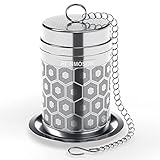
- Upgraded Micron Mesh: loose leaf tea steeper is Ideal to hold tea leaves, particles, or ground coffee. Compared to traditional tea strainer, our tea ball features 50% more ultra fine, half-sized holes for optimal tea flavor and minimal sediment leak. Ideal for rooibos, herbs, green tea, Chai, ground coffee, small tea leaves and etc.
- High-Quality Materials: Made of 304 food-grade stainless steel, tea ball infuser for loose tea is easier to be cleaned. Besides, loose tea steeper ensures no metallic taste on your tea or coffee and never rust for years of use. Money-saving and eco-friendly alternative to disposable tea bags and paper filters.
- Easy to Open and Close: With the design of thread top, the lids screw easily and are much more secure than the traditional twist lid, so the tea leaves will be held tightly and the lid never escapes during the process of brewing.
- Wide Application: tea steeper is not only for loose tea leaves but also a spice filter, infusing spices, herbs, and seasonings in soups, sauce, broths, and stews. Extended 4.3” chain with S-handle makes tea infusers can catch securely on any rim of mugs, cups, teapots, kettles, bottles, and pitchers.
- Package: Comes with 1.5” diameter and 2.2” high tea balls for loose tea and 1 saucer. The saucer is helpful for avoiding making a mess when you take out the loose leaf tea infusers after brewing.