
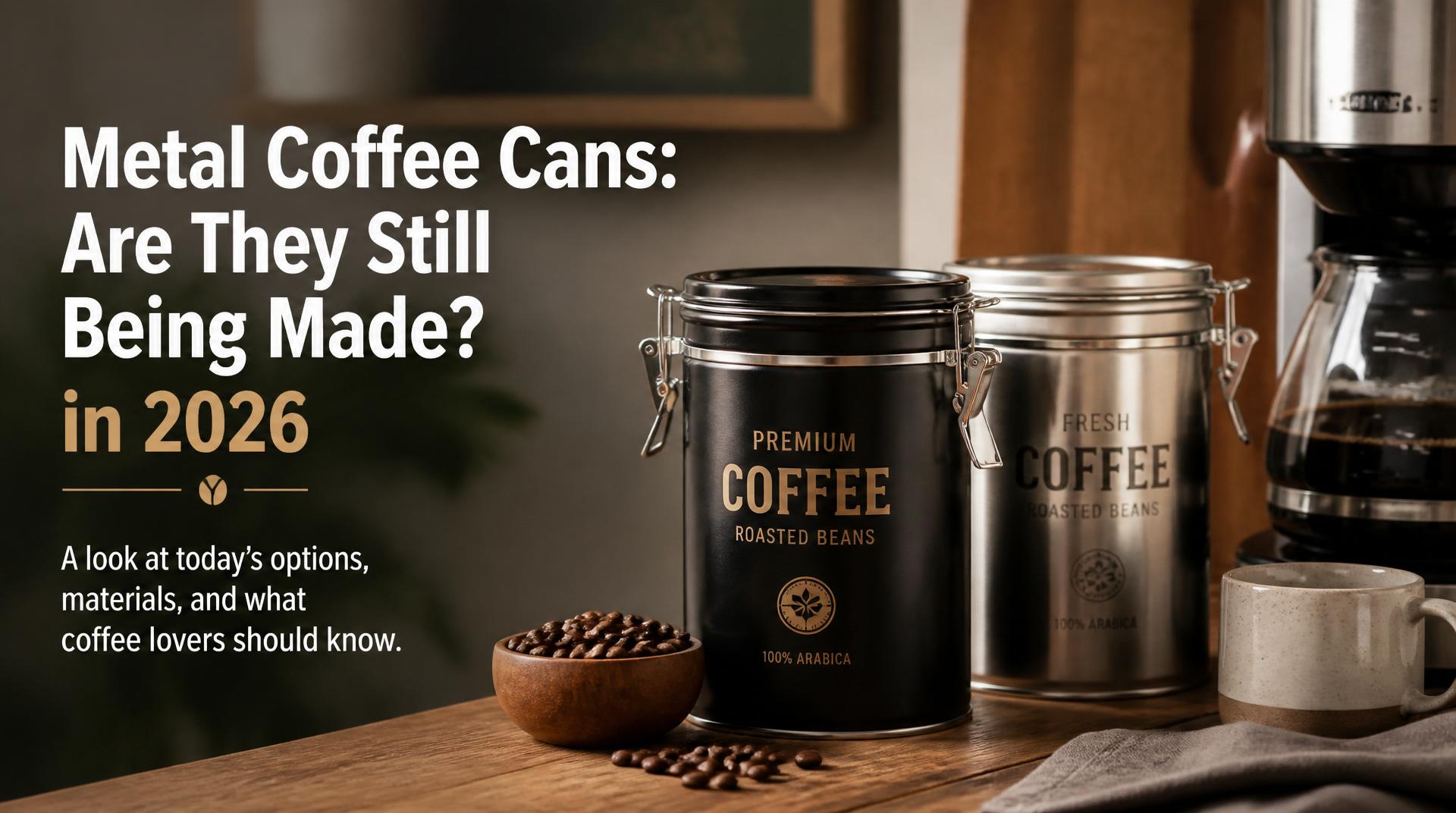
Metal Coffee Cans: Are They Still Being Made? in 2026
Yes, metal coffee cans are still being made in 2026, but you will not find them in the mainstream coffee aisle. The classic tinplate can that dominated supermarket shelves for decades has been replaced by flexible pouches, plastic tubs, and vacuum-sealed bricks in mass-market retail. Today, metal cans survive in three places: specialty roasters using them as a premium branding statement, heritage brands retaining their classic packaging for loyal customers, and limited-edition gift sets where the container is part of the product. If you want the traditional format, your most reliable sources are direct-to-consumer roasters, European imports, and the premium or gourmet section of your grocery store.
That shift matters for your next purchase decision. If you are simply looking for fresh coffee at a reasonable price, modern pouches will serve you better. If you want a rigid, stackable container for your pantry or a gift-worthy presentation, metal cans are still worth seeking out. The rest of this guide walks through where metal cans remain available, what can go wrong with them, and how to verify you are getting a properly sealed product.
Where Metal Coffee Cans Still Show Up in 2026
Metal coffee cans have not disappeared, but they have consolidated into three distinct market segments.
Specialty and small-batch roasters use metal cans as a deliberate branding choice. The rigid container signals craftsmanship and permanence in a way that a flexible pouch cannot replicate. For a $20-plus bag of single-origin beans, the packaging cost is a smaller percentage of the retail price, making the premium format financially viable. Roasters like Partners Coffee and several Pacific Northwest micro-roasters have used metal tins for their flagship lines, often pairing them with resealable plastic lids for daily use.
Heritage brands with decades-old flagship lines have retained metal cans largely out of customer loyalty. Some buyers specifically seek out the familiar red or green can they remember from childhood, and brands in this category know that changing the format risks alienating that core audience. You will still find these on shelves in certain regional grocery chains, though often in the gourmet section rather than the main coffee display.
Gift sets and limited releases frequently use metal cans because the container itself carries perceived value. A collectible can with custom artwork or a holiday design becomes part of the product, not just its packaging. After the coffee is gone, the can often lives on as a storage container or decorative piece.
The economics explain the retreat. A 12-ounce metal can costs roughly $0.65 to $1.10 per unit depending on order volume, while a comparable flexible pouch runs $0.15 to $0.35. Add in the higher shipping weight and larger storage footprint, and the cost gap becomes even wider for high-volume producers. For a roaster moving thousands of units weekly, that difference adds up to tens of thousands of dollars annually.
Why the Metal Coffee Can Lost the Mass Market
The decline of the metal coffee can happened gradually, driven by three converging pressures that made the format unsustainable for large-scale production.
Freight and Storage Costs
Metal cans are heavy. A case of twelve 12-ounce cans weighs roughly 30 to 40 percent more than the same coffee in pouches. For a roaster moving thousands of cases weekly, that weight penalty shows up directly in freight invoices. Warehousing compounds the problem: empty cans arrive pre-formed and take up substantial space, while pouches ship flat and are formed or filled on-site. A roaster can store roughly three times more packaging material in the same warehouse footprint when using flexible pouches.
The Degassing Problem
Coffee releases carbon dioxide for days after roasting. Packaging must let that gas escape while keeping oxygen out. Traditional metal cans use a one-way valve, typically mounted on the lid or side, to handle this. The valve adds cost and an assembly step. Flexible pouches with degassing valves are cheaper to produce and can be sealed sooner after roasting, which locks in aroma more effectively. Many commercial roasters report that modern pouches actually outperform metal cans on freshness metrics because the shorter time between roast and seal matters more than the barrier properties of the container itself.
Everyday Usability
Modern coffee buyers want packaging that reseals easily, stores compactly, and survives daily use. A metal can with a plastic lid reseals adequately, but the lid can crack or go missing, and the can dents if dropped. Flexible pouches with zipper closures take up less cabinet space and are less likely to fail in humid environments. The convenience gap is small, but it compounds over years of daily coffee preparation.
The Most Common Failure Mode: Degassing Valve Seal Failure
If you are buying coffee in metal cans or considering them for your own roasting operation, the single most likely point of failure is the degassing valve. This small plastic or foil component is responsible for venting CO₂ while blocking oxygen, and it is more vulnerable on a metal can than on a flexible pouch.
Early Warning Signs
A failing degassing valve produces symptoms you can catch before the coffee is ruined:
- Bulging lid or can body — The can is swelling because CO₂ cannot escape. This is the earliest and most obvious indicator.
- Loud hiss on opening — A brief hiss is normal for freshly roasted coffee. A prolonged or forceful release means pressure built up excessively.
- Rapid staleness — If the coffee loses aroma and flavor noticeably faster than expected, oxygen is likely entering through a compromised valve seal.
Why Metal Cans Are More Vulnerable
A flexible pouch expands slightly under internal pressure, creating a natural buffer that reduces stress on the valve. A metal can has zero give. The valve must handle the full degassing load on its own. Over time, the adhesive bonding the valve to the can surface can degrade, particularly if the can is stored in warm conditions or exposed to temperature swings. The risk is highest with cans that have epoxy-based interior linings, which do not always bond well with standard valve adhesives.
How to Verify Valve Integrity
For roasters, a simple field test catches most seal failures before product ships. Fill a sealed can with air, submerge it in water, and watch for bubbles around the valve perimeter. Any bubbling indicates a failed bond. For buyers, inspect the valve area before purchasing. Look for lifting edges, cracks, or discoloration around the valve base. If you are evaluating a new can supplier, run a two-week pressure test on sample cans to confirm the valve performs to spec under real storage conditions.
Escalation signal: If you receive a can that is already bulging or hissing loudly when you open it, do not consume the coffee. A compromised seal allows oxygen and moisture in, which accelerates staleness and, in rare cases, can promote mold growth. Contact the roaster for a replacement. Reputable specialty roasters will replace a defective can without hesitation, as this is a known failure point in the format.
Choosing Between Metal Cans and Modern Packaging
Your decision comes down to what you prioritize. Here is a practical framework.
Metal cans make sense if:
- You are buying coffee as a gift or for countertop display
- You want a rigid, stackable container for pantry organization
- You are purchasing a heritage brand that has maintained its classic packaging
- You are a roaster targeting a premium shelf-stable product with a longer shelf life
Flexible pouches make sense if:
- Maximum freshness after opening is your top priority
- You want the best price per ounce
- You need packaging that stores flat and reseals reliably
- You are shipping coffee and want to minimize weight and breakage risk
Plastic containers make sense if:
- You want a reusable daily-use container with a wide mouth
- You buy in bulk and scoop directly from the package
- You prefer a container that survives drops and rough handling
The Trade-Off Most Buyers Miss
The biggest mismatch buyers run into is assuming a metal can will keep coffee fresher than a pouch. That is not automatically true. The can’s oxygen barrier is superior, but only if the degassing valve seals properly and the lid fits tightly. A pouch with a quality one-way valve and zipper closure can match or beat a metal can on freshness, especially if the roaster seals the pouch sooner after roasting. If your priority is freshness, check the roast date on the package rather than assuming the container type tells you anything about quality.
For roasters, the trade-off is different. Metal cans increase your unit cost by roughly $0.50 to $0.75 per package and add significant freight weight. You can offset that with a higher retail price, but only if your target customer values the rigid format enough to pay the premium. If you are selling primarily online, the heavier shipping weight will eat into your margins on every order.
How to Verify You Are Getting a Properly Sealed Can
Before you commit to buying metal-canned coffee, run through this quick verification checklist:
1. Inspect the valve visually. Look for lifting edges, cracks, or discoloration around the valve base. Any of these indicate a potential seal failure.
2. Press the center of the lid. A properly sealed can should feel firm with minimal give. If the lid depresses easily and springs back slowly, pressure may have escaped through a compromised seal.
3. Check the roast date. Metal cans do not preserve coffee indefinitely. If the roast date is more than three months old, the coffee will taste stale regardless of the container.
4. Listen on first open. A brief hiss is normal. A prolonged hiss or a popping sound means pressure built up excessively, which suggests the valve did not vent properly during storage.
If you are evaluating a new roaster or supplier, order a single can before committing to a larger purchase. Confirm the valve holds, the coffee tastes fresh, and the can arrives without dents or bulging. This is especially important if you are buying from a new source, as packaging quality varies significantly between producers.
The Environmental Trade-Off
Metal cans are infinitely recyclable, which gives them a clear advantage over multi-layer flexible pouches that frequently end up in landfills. But the full environmental picture is more nuanced. Producing virgin aluminum and tinplate carries a significant carbon footprint, and the heavier shipping weight increases transport emissions. A 2024 lifecycle analysis of coffee packaging found that the relative impact depends heavily on two variables: local recycling rates and transport distance. In regions with strong metal recycling infrastructure and short supply chains, metal cans can be the more sustainable choice. In areas with low recycling participation or long shipping routes, the lighter pouch often wins on overall environmental impact.
For the individual buyer, the practical takeaway is simple. If you live in a municipality with curbside metal recycling and you buy coffee from a local roaster, the metal can is likely the more sustainable option. If you are ordering online from across the country, the pouch’s lower shipping weight gives it an environmental edge.
Practical Next Steps for Buyers and Roasters
If you are looking for metal coffee cans in 2026, start with specialty roasters and regional brands rather than national grocery chains. Check the premium or gourmet section of your local store, and search online for roasters that explicitly advertise metal packaging. European imports are another reliable source, as several traditional brands have retained the format.
If you are a roaster considering a switch to metal cans, run a small pilot batch before committing to a full production run. Verify that your valve supplier provides an adhesive compatible with your specific can lining. Test sealed cans for pressure buildup over a two-week period using a simple pressure gauge on a sample unit. Confirm that your filling line can handle the weight and rigidity of the cans without slowing down your packaging throughput.
Stop point: If you have a can that is bulging, leaking, or hissing loudly, do not consume the coffee. Discard the can and contact the roaster for a replacement. If you are a roaster and you see more than 2 percent of your cans failing the water submersion test, halt production and address the valve adhesive compatibility before shipping more product.
FAQ
Are metal coffee cans recyclable?
Yes, metal coffee cans are recyclable in most municipal programs. Remove the plastic lid and any paper label before recycling. The degassing valve does not need to be removed, but check with your local facility for specific requirements.
Do metal cans keep coffee fresher than bags?
Metal cans provide a better oxygen barrier than most flexible pouches, but the difference is small when the pouch has a quality degassing valve and zipper seal. The larger factor is how quickly the package is sealed after roasting and how soon you consume the coffee after opening.
Why do some premium roasters still use metal cans?
Premium roasters use metal cans for brand positioning, shelf presence, and perceived quality. The heavier container signals a higher-end product and supports a higher price point. Some roasters also use metal cans for limited editions or collaborations where the packaging is part of the collectible appeal.
Can I reuse a metal coffee can?
Yes, metal coffee cans can be reused for dry goods storage, hardware organization, or as planters. Clean the can thoroughly with warm soapy water and dry it completely before reuse. Do not use the can for food storage if the interior lining is scratched or damaged.
Are metal cans making a comeback?
There is modest growth in metal can usage among specialty roasters, but the overall trend remains toward flexible packaging. The cost and weight disadvantages of metal make a full-scale comeback unlikely in the near term. The format will stay a niche premium option rather than returning to mainstream dominance.
<!– cluster-navigation –>
Explore This Topic
- Back to [General Coffee Info
Related guides in this cluster: