
Materials Used To Make Coffee Cups
Quick answer
- Ceramic and porcelain are the most common materials for coffee cups due to their durability, heat retention, and aesthetic appeal.
- Glass coffee cups offer a clear view of the coffee and are generally non-reactive, but can be fragile.
- Stainless steel is often used for travel mugs, providing excellent insulation and robustness.
- Plastic coffee cups are lightweight and inexpensive, but can sometimes impart flavors or degrade over time.
- Paper coffee cups are typically used for single-use or to-go beverages, offering convenience but limited insulation.
- Other materials like stoneware, bone china, and even bamboo are used for specialty or eco-conscious coffee cups.
Key terms and definitions
- Ceramic: A general term for pottery made from clay that has been fired at high temperatures. It’s durable and holds heat well.
- Porcelain: A type of ceramic made from kaolin clay, fired at very high temperatures. It’s known for its translucence, strength, and non-porous surface.
- Stoneware: Another type of ceramic, fired at high temperatures but typically less vitrified (less glassy) than porcelain. It’s durable and opaque.
- Kaolin Clay: A fine, white clay essential for producing porcelain.
- Vitrification: The process where clay materials melt and fuse together during firing, becoming dense and non-porous.
- Glaze: A glassy coating applied to ceramic surfaces before firing. It makes the cup waterproof, easier to clean, and adds decorative elements.
- Tempered Glass: Glass that has been heat-treated to increase its strength and resistance to thermal shock.
- BPA (Bisphenol A): A chemical compound found in some plastics that has raised health concerns. Food-grade plastics are often labeled “BPA-free.”
- Insulation: The ability of a material to resist heat transfer, keeping beverages hot or cold.
- Reactivity: The tendency of a material to interact chemically with its contents, potentially altering taste.
How it works
- Clay Preparation: Natural clays are mixed with water and other minerals to achieve the desired consistency and properties for molding.
- Forming: The prepared clay is shaped into cups using methods like slip casting, jiggering, or hand-building.
- Drying: The formed cups are air-dried to remove most of the moisture, preventing cracking during firing.
- Bisque Firing: The dried cups are fired in a kiln at moderate temperatures (around 1800-2000°F) to harden them and make them porous for glazing.
- Glazing: A liquid glaze suspension is applied to the bisqued ware, either by dipping, pouring, or spraying.
- Glaze Firing: The glazed pieces are fired again at higher temperatures (often 2200-2400°F for porcelain) to melt the glaze, making it fuse to the clay body and become impermeable.
- Annealing (for Glass): Glass is heated and then slowly cooled to relieve internal stresses, making it more durable.
- Tempering (for Glass): Glass is heated and then rapidly cooled with air jets, creating compressive stress on the surface for increased strength.
- Material Synthesis (for Plastics): Polymers are created through chemical processes, then molded into cup shapes.
- Metal Forming: Stainless steel sheets are shaped, often through stamping and welding, to form the body and components of travel mugs.
What affects the result
- Porosity: Less porous materials like porcelain and well-glazed stoneware are better because they don’t absorb flavors or odors and are easier to clean.
- Heat Retention: Thicker walls and materials with lower thermal conductivity, such as ceramic or insulated stainless steel, keep coffee hotter for longer.
- Durability: Materials like tempered glass, stoneware, and stainless steel are generally more resistant to chipping, breaking, and scratching than thinner ceramics or plastics.
- Taste Neutrality: Non-reactive materials like glass, porcelain, and stainless steel are preferred as they don’t impart any off-flavors to the coffee.
- Weight and Portability: Lighter materials like plastic and paper are convenient for travel or disposable use, while heavier ceramic cups feel more substantial.
- Thermal Shock Resistance: Materials that can withstand rapid temperature changes without cracking, like tempered glass and some ceramics, are advantageous.
- Surface Finish: Smooth, non-porous surfaces, often achieved through glazing, are easier to clean and less likely to harbor bacteria.
- Insulation Properties: Double-walled construction, vacuum sealing (in travel mugs), and the inherent insulating qualities of materials like ceramic play a role in temperature maintenance.
- Aesthetic Appeal: The visual and tactile qualities of materials, from the gloss of porcelain to the texture of stoneware, influence the user experience.
- Chemical Resistance: Materials should not degrade or leach chemicals into the beverage, especially when exposed to hot liquids.
- Environmental Impact: The sustainability of the material, its recyclability, and the energy required for production are considerations for some consumers.
- Cost of Production: The availability of raw materials and the complexity of manufacturing processes influence the final price of the coffee cup.
Pros, cons, and when it matters
- Ceramic/Porcelain:
- Pros: Excellent heat retention, neutral taste, durable, wide range of designs, feels substantial.
- Cons: Can chip or break if dropped, heavier than plastic or paper, can stain over time if not properly glazed.
- When it matters: For a classic, comfortable home coffee experience where durability and heat retention are priorities.
- Glass:
- Pros: Visually appealing (see coffee color), non-reactive, easy to clean, lightweight.
- Cons: Fragile, can be prone to thermal shock if not tempered, may not retain heat as well as ceramic.
- When it matters: For those who appreciate the aesthetics of their coffee and want a pure, unadulterated taste.
- Stainless Steel:
- Pros: Extremely durable, excellent insulation (especially double-walled), lightweight for its strength, rust-resistant.
- Cons: Can sometimes impart a metallic taste, not microwave-safe, can be scratched.
- When it matters: Ideal for travel, camping, or situations where durability and long-lasting heat are essential.
- Plastic:
- Pros: Lightweight, inexpensive, shatterproof, often dishwasher safe.
- Cons: Can leach chemicals (look for BPA-free), may retain odors/flavors, less durable than ceramic or metal, can degrade over time.
- When it matters: For casual use, children, or situations where breakage is a concern and budget is a factor.
- Paper:
- Pros: Lightweight, disposable, convenient for to-go.
- Cons: Poor insulation, can become soggy, contributes to waste, can impart a papery taste.
- When it matters: For quick coffee runs or situations where washing is not an option.
- Stoneware:
- Pros: Rustic appeal, good heat retention, durable, often more affordable than porcelain.
- Cons: Can be more porous than porcelain, potentially leading to staining over time if unglazed or poorly glazed.
- When it matters: For a casual, earthy feel with good performance for everyday brewing.
- Bone China:
- Pros: Very strong, lightweight, translucent, elegant appearance.
- Cons: Can be expensive, requires careful handling.
- When it matters: For a refined, delicate coffee service where aesthetics are paramount.
- Bamboo:
- Pros: Eco-friendly, lightweight, biodegradable (under specific conditions).
- Cons: Durability can vary, may absorb flavors, not always dishwasher or microwave safe.
- When it matters: For environmentally conscious consumers looking for a natural alternative.
If you appreciate the aesthetics of your coffee and want a pure, unadulterated taste, glass coffee cups are a great option. For everyday use, consider tempered glass options for added durability.
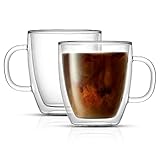
- SAVOR DAYS, EVERYDAY: Ahh, the comfort of the diner mug. Thick walled and narrow in the middle, it’s the extra large coffee mug that loves being cradled at breakfast, with an open heart for your woes at the end of a long day. Now, enjoy those diner memories
- FAMILIAR, YET MODERN: Your 13.5-ounce glass mugs with handles are the same shape as the cute coffee mugs we know so well, but instead of a ceramic thermal coffee mug, these are thermic glass coffee mugs. Each one is 4.5” tall, and 4” wide
- EASY TO HOLD: The double-wall coffee glass insulation lets you cup hot beverages in your hands without burning. And just like our popular Serene, or Aroma Double Walled Coffee Glasses, they’re cool to touch. Using it as an iced coffee glass? Icy cold beverages stay inside the glass, while you stay warm.
- TEMPERATURE-SAFE BOROSILICATE GLASS CUP: Your insulated cups are Safe For Fridge, Freezer, Dishwasher, Microwave and Oven. These unique coffee mugs are also Lead-Free and naturally BPA-Free. So whether you're using them for a late night latte, or an early morning tea mug, it all tastes perfect.
- UNBOXING NOSTALGIA: These cool coffee mugs are mouth-blown and handmade, and come securely wrapped and nestled in a gift box with a 12 Month Guarantee for a satisfying unboxing. Surprise someone you love with memories of their favorite double walled glass coffee mugs by JoyJolt.
Common misconceptions
- All ceramic is the same: There are different types of ceramics like porcelain, stoneware, and earthenware, each with distinct properties regarding durability, porosity, and heat retention.
- Glass cups are always fragile: Tempered glass and borosilicate glass are designed to be more resistant to breakage and thermal shock than standard glass.
- Plastic cups are always bad for your health: While some older plastics contained concerning chemicals, many modern food-grade plastics are BPA-free and considered safe for hot beverages. Always check for labels.
- Metal cups always taste like metal: High-quality stainless steel, especially food-grade varieties, is designed to be non-reactive and should not impart a metallic flavor to coffee.
- Paper cups are the most eco-friendly option: While disposable, paper cups often have plastic linings and contribute significantly to landfill waste. Reusable cups are generally more sustainable.
- Thicker cups always keep coffee hotter: While thickness contributes, the material’s thermal conductivity and whether the cup is insulated (e.g., double-walled) are more critical factors.
- You can’t clean stained cups: While some stains are stubborn, using baking soda paste or specialized ceramic cleaners can often remove coffee stains from ceramic and porcelain.
- All travel mugs are equally good at insulation: The quality of the insulation, the seal of the lid, and the material (e.g., vacuum-sealed stainless steel) significantly impact how long coffee stays hot.
- You need special cleaners for coffee cups: For most everyday cleaning, warm water, mild dish soap, and a sponge are sufficient for most materials.
FAQ
Q: What is the best material for a coffee cup if I want my coffee to stay hot for a long time?
A: For maximum heat retention, insulated stainless steel travel mugs are generally the best. Ceramic and porcelain cups also offer good heat retention due to their density and thickness, but they will eventually cool down.
Q: Can I put any coffee cup in the microwave?
A: Generally, ceramic, porcelain, and glass cups are microwave-safe, but always check for any metallic trim or decorations, as these can cause arcing. Never microwave plastic or metal cups, as they can melt, warp, or cause dangerous sparks.
Q: Are reusable plastic coffee cups safe?
A: Many reusable plastic cups are made from BPA-free plastics and are considered safe. However, some people prefer to avoid plastic altogether due to potential concerns about chemical leaching or taste absorption, especially with prolonged use or exposure to very hot liquids.
Q: Why do some ceramic cups feel rougher than others?
A: This difference often comes down to the type of ceramic and the finish. Stoneware can sometimes have a more textured feel than smooth porcelain. The glaze application can also affect the surface texture; some glazes are intentionally matte or textured.
Q: What’s the difference between porcelain and ceramic coffee cups?
A: Porcelain is a type of ceramic made from kaolin clay fired at very high temperatures. It’s typically whiter, stronger, and less porous than other ceramics like stoneware or earthenware, making it more resistant to staining and chipping.
Q: Do glass coffee cups break easily?
A: Standard glass cups can be fragile. However, tempered glass and borosilicate glass are significantly more durable and resistant to thermal shock, making them a better choice for everyday use.
Q: Can coffee stain my cups?
A: Yes, coffee can stain porous materials over time, especially if they are unglazed or have a light color. Well-glazed ceramic, porcelain, glass, and stainless steel are more resistant to staining.
Q: What is “bone china”?
A: Bone china is a type of porcelain that contains bone ash in its composition. This ingredient gives it exceptional strength, lightness, and a characteristic translucence while maintaining a delicate appearance.
What this page does NOT cover (and where to go next)
- Specific brand comparisons or product recommendations for coffee cups.
- Detailed chemical analyses of different plastic types and their safety profiles.
- The environmental impact of manufacturing and disposal for each material type.
- Specific care instructions or cleaning techniques for niche materials.
- The history of coffee cup design and its evolution.