
Mastering the Art of Perfect Home Coffee
Quick answer
- Dial in your grind size. It’s the biggest lever you have.
- Use good water. Filtered is your friend.
- Get your coffee-to-water ratio right. Weighing is best.
- Pay attention to water temperature. Too hot or too cold messes things up.
- Keep your gear clean. Seriously, clean it.
- Fresh beans make a difference. Buy them recently roasted.
Who this is for
- You’re tired of mediocre coffee at home.
- You’ve got a decent brewer but aren’t getting stellar results.
- You’re ready to stop guessing and start brewing with confidence.
What to check first
Brewer type and filter type
Your setup dictates a lot. Are you using a pour-over, a French press, an AeroPress, or a drip machine? Each has its own sweet spot. And the filter matters – paper filters trap more oils than metal ones, affecting body and clarity. A paper filter for a pour-over is different from the basket filter in a drip machine. Make sure you’re using the right one for your brewer.
Water quality and temperature
Coffee is mostly water, so good water is key. Tap water can have off-flavors or too much mineral content. A simple carbon filter can make a big difference. For temperature, aim for 195-205°F (90-96°C) for most brewing methods. Too hot can scorch the grounds; too cool leads to under-extraction. Most kettles have temperature settings, or you can let boiling water sit for about 30-60 seconds.
Grind size and coffee freshness
This is huge. Too coarse, and your coffee will be weak and sour. Too fine, and it’ll be bitter and over-extracted. The right grind size depends on your brew method. French press needs coarse, espresso needs fine, and drip is usually medium. Freshness matters too. Coffee starts losing flavor compounds after roasting. Aim for beans roasted within the last 2-3 weeks. Stale beans just won’t deliver.
For the best results, a quality burr grinder is essential for achieving the correct grind size. We recommend checking out this highly-rated coffee bean grinder for a significant upgrade to your home brewing.
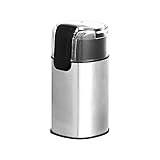
- Electric coffee bean grinder appliance for home use
- Can grind 30 grams/1 ounce of beans for drip coffee brewing in 10 seconds
- Grind coffee beans, herbs, spices, grains, nuts, and more
- Clear safety lid allows you to easily see the results in progress
- Heavy-duty stainless steel grind blade
Coffee-to-water ratio
This is about strength and balance. A common starting point is a 1:15 to 1:17 ratio. That means for every gram of coffee, you use 15 to 17 grams of water. Weighing your coffee and water is the most accurate way to get this right. Using scoops can be inconsistent. For example, 20 grams of coffee to 300-340 grams of water is a solid starting point for a single cup.
Cleanliness/descale status
Grime and mineral buildup are coffee’s worst enemies. Old coffee oils turn rancid and make your brew taste bitter and stale, no matter how good your beans are. Regularly clean your brewer, grinder, and any storage containers. Descaling drip machines is also crucial for performance and taste. Check your brewer’s manual for specific cleaning and descaling instructions.
Step-by-step (brew workflow)
1. Measure your coffee beans.
- What “good” looks like: Accurate weight, consistent with your chosen ratio.
- Common mistake: Using scoops instead of a scale. This leads to inconsistent strength. Use a scale, even a cheap one, for repeatable results.
2. Grind your coffee.
- What “good” looks like: The correct grind size for your brewer, with a consistent particle size.
- Common mistake: Using a blade grinder. These chop beans unevenly, leading to both over- and under-extraction. Invest in a burr grinder.
3. Heat your water.
- What “good” looks like: Water at the target temperature range (195-205°F or 90-96°C).
- Common mistake: Using boiling water straight off the boil. This can scorch the coffee. Let it cool for 30-60 seconds after boiling.
4. Prepare your brewer and filter.
- What “good” looks like: Clean brewer, filter rinsed (if paper) to remove papery taste and preheat.
- Common mistake: Not rinsing paper filters. This leaves a papery taste in your cup. A quick rinse with hot water is all it takes.
5. Add coffee grounds to the brewer.
- What “good” looks like: Evenly distributed grounds, ready for water.
- Common mistake: Tamping grounds too hard in certain brewers (like espresso, but also can affect pour-over flow). This restricts water flow. Keep it loose.
6. Start the bloom (pour-over/drip).
- What “good” looks like: A gentle pour of just enough water to saturate all grounds, then a 30-second pause. The grounds should bubble and expand.
- Common mistake: Pouring too much water too fast. This can create channels and lead to uneven extraction. Just wet the grounds.
7. Continue pouring water.
- What “good” looks like: Controlled, even pouring to maintain a consistent water level and flow rate.
- Common mistake: Pouring too aggressively or unevenly. This disrupts the coffee bed and leads to channeling. Pour in slow, concentric circles.
8. Allow the coffee to brew/steep.
- What “good” looks like: The correct brew time for your method, allowing for full extraction without over-extraction.
- Common mistake: Rushing the process or letting it go too long. French press steeping too long becomes bitter. Pour-over finishing too fast is weak.
9. Press/drain the coffee.
- What “good” looks like: Clean separation of grounds from liquid.
- Common mistake: Pressing the French press plunger too hard or too fast. This can force fine grounds through the filter. Press gently and steadily.
10. Serve immediately.
- What “good” looks like: A hot, aromatic cup of coffee.
- Common mistake: Letting brewed coffee sit on a hot plate. This cooks the coffee and makes it taste burnt. Transfer to a thermal carafe if not drinking right away.
Common mistakes (and what happens if you ignore them)
| Mistake | What it causes | Fix |
|---|---|---|
| Using stale coffee beans | Flat, dull, papery, or bitter taste | Buy beans roasted within the last 2-3 weeks. Store them airtight. |
| Incorrect grind size | Sour (too coarse) or bitter (too fine) coffee | Adjust your grinder. Check grind charts for your brew method. |
| Inconsistent coffee-to-water ratio | Weak or too strong coffee, unbalanced flavor | Use a scale to weigh both coffee and water. |
| Water that’s too hot or too cold | Scorched, bitter taste (too hot) or sour (too cold) | Use a thermometer or let boiling water rest 30-60 seconds. |
| Dirty equipment | Rancid, bitter, or “off” flavors | Clean your brewer, grinder, and carafe regularly. |
| Using tap water with off-flavors | Unpleasant taste in the final cup | Filter your water or use spring water. |
| Uneven water distribution | Channeling, leading to weak and bitter patches | Pour water slowly and evenly, saturating all grounds. |
| Over-extraction | Bitter, astringent, harsh taste | Reduce brew time, increase grind size, or lower water temperature. |
| Under-extraction | Sour, acidic, weak, thin body | Increase brew time, decrease grind size, or raise water temperature. |
| Not rinsing paper filters | Papery, cardboard-like taste | Rinse paper filters with hot water before brewing. |
Decision rules (simple if/then)
- If your coffee tastes sour, then try grinding finer because sourness often indicates under-extraction.
- If your coffee tastes bitter, then try grinding coarser because bitterness often indicates over-extraction.
- If your coffee tastes weak, then increase the amount of coffee you use or decrease the amount of water because you might be using too low a coffee-to-water ratio.
- If your coffee tastes too strong, then decrease the amount of coffee you use or increase the amount of water because you might be using too high a coffee-to-water ratio.
- If your coffee has a papery taste, then ensure you are rinsing your paper filter thoroughly because residual paper can impart this flavor.
- If your coffee tastes muddy or has a lot of sediment, then try a coarser grind for immersion methods like French press or ensure your grinder produces fewer fines.
- If your brewed coffee has a burnt taste, then check your water temperature – it might be too high, or the coffee might be sitting on a hot plate too long.
- If your pour-over is draining too fast, then try grinding finer because a coarser grind allows water to pass through too quickly.
- If your pour-over is draining too slowly, then try grinding coarser because a finer grind can clog the filter.
- If your coffee tastes inconsistent from day to day, then start weighing your coffee and water because volumetric measurements (scoops, cups) are less accurate.
- If your drip machine coffee tastes stale, then descale the machine and clean it thoroughly because mineral buildup and old oils degrade flavor.
FAQ
Q: How often should I clean my coffee maker?
A: It’s best to rinse your brewer daily after use. For a deeper clean, descale and clean thoroughly at least once a month, or more often if you use it heavily.
Q: What’s the best way to store coffee beans?
A: Store them in an airtight container in a cool, dark place, away from heat and moisture. Avoid the refrigerator or freezer unless you’re storing them long-term in a vacuum-sealed bag.
Q: Can I reuse coffee grounds?
A: While you technically can, the flavor will be significantly diminished. The first brew extracts most of the desirable compounds. Subsequent brews will be weak and taste stale.
Q: My coffee tastes bland. What am I doing wrong?
A: Bland coffee usually means under-extraction or stale beans. Check your grind size (try finer), water temperature (ensure it’s hot enough), and the freshness of your beans.
Q: How do I know if my grinder is good enough?
A: A good burr grinder produces consistent particle sizes. If your coffee is all over the place in flavor (sour and bitter at the same time), your grinder might be the culprit.
Q: Is filtered water really that important?
A: Yes, especially if your tap water has a strong taste or is very hard. Coffee is 98% water, so the water’s flavor profile directly impacts your final cup.
Q: What’s the “bloom” in pour-over coffee?
A: The bloom is when you first add a small amount of hot water to the coffee grounds. It allows trapped CO2 gas to escape, which can improve extraction and flavor.
Q: How can I make my coffee taste richer and more full-bodied?
A: Try using a French press or a metal filter in your pour-over. These methods allow more of the coffee’s natural oils to pass into the cup, contributing to body.
Q: Should I buy pre-ground coffee?
A: For the best flavor, always buy whole beans and grind them right before brewing. Pre-ground coffee loses its aroma and flavor much faster.
What this page does NOT cover (and where to go next)
- Specific calibration for espresso machines. Espresso is a whole different beast.
- Advanced techniques like water chemistry manipulation. That’s for the true geeks.
- Comparisons of specific coffee maker brands or models. This is about the art, not the gear.
- Detailed guides on latte art or milk steaming. That’s a barista skill.
Next up, consider exploring the world of single-origin coffees and how different bean varietals affect flavor. You might also want to dive into the nuances of different roast levels.