
Making Multiple Servings of Bulletproof Coffee
Quick answer
- Yes, you can make multiple servings of Bulletproof Coffee, but it requires careful preparation to maintain its intended consistency and flavor.
- For larger batches, consider using a high-powered blender that can accommodate more liquid.
- Pre-measuring your ingredients can save time and ensure consistency when brewing larger quantities.
- While blending a large batch at once is possible, you may need to do it in stages depending on your blender’s capacity.
- Using a frother after brewing can help incorporate the fats and achieve the desired emulsification for multiple servings.
- Experiment with your preferred coffee maker and blender size to find the most efficient method for your needs.
For larger batches, consider using a high-powered blender that can accommodate more liquid.
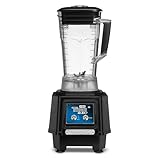
- Motor: 2 Horsepower high-performance motor delivers 24,000 max RPM for consistent blending power in commercial kitchens and bars, ensuring reliable operation during peak service hours
- Container: 64 oz BPA-free copolyester jar with stackable design maximizes storage efficiency while providing durable construction for high-volume blender use in professional settings
- Controls: 2-speed toggle switch provides simple operation with reliable performance for bartenders and kitchen staff in fast-paced commercial environments and busy food service operations
- Drive: Stainless steel user-replaceable drive coupling ensures long-lasting durability and easy maintenance for continuous commercial blender operation in demanding restaurant environments
- Certifications: cULus and NSF approved for commercial food service applications, meeting strict safety and sanitation standards for professional kitchen use in restaurants and bars
Who this is for
- Individuals who regularly drink Bulletproof Coffee and want to prepare it for multiple people at once.
- Those who want to save time in the morning by making a larger batch of Bulletproof Coffee to last them for a few days.
- Busy professionals or families who need a quick and efficient way to prepare this specific type of coffee.
What to check first
Brewer type and filter type
Your coffee brewer’s capacity is a primary consideration. Drip coffee makers, French presses, and pour-over setups all have different maximum brew volumes. Ensure your brewer can handle the amount of coffee you intend to make. The filter type, whether paper, metal, or cloth, can also affect the final taste and body of the coffee, which is important for Bulletproof Coffee’s texture.
Water quality and temperature
For any coffee, including Bulletproof Coffee, water quality matters. Using filtered water can significantly improve the taste by removing impurities that might otherwise interfere with the coffee’s flavor and the emulsification of fats. The ideal brewing temperature for most coffee is between 195°F and 205°F. If you’re brewing a larger batch, ensure your water reaches and maintains this temperature throughout the brewing process.
Grind size and coffee freshness
The grind size should be appropriate for your brewing method. For example, a coarse grind is typically used for a French press, while a medium grind is suitable for a drip coffee maker. Freshly ground coffee beans yield the best flavor. If you’re making a large batch, grind your beans just before brewing. Stale coffee can result in a flat or bitter taste, which is particularly noticeable when the added fats are meant to enhance the experience.
Coffee-to-water ratio
The standard ratio for coffee is often cited as 1:15 to 1:18 (coffee to water by weight). For Bulletproof Coffee, this ratio might be adjusted slightly based on personal preference and the amount of fat you intend to add. When scaling up, maintaining this ratio is crucial for consistent flavor. For example, if you typically use 2 tablespoons of coffee for 6 oz of water, for a larger batch, you’ll need to multiply both accordingly.
Cleanliness/descale status
A clean brewer is essential for good-tasting coffee. Coffee oils can build up over time, turning rancid and imparting off-flavors. Regularly cleaning your coffee maker, grinder, and any other equipment used is vital. If you have hard water, descaling your brewer periodically will prevent mineral buildup, which can affect both performance and taste.
Step-by-step (brew workflow)
1. Prepare your coffee beans: Measure your whole coffee beans. For a larger batch, use a scale for accuracy, aiming for a consistent ratio (e.g., 1:17 coffee to water by weight).
- What “good” looks like: Precisely measured beans that match your desired strength.
- Common mistake: Estimating by volume, which can lead to inconsistent results. Use a scale for best practice.
2. Grind the coffee: Grind the beans to the appropriate coarseness for your chosen brewing method (e.g., medium-coarse for drip, coarse for French press).
- What “good” looks like: Uniformly ground coffee particles.
- Common mistake: Uneven grind size from an old or low-quality grinder, leading to uneven extraction and potentially bitter coffee.
3. Heat the water: Heat filtered water to the optimal brewing temperature, typically between 195°F and 205°F. Use a thermometer to ensure accuracy.
- What “good” looks like: Water at the correct temperature, not boiling.
- Common mistake: Using boiling water, which can scald the coffee grounds and result in a bitter taste.
4. Prepare your brewer: If using a drip machine, ensure the filter is in place and rinsed if it’s a paper filter. For a French press, preheat the carafe.
- What “good” looks like: Brewer is ready and clean, with the correct filter installed.
- Common mistake: Forgetting to rinse paper filters, which can impart a papery taste, or not preheating a French press, which can lead to a cooler brew.
5. Add coffee grounds to the brewer: Carefully transfer the ground coffee into your brewer.
- What “good” looks like: All grounds are evenly distributed in the brew basket or French press.
- Common mistake: Spilling grounds outside the filter or brewer, which can lead to weaker coffee or grounds in your final cup.
6. Start the brewing process: Pour hot water over the grounds, ensuring all grounds are saturated. For drip machines, this is automated. For manual methods, pour slowly and evenly.
- What “good” looks like: Even saturation of coffee grounds, with a bloom (expansion) if using fresh coffee.
- Common mistake: Pouring water too quickly or unevenly, which can lead to channeling (water finding paths of least resistance) and under-extraction.
7. Allow coffee to brew completely: Let the brewing cycle finish for drip machines, or steep for the recommended time (e.g., 4 minutes for French press).
- What “good” looks like: The brewer has finished its cycle or the coffee has steeped for the correct duration.
- Common mistake: Pressing the French press plunger too early or too late, affecting extraction.
8. Transfer brewed coffee to blender: Carefully pour the hot, brewed coffee into your blender carafe. Ensure the blender is large enough for the total volume.
- What “good” looks like: All brewed coffee is transferred to the blender without spills.
- Common mistake: Overfilling the blender, which can cause overflow during blending.
9. Add fats and optional ingredients: Add your measured grass-fed butter and MCT oil (or coconut oil) to the blender.
- What “good” looks like: Correct amounts of fats are added for your desired consistency.
- Common mistake: Guessing the amount of fats, which can result in a greasy or flavorless drink.
10. Blend the mixture: Secure the lid on the blender and start blending on a low speed, gradually increasing to high. Blend for 20-30 seconds until frothy and emulsified.
- What “good” looks like: A creamy, emulsified mixture with a frothy top layer.
- Common mistake: Not blending long enough, resulting in separated fats and an oily texture, or blending too long on high heat, potentially damaging the blender or creating excessive heat.
11. Serve immediately: Pour the Bulletproof Coffee into mugs and enjoy.
- What “good” looks like: A smooth, creamy, and hot beverage.
- Common mistake: Letting it sit too long before serving, as the emulsion can start to separate.
Common mistakes (and what happens if you ignore them)
| Mistake | What it causes | Fix |
|---|---|---|
| Using stale coffee beans | Flat, bitter, or weak coffee flavor | Use freshly roasted beans and grind them just before brewing. |
| Incorrect grind size for brewing method | Under-extraction (sour) or over-extraction (bitter), weak or muddy coffee | Adjust grind size to match your brewer (e.g., coarse for French press, medium for drip). |
| Using unfiltered or poor-quality water | Off-flavors, interference with fat emulsification, potential mineral buildup | Use filtered water for a cleaner taste and better emulsification. |
| Brewing with water that’s too hot or too cold | Scalded grounds (bitter) or under-extracted (weak, sour) | Aim for 195°F-205°F water temperature; check with a thermometer. |
| Not cleaning brewing equipment regularly | Rancid coffee oils and residue impart unpleasant flavors | Clean your brewer, grinder, and blender regularly according to manufacturer instructions. |
| Overfilling the blender | Messy overflow, potential for injury, incomplete blending | Ensure your blender carafe has enough headspace for expansion during blending. Blend in batches if needed. |
| Not blending long enough | Separated fats, oily texture, lack of desired creaminess | Blend for at least 20-30 seconds until fully emulsified and frothy. |
| Using the wrong type or amount of fats | Greasy mouthfeel, lack of energy boost, or flavor that’s too rich/fatty | Use high-quality grass-fed butter and MCT oil or coconut oil in measured amounts. |
| Allowing brewed coffee to sit for too long | Emulsion begins to separate, texture changes, flavor can degrade | Serve and consume Bulletproof Coffee shortly after preparation. |
| Not measuring ingredients accurately | Inconsistent taste, texture, and fat content from batch to batch | Use a scale for coffee and water, and measure fats precisely for reproducible results. |
Decision rules (simple if/then)
- If your coffee tastes bitter, then try a coarser grind or a slightly lower water temperature because over-extraction can cause bitterness.
- If your coffee tastes sour, then try a finer grind or a slightly longer brew time because under-extraction can lead to sourness.
- If your Bulletproof Coffee is separating into layers, then blend it for a longer duration or at a higher speed because insufficient emulsification causes separation.
- If your blender is overflowing, then reduce the amount of liquid or blend in smaller batches because the blender’s capacity has been exceeded.
- If your coffee has a “papery” taste, then rinse your paper filter thoroughly before adding coffee grounds because this removes residual papery flavor.
- If you notice mineral buildup in your coffee maker, then descale your brewer with a descaling solution because this improves performance and taste.
- If your brewed coffee tastes weak even after adjusting the grind, then check your coffee-to-water ratio and ensure you are using enough coffee for the amount of water.
- If you want a smoother, creamier texture, then ensure you are using high-quality grass-fed butter and pure MCT oil because these fats emulsify best.
- If you are making a large batch for multiple people, then pre-measure all ingredients to ensure consistency across servings because it’s easy to misjudge quantities when scaling up.
- If your coffee tastes dull or flat, then ensure you are using freshly roasted and freshly ground coffee beans because stale beans lose their aromatic compounds.
- If you are concerned about the heat from blending, then let the brewed coffee cool slightly before adding fats and blending because this can help manage the temperature.
FAQ
Can I make Bulletproof Coffee ahead of time?
While you can brew the coffee base ahead of time, it’s best to add the fats and blend just before consuming. The emulsification that gives Bulletproof Coffee its signature texture can start to separate if it sits too long after blending.
How much butter and MCT oil should I use for a larger batch?
Maintain the same ratio of fats to coffee as you would for a single serving. For example, if you use 1 tablespoon of butter and 1 tablespoon of MCT oil per 8 oz of coffee, multiply those amounts by the number of servings you are making. Always start with recommended amounts and adjust to your preference.
What kind of blender is best for making multiple servings?
A high-powered blender with a larger capacity is ideal for making multiple servings of Bulletproof Coffee at once. Look for blenders that can handle hot liquids and have a jug large enough to accommodate your desired batch size without overflowing.
Will the taste be different if I make a big batch?
The core flavor of the coffee and fats will be the same, but consistency can be a challenge. Ensuring precise measurements and thorough blending are key to achieving a similar taste and texture to a single serving.
Can I reheat Bulletproof Coffee?
It’s generally not recommended to reheat Bulletproof Coffee after it’s been blended with fats. Reheating can cause the fats to separate and the texture to become oily or greasy, negatively impacting the experience.
What if I don’t have MCT oil?
You can use pure coconut oil as an alternative, though the results may vary slightly in terms of texture and how quickly it emulsifies. Grass-fed butter is still a key component for the signature richness.
How do I store leftover brewed coffee?
If you brew extra coffee without adding fats, store it in an airtight container in the refrigerator for up to 2-3 days. Reheat the coffee base before adding fats and blending for a fresh batch.
Is there a limit to how much Bulletproof Coffee I can blend at once?
The main limitation is your blender’s capacity. If your blender is not large enough for the entire batch, you will need to blend it in smaller, manageable portions.
What this page does not cover (and where to go next)
- Specific brand recommendations for coffee beans, MCT oil, or butter. (Consider researching top-rated brands for each ingredient.)
- Detailed nutritional breakdowns of Bulletproof Coffee. (Consult a nutritionist or health professional for personalized dietary advice.)
- Advanced blending techniques or troubleshooting for specific blender models. (Refer to your blender’s user manual or the manufacturer’s support resources.)