
Making Iced Coffee Using Only Cold Water
Quick answer
- Yes, you can make iced coffee using only cold water, but it requires a different approach than hot brewing.
- Methods like Japanese iced coffee or cold brew are specifically designed for this.
- Japanese iced coffee involves brewing hot coffee directly over ice.
- Cold brew steeps coffee grounds in cold water for an extended period.
- The key is to extract flavor without heat, which changes the solubility of coffee compounds.
- Results will differ from hot-brewed iced coffee; cold brew is smoother and less acidic.
Who this is for
- Coffee lovers who prefer a less acidic, smoother beverage.
- Those who want to avoid using hot water for brewing iced coffee, perhaps for safety or convenience.
- Individuals looking for simple, low-tech ways to make delicious iced coffee at home.
What to check first
Brewer type and filter type
Before you begin, understand the equipment you’re using. Some methods are specific to certain brewers. For example, Japanese iced coffee is best suited for pour-over setups like a V60 or Chemex, while cold brew can be made in a French press, a dedicated cold brew maker, or even a simple jar. The type of filter—paper, metal, or cloth—will also impact the clarity and body of your final iced coffee. Paper filters generally produce a cleaner cup, while metal filters allow more oils and fine particles through.
For Japanese iced coffee, a pour over coffee maker is ideal. This allows for precise control over the brewing process as you pour hot water directly over the grounds and ice.

- Pour Over Coffee: Manual Pour Over Coffee Maker allows you to brew an excellent cup of Coffee in minutes
- Stainless steel: Includes a new and improved permanent, stainless steel mesh filter that helps extract your coffee's aromatic oils and subtle flavors instead of being absorbed by a paper filter
- Coffee Carafe: Made of durable, heat-resistant borosilicate glass with Cork Band detailing that is both functional and elegant; single wall
- Quick and Easy: Simply add coarse ground Coffee to filter, pour a small amount of water in a circular motion over ground Coffee until soaked then add the remaining water and let drip
- Servings: Pour Over Coffee Maker makes 8 cups of Coffee, 4 oz each; dishwasher safe
Water quality and temperature
The water you use is crucial for any coffee brewing, and iced coffee is no exception. Ideally, use filtered water. Tap water can contain minerals or chlorine that negatively affect the taste. For methods that involve any hot water (like Japanese iced coffee), aim for a temperature between 195-205°F. For cold brewing, the starting water temperature is less critical, but room temperature or slightly cooler is common. The goal is to have the water interact with the coffee grounds effectively to extract flavor.
Grind size and coffee freshness
The grind size is paramount for controlling extraction. For Japanese iced coffee, a medium-fine to medium grind, similar to what you’d use for hot pour-over, is generally recommended. For cold brew, a much coarser grind is necessary. Think coarse sea salt. This prevents over-extraction and makes the grounds easier to filter. Always use freshly roasted and freshly ground coffee for the best flavor. Pre-ground coffee loses its aroma and flavor compounds rapidly.
Coffee-to-water ratio
Getting the coffee-to-water ratio right is essential for a balanced brew. For Japanese iced coffee, you’ll typically use a higher ratio of coffee to water because some of the water will be replaced by ice. A common starting point is a 1:15 to 1:17 ratio of coffee to total water (including the water that melts from the ice). For cold brew, the ratio is often more concentrated, starting around 1:4 to 1:8 coffee to water. This is because cold brew concentrate is usually diluted with water or milk before serving.
Cleanliness/descale status
A clean brewer and accessories are non-negotiable for good-tasting coffee. Coffee oils can build up over time, becoming rancid and imparting bitter, stale flavors to your brew. If you use a French press or a cold brew maker with multiple parts, ensure they are thoroughly cleaned after each use. If you use a coffee machine, regularly descale it according to the manufacturer’s instructions. Mineral buildup can affect water temperature and flow, leading to inconsistent brewing.
Step-by-step (brew workflow)
Method 1: Japanese Iced Coffee (Brewing Hot Coffee Over Ice)
1. Prepare your brewer: Set up your pour-over dripper (like a V60 or Chemex) over a carafe or pitcher. Place a paper filter in the dripper.
- What “good” looks like: The dripper is securely in place, and the filter is properly seated.
- Common mistake: Forgetting to rinse the paper filter.
- How to avoid: Rinse the paper filter with hot water before adding coffee grounds. This removes papery taste and preheats your brewing vessel.
2. Add coffee grounds: Add your freshly ground coffee to the filter. The grind should be medium-fine, similar to hot pour-over.
- What “good” looks like: The grounds are evenly distributed in the filter.
- Common mistake: Using a grind that’s too fine or too coarse.
- How to avoid: Too fine a grind can lead to over-extraction and bitterness; too coarse can result in weak, sour coffee. Aim for consistency.
3. Add ice to the carafe: Fill your carafe or pitcher with ice. This will be the “water” that cools your coffee. You’ll use about half the amount of ice as you would hot water for a standard brew. For example, if you’re brewing 16 oz of coffee, use about 8 oz of ice.
- What “good” looks like: The carafe is sufficiently filled with ice to cool the hot coffee.
- Common mistake: Not using enough ice.
- How to avoid: Measure your ice. If you don’t use enough, your coffee won’t cool quickly enough, and it may taste diluted as it melts.
4. Bloom the coffee: Pour just enough hot water (around 200°F) over the grounds to saturate them. Wait 30 seconds.
- What “good” looks like: The coffee grounds puff up and release CO2 (bloom).
- Common mistake: Skipping the bloom.
- How to avoid: The bloom allows trapped gases to escape, leading to a more even extraction and better flavor.
5. Begin pouring: Slowly and steadily pour the remaining hot water (around 200°F) over the grounds in a circular motion. Aim to keep the water level consistent.
- What “good” looks like: Coffee drips evenly into the carafe over the ice.
- Common mistake: Pouring too fast or unevenly.
- How to avoid: A slow, controlled pour ensures all grounds are extracted evenly, preventing channeling and weak spots.
6. Finish brewing: Continue pouring until you’ve added the desired amount of hot water. The hot coffee will drip directly onto the ice, cooling it rapidly.
- What “good” looks like: The brewing process is complete, and the carafe contains chilled coffee.
- Common mistake: Over-extracting by pouring too slowly or too much water.
- How to avoid: Monitor your pour rate and total water volume. Aim for a brew time of 2-4 minutes for most pour-overs.
7. Stir and serve: Once brewing is complete, give the coffee a good stir to ensure it’s fully chilled and mixed.
- What “good” looks like: The coffee is uniformly cold and ready to drink.
- Common mistake: Not stirring enough.
- How to avoid: Stirring ensures the coffee is evenly chilled and dilutes any remaining ice without watering down the flavor.
Once your Japanese iced coffee is brewed and stirred, pour it into your favorite iced coffee glasses. Enjoy the refreshing taste immediately!
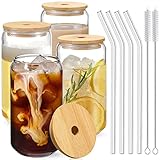
- PRODUCT CONFIGURATION: Drinking glass set includes 4 glass cups [ Diameter - 3 inches, Height - 5.6 inches ],4 nature bamboo lids, 4 reusable glass straws and 2 cleaning brushes, Classic design tumbler
- DURABLE and SAFE: The glasses are made of high-quality durable clear glass, Lead-free and BPA-free. It can be used safely for a long time. This thick clear glass can withstand the sudden changes in the temperature difference between -68°F to 212°F, making them dishwasher safe. If you want to decorate this glass, you can do DIY easily without breakage
- MULTI-PURPOSE: The glassware Great for any Occasion, any hot and cold drinks, home essentials. It is widely loved by families, kitchen, breweries, cafes, bars and restaurants. You can use it to make perfect tea, bubble Pearl Milk Tea, soda, water, iced coffee, smoothie, fruit juice or any other interesting holiday drinks
- AMAZING GIFT: This jar is very fashionable, aesthetic and characteristic. Excellent workmanship. Perfect Gifts for Women, House warming gifts, Tea mug Sets, Highball Glasses, Home Bar Accessories, Birthdays, Graduation, Weddings and Christmas Gifts
- SATISFIED SERVICE: This glass set is packaged in the heavy bubble holder and thick carton box to prevent damage while in transport. If the glass set you received was damaged or imperfect or you are not satisfied, we will offer a satisfactory solution
Method 2: Cold Brew (Steeping in Cold Water)
1. Grind your coffee: Use a very coarse grind, similar to breadcrumbs or coarse sea salt.
- What “good” looks like: The coffee particles are large and distinct.
- Common mistake: Using a grind that’s too fine.
- How to avoid: Fine grounds will over-extract, making your cold brew bitter, and will also create a muddy, hard-to-filter mess.
2. Combine coffee and water: In a jar or cold brew maker, combine your coarse coffee grounds with cold or room-temperature filtered water. A common ratio is 1:8 (e.g., 1 cup of coffee to 8 cups of water).
- What “good” looks like: All coffee grounds are saturated with water.
- Common mistake: Not ensuring all grounds are wet.
- How to avoid: Stir gently to make sure there are no dry pockets of coffee.
3. Steep: Cover the container and let it steep at room temperature or in the refrigerator for 12 to 24 hours. Longer steeping times result in a stronger concentrate.
- What “good” looks like: The coffee and water have had ample time to extract flavors.
- Common mistake: Steeping for too short a time.
- How to avoid: Under-steeping results in weak, underdeveloped coffee. Experiment to find your preferred steep time.
4. Filter the coffee: Carefully strain the coffee concentrate. If using a French press, slowly press the plunger down. If using a jar, strain through a fine-mesh sieve lined with cheesecloth or a coffee filter.
- What “good” looks like: You have a clear, liquid concentrate with minimal sediment.
- Common mistake: Filtering too quickly or using a filter that’s too coarse.
- How to avoid: A slow, thorough filtration process is key to a clean cup. You may need to filter twice for optimal clarity.
5. Dilute and serve: Dilute the cold brew concentrate with water, milk, or ice to your desired strength. A common starting point is a 1:1 ratio of concentrate to water or milk.
- What “good” looks like: The diluted coffee has a balanced flavor and desired strength.
- Common mistake: Not diluting enough.
- How to avoid: Cold brew concentrate is potent. Diluting it makes it palatable and enjoyable. Taste and adjust.
Common mistakes (and what happens if you ignore them)
| Mistake | What it causes | Fix |
|---|---|---|
| Using pre-ground coffee | Stale, flat, or bitter flavor; lack of aroma. | Buy whole beans and grind them just before brewing. |
| Incorrect grind size for the method | Too fine: bitter, over-extracted. Too coarse: weak, sour, under-extracted. | Use a coarse grind for cold brew; medium-fine for Japanese iced coffee. Check your brewer’s recommendation. |
| Not rinsing paper filters | Papery, unpleasant taste in the final coffee. | Rinse paper filters with hot water before adding coffee grounds. |
| Using poor quality water | Off-flavors, dull coffee taste. | Use filtered water for brewing. |
| Inconsistent pouring technique | Uneven extraction, channeling, leading to both bitter and sour notes. | Pour slowly and steadily in controlled circular motions for pour-over methods. |
| Not blooming the coffee (hot brew) | Gassy coffee, uneven extraction, less flavorful brew. | Pour a small amount of hot water to saturate grounds and wait 30 seconds before continuing. |
| Steeping cold brew for too short a time | Weak, watery, underdeveloped coffee flavor. | Increase steeping time (12-24 hours is typical). |
| Filtering cold brew too aggressively | Cloudy, silty coffee with grounds in the cup. | Filter slowly and patiently. Consider a double filter if needed. |
| Not diluting cold brew concentrate | Overpowering, intensely bitter coffee. | Dilute the concentrate with water, milk, or ice to taste. |
| Brewing with dirty equipment | Rancid, stale, bitter flavors that mask the coffee’s natural taste. | Clean your brewer, grinder, and all accessories thoroughly after each use. |
| Using incorrect coffee-to-water ratio | Coffee that is too strong or too weak for your preference. | Start with recommended ratios and adjust based on your taste. |
| Using stale ice for Japanese iced coffee | Diluted coffee with an “off” taste from melted, old ice. | Use fresh, clean ice. |
Decision rules (simple if/then)
- If you want a quick iced coffee and don’t mind using hot water, then choose the Japanese iced coffee method because it brews hot coffee directly over ice for rapid chilling.
- If you prefer a smoother, less acidic, and more concentrated iced coffee, then choose the cold brew method because it extracts flavor without heat over a long period.
- If your coffee tastes weak and sour using the cold brew method, then try grinding your coffee coarser or steeping for a longer period because under-extraction is likely the cause.
- If your Japanese iced coffee tastes bitter, then try grinding your coffee slightly coarser or pouring your hot water more quickly because over-extraction is likely the cause.
- If you have a French press, then you can use it for both hot pour-over style brewing (with modifications for ice) or for cold brewing because its plunging mechanism can filter grounds.
- If you notice sediment in your cold brew, then you should filter it again through a finer material like cheesecloth or a paper filter because the initial filtration was not sufficient.
- If you’re short on time and want iced coffee right away, then the Japanese iced coffee method is your best bet because it takes minutes, whereas cold brew takes hours.
- If you want to make a large batch of iced coffee concentrate to use throughout the week, then cold brew is ideal because it stores well and can be diluted as needed.
- If your coffee tastes like paper, then you likely skipped rinsing your paper filter for the Japanese iced coffee method, so be sure to rinse next time.
- If you want to avoid the potential bitterness associated with hot brewing, then cold brew is a good choice because the cold water extraction process naturally results in lower acidity and bitterness.
- If you find your Japanese iced coffee is too diluted, then use slightly less ice or a slightly higher coffee-to-water ratio for your hot brew next time because the ice is melting and adding water.
FAQ
Can I use any coffee maker to make iced coffee with cold water?
While some methods are more suited to specific brewers, you can adapt. Cold brew can be made in a simple jar with a filter. Japanese iced coffee typically uses pour-over equipment. Standard drip machines are not designed for making iced coffee directly with cold water.
How long does cold brew coffee last?
Cold brew concentrate typically lasts for about 1 to 2 weeks when stored in an airtight container in the refrigerator. Its flavor may degrade over time, so it’s best consumed within that timeframe.
Is Japanese iced coffee the same as cold brew?
No, they are quite different. Japanese iced coffee involves brewing hot coffee directly over ice, resulting in a brighter, more aromatic cup that retains some of the characteristics of hot coffee. Cold brew, on the other hand, steeps grounds in cold water for many hours, producing a smoother, less acidic, and often more concentrated coffee.
Why is my cold brew bitter?
Bitterness in cold brew usually stems from over-extraction. This can be caused by grinding your coffee too finely, steeping for too long, or using water that’s too hot if you’re using a hybrid method. Try a coarser grind or a shorter steep time.
How do I make my Japanese iced coffee stronger?
To make Japanese iced coffee stronger, you can increase the amount of coffee grounds you use, or slightly decrease the amount of ice you brew over. Ensure your hot water temperature is within the optimal range (195-205°F) for good extraction.
Can I use instant coffee to make iced coffee with cold water?
While you can mix instant coffee with cold water, it’s not the same as brewing. Instant coffee is already processed and dried. You won’t achieve the same depth of flavor or complexity as you would with a brewed method.
What is the best coffee bean for cold brew?
Medium to dark roasts are often favored for cold brew because their flavors are more pronounced and can stand up to the long steeping process. However, you can experiment with lighter roasts to see if you enjoy their brighter notes in a cold brew context.
Do I need special equipment for cold brew?
Not necessarily. While dedicated cold brew makers exist, you can make excellent cold brew using a large jar, a fine-mesh sieve, and cheesecloth or a coffee filter for straining.
What this page does NOT cover (and where to go next)
- Specific recommendations for coffee bean origins or roast profiles for iced coffee.
- Detailed guides on using electric iced coffee makers or automatic brewers.
- Advanced techniques such as flash-chilling hot coffee with a specific device.
To learn more, explore resources on coffee bean selection, the science of coffee extraction, and other home brewing methods like espresso or Aeropress.