
Making Iced Coffee Overnight For Easy Mornings
Quick answer
- Yes, you can make iced coffee overnight using a cold brew method.
- This involves steeping coffee grounds in cold water for 12-24 hours.
- The resulting concentrate is less acidic and smoother than hot-brewed coffee.
- You’ll need coarse-ground coffee, cold water, a container, and a filter.
- Adjust the coffee-to-water ratio for your desired strength.
- It’s a simple process that yields delicious, ready-to-drink iced coffee.
Who this is for
- Busy individuals who want a quick and easy way to enjoy iced coffee in the morning.
- Coffee lovers who prefer a less acidic and smoother iced coffee taste.
- Anyone looking to save money by making their own iced coffee at home instead of buying it.
What to check first
- Brewer type and filter type: For overnight iced coffee, you’re typically looking at a cold brew method. This usually involves a large jar or pitcher and a filtering mechanism. Common filters include cheesecloth, fine-mesh strainers, paper filters (like those for pour-over, though these can clog), or specialized cold brew makers with built-in filters. Ensure your chosen method can handle a large volume of coffee and water and effectively separate the grounds.
For overnight iced coffee, you’ll typically need a large glass pitcher or jar to steep your grounds. This ensures you have enough space for both the coffee and water.
No products found.
- Water quality and temperature: Use filtered water for the best taste. Tap water can sometimes introduce unwanted flavors. For cold brew, the “cold” in the name is key. Room temperature water is generally acceptable for the steeping process, but avoid using hot water as it will negate the benefits of cold brewing (like reduced acidity).
- Grind size and coffee freshness: A coarse grind is essential for cold brew. This resembles breadcrumbs or coarse sea salt. A finer grind will result in over-extraction, bitterness, and a muddy concentrate that’s difficult to filter. Freshly roasted and ground coffee will always yield the best flavor. Grind your beans just before you plan to start the brewing process for optimal results.
- Coffee-to-water ratio: This is crucial for achieving your desired strength. A common starting point for cold brew concentrate is a 1:4 ratio of coffee to water by weight or volume. For example, 1 cup of coffee grounds to 4 cups of water. You can adjust this based on your preference. A stronger concentrate (like 1:3) will be more potent and require dilution with water or milk. A weaker ratio (like 1:5 or 1:6) will be closer to ready-to-drink strength.
- Cleanliness/descale status: Any residual coffee oils or mineral buildup can impart off-flavors to your cold brew. Ensure your brewing container, any filters, and storage vessels are thoroughly cleaned and rinsed. If you use a dedicated cold brew maker, check its manual for descaling recommendations if you notice a decline in taste.
Step-by-step (brew workflow)
1. Measure your coffee grounds: Use a coarse grind. For a 32 oz pitcher, you might start with 1 cup of coffee grounds.
- What “good” looks like: The grounds should be visibly coarse, not powdery.
- Common mistake and how to avoid it: Using pre-ground coffee meant for drip machines. This will lead to a bitter, over-extracted brew. Always grind coarse or buy whole beans and grind them yourself just before brewing.
2. Add coffee grounds to your brewing container: Place the coarse grounds into your clean jar, pitcher, or cold brew maker.
- What “good” looks like: The grounds are settled at the bottom of the container.
- Common mistake and how to avoid it: Not having a container large enough for both grounds and water. Ensure your vessel can accommodate the full volume without overflowing.
3. Measure and add cold water: Use filtered water. For 1 cup of coffee grounds, add about 4 cups of cold water.
- What “good” looks like: The water saturates all the coffee grounds evenly.
- Common mistake and how to avoid it: Pouring water too quickly, which can create dry pockets of coffee. Pour the water slowly and in a circular motion to ensure full saturation.
4. Stir gently: Use a long spoon to gently stir the mixture, ensuring all grounds are wet.
- What “good” looks like: The coffee and water are combined into a slurry.
- Common mistake and how to avoid it: Stirring too vigorously. This can break down finer particles and lead to a cloudy, bitter brew. A gentle stir is all that’s needed.
5. Cover the container: Seal the pitcher or jar with a lid or plastic wrap.
- What “good” looks like: The container is airtight or well-covered to prevent contamination.
- Common mistake and how to avoid it: Leaving the container uncovered. This can allow dust, fridge odors, or other contaminants to get into your brew.
6. Refrigerate or steep at room temperature: Place the covered container in the refrigerator or on your counter for 12 to 24 hours.
- What “good” looks like: The coffee is steeping undisturbed.
- Common mistake and how to avoid it: Steeping for too short a time (under 12 hours) or too long (over 24 hours). Under-steeping results in weak coffee; over-steeping can lead to bitterness. Experiment to find your sweet spot.
7. Prepare your filtering setup: Line a fine-mesh sieve with cheesecloth, or set up your cold brew maker’s filter.
- What “good” looks like: The filter is securely in place and ready to catch the grounds.
- Common mistake and how to avoid it: Using a filter that’s too fine for the initial coarse grounds, leading to clogs. Start with a coarser filter if you have one, or be prepared for slower filtering with very fine filters.
8. Slowly strain the concentrate: Pour the steeped coffee mixture through your prepared filter into another clean container or pitcher. You may need to strain it twice for a cleaner result.
- What “good” looks like: A dark, smooth liquid (the concentrate) is collected, with minimal sediment.
- Common mistake and how to avoid it: Pouring too quickly, which can push fine particles through the filter. Patience is key here; let gravity do the work.
9. Discard the grounds: Once filtered, dispose of the wet coffee grounds.
- What “good” looks like: All grounds are removed from the liquid.
- Common mistake and how to avoid it: Not filtering thoroughly enough. Any remaining grounds will continue to steep and can make the coffee bitter.
10. Dilute and serve: The resulting liquid is a concentrate. Mix it with water, milk, or your preferred creamer to taste. A common starting point is a 1:1 ratio of concentrate to water or milk.
- What “good” looks like: A balanced, refreshing iced coffee.
- Common mistake and how to avoid it: Drinking the concentrate straight. It’s very strong and will likely be too intense. Always dilute to your preferred strength.
Once diluted, pour your perfectly brewed cold brew into your favorite iced coffee glasses for a refreshing treat.
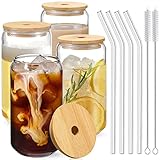
- PRODUCT CONFIGURATION: Drinking glass set includes 4 glass cups [ Diameter - 3 inches, Height - 5.6 inches ],4 nature bamboo lids, 4 reusable glass straws and 2 cleaning brushes, Classic design tumbler
- DURABLE and SAFE: The glasses are made of high-quality durable clear glass, Lead-free and BPA-free. It can be used safely for a long time. This thick clear glass can withstand the sudden changes in the temperature difference between -68°F to 212°F, making them dishwasher safe. If you want to decorate this glass, you can do DIY easily without breakage
- MULTI-PURPOSE: The glassware Great for any Occasion, any hot and cold drinks, home essentials. It is widely loved by families, kitchen, breweries, cafes, bars and restaurants. You can use it to make perfect tea, bubble Pearl Milk Tea, soda, water, iced coffee, smoothie, fruit juice or any other interesting holiday drinks
- AMAZING GIFT: This jar is very fashionable, aesthetic and characteristic. Excellent workmanship. Perfect Gifts for Women, House warming gifts, Tea mug Sets, Highball Glasses, Home Bar Accessories, Birthdays, Graduation, Weddings and Christmas Gifts
- SATISFIED SERVICE: This glass set is packaged in the heavy bubble holder and thick carton box to prevent damage while in transport. If the glass set you received was damaged or imperfect or you are not satisfied, we will offer a satisfactory solution
11. Store the concentrate: Pour the finished cold brew concentrate into an airtight container and store it in the refrigerator.
- What “good” looks like: The concentrate is stored safely and will remain fresh.
- Common mistake and how to avoid it: Leaving the concentrate at room temperature or in a non-airtight container. This can lead to spoilage and a loss of flavor.
Common mistakes (and what happens if you ignore them)
| Mistake | What it causes | Fix |
|---|---|---|
| Using a fine coffee grind | Bitter, muddy, over-extracted coffee that’s hard to filter. | Use a coarse grind, similar to breadcrumbs. |
| Not using filtered water | Off-flavors from tap water can affect the final taste. | Use filtered or bottled water for a cleaner, purer coffee flavor. |
| Not stirring the grounds and water mixture | Uneven saturation, leading to weak spots and potentially bitter extraction. | Gently stir the grounds and water together to ensure all coffee is wet. |
| Leaving the brewing container uncovered | Contamination from fridge odors or airborne particles, affecting taste. | Always cover the container tightly with a lid or plastic wrap. |
| Steeping for less than 12 hours | Weak, watery, underdeveloped coffee flavor. | Steep for at least 12 hours, ideally 18-24 hours, to allow for proper extraction. |
| Steeping for more than 24 hours | Bitter, acrid, and potentially unpleasant flavors from over-extraction. | Limit steeping time to a maximum of 24 hours. Experiment to find your preferred duration. |
| Pouring the concentrate too quickly to filter | Grounds and sediment passing through the filter, resulting in cloudy coffee. | Pour slowly and patiently, allowing gravity to do the work. You may need to strain twice. |
| Not diluting the cold brew concentrate | Extremely strong, intense, and potentially undrinkable coffee. | Always dilute the concentrate with water, milk, or your preferred creamer to your desired strength. |
| Storing the concentrate improperly | Spoilage, loss of flavor, and potential for mold growth. | Store in an airtight container in the refrigerator and consume within 1-2 weeks. |
| Using old or stale coffee beans | Flat, dull, and uninspired flavor profile. | Use freshly roasted beans and grind them just before brewing for the best aroma and taste. |
Decision rules (simple if/then)
- If your iced coffee tastes weak and watery, then increase the amount of coffee grounds you use in your next batch because a lower coffee-to-water ratio results in a less potent brew.
- If your iced coffee tastes bitter and harsh, then try a coarser grind or reduce the steeping time because over-extraction is the primary cause of bitterness.
- If your cold brew concentrate is cloudy and has sediment, then strain it a second time or use a finer filter because insufficient filtering leads to an unpleasant texture and taste.
- If you prefer a less acidic coffee, then use the cold brew method because the slow, cold water extraction process naturally produces a smoother, less acidic beverage.
- If you are in a hurry and cannot wait 12-24 hours, then consider a Japanese-style iced coffee method (brewing hot coffee directly over ice) because it’s a faster way to make iced coffee, though it can result in a different flavor profile.
- If your coffee has an “off” flavor, then check the cleanliness of your brewing equipment and the quality of your water because residual oils or impurities can significantly impact taste.
- If you want a stronger coffee flavor without adding more grounds, then steep for a longer period (closer to 24 hours) because extended steeping allows for more flavor extraction.
- If you want to reduce the acidity of your coffee, then opt for darker roasted beans because darker roasts are generally less acidic than lighter roasts.
- If you find your cold brew is too concentrated, then dilute it with more water or milk because the concentrate is meant to be adjusted to your personal taste.
- If you want to experiment with different flavor profiles, then try adding spices like cinnamon or cardamom to the grounds before steeping because this can infuse subtle flavors into the brew.
FAQ
Can I use any kind of coffee for overnight iced coffee?
Yes, you can use most types of coffee, but the grind size is critical. For overnight cold brew, a coarse grind is essential to prevent over-extraction and bitterness. Freshly roasted beans will yield the best flavor.
How long does homemade overnight iced coffee last?
Stored properly in an airtight container in the refrigerator, cold brew concentrate can last for about 1 to 2 weeks. However, the flavor is best within the first week.
Is overnight iced coffee healthier than regular iced coffee?
Overnight iced coffee (cold brew) is often considered gentler on the stomach because the cold water extraction process results in lower acidity compared to hot-brewed coffee. This can be beneficial for individuals with sensitive digestive systems.
What’s the difference between cold brew and regular iced coffee?
Regular iced coffee is typically made by brewing hot coffee and then chilling it, often with ice. Overnight iced coffee (cold brew) is made by steeping coffee grounds in cold water for an extended period, resulting in a smoother, less acidic concentrate.
Can I make iced coffee overnight without a special cold brew maker?
Absolutely. A simple pitcher or jar, along with a fine-mesh sieve and cheesecloth or a paper filter, is all you need to make delicious overnight iced coffee at home.
How do I adjust the strength of my overnight iced coffee?
You can adjust the strength by altering the coffee-to-water ratio during the initial steep. A higher ratio of coffee to water (e.g., 1:4) will create a stronger concentrate that you can dilute more, while a lower ratio (e.g., 1:6) will result in a weaker brew that needs less dilution.
What this page does NOT cover (and where to go next)
- Detailed comparisons of specific cold brew maker brands and models.
- Advanced techniques for espresso-based iced coffee drinks.
- Recipes for complex coffee-based beverages like affogatos or blended iced coffees.
- Information on the origin and processing of different coffee bean varietals.