
Making Iced Coffee From Brewed Coffee
Quick Answer
- Yes, you can absolutely make delicious iced coffee using your regular brewed coffee.
- The key is to brew it stronger than usual to account for dilution from ice.
- Allow the brewed coffee to cool down before pouring it over ice.
- Use filtered water for the best flavor, as it impacts the final taste.
- Consider brewing a larger batch to have on hand for multiple servings.
- Experiment with different coffee beans and brew methods to find your perfect iced coffee.
Who This Is For
- Anyone who enjoys a refreshing cold coffee drink without needing specialized equipment.
- Home brewers who want to repurpose their daily hot coffee into a chilled beverage.
- Budget-conscious individuals looking for a cost-effective way to enjoy iced coffee.
What to Check First for Great Iced Coffee
Before you brew, a few checks will set you up for success.
Brewer Type and Filter Type
What to check: What coffee maker are you using (drip, pour-over, French press, AeroPress)? What type of filter does it require (paper, metal, cloth)?
Why it matters: Different brew methods and filters yield different flavor profiles and body. A paper filter will remove more oils, resulting in a cleaner cup, while a metal filter allows more oils through, potentially leading to a richer, fuller-bodied coffee. For iced coffee, a cleaner cup can sometimes be preferable as it highlights the coffee’s natural sweetness and acidity without being masked by bitterness.
What “good” looks like: Ensure your chosen brewer is functioning correctly and that you have the appropriate, clean filter for it. For paper filters, make sure they are rinsed with hot water before brewing to remove any papery taste.
Water Quality and Temperature
What to check: Are you using filtered or tap water? What is the ideal brewing temperature for your chosen method?
Why it matters: Water makes up over 98% of your coffee, so its quality significantly impacts the taste. Tap water can contain minerals or chlorine that impart off-flavors. For hot brewing, the ideal temperature range is typically between 195°F and 205°F. Too cool, and you’ll under-extract, leading to a sour taste. Too hot, and you risk scorching the grounds, resulting in bitterness.
What “good” looks like: Use fresh, filtered water. If using a kettle, ensure it heats water to the recommended temperature range for your brewing method. Many kettles have temperature controls, or you can let boiling water sit for about 30-60 seconds before pouring.
Grind Size and Coffee Freshness
What to check: Is your coffee freshly roasted and ground just before brewing? Is the grind size appropriate for your brewing method?
Why it matters: Coffee begins to lose its volatile aromatic compounds shortly after grinding. Grinding right before brewing preserves the freshest, most vibrant flavors. The grind size is crucial for proper extraction. Too fine a grind can lead to over-extraction and bitterness, while too coarse can result in under-extraction and a weak, sour cup. For iced coffee made from brewed coffee, a medium to medium-fine grind is often suitable for drip or pour-over methods.
What “good” looks like: Use whole beans and grind them just before you brew. The grounds should feel somewhat gritty, similar to coarse sand for drip coffee.
Coffee-to-Water Ratio
What to check: Are you measuring your coffee grounds and water accurately?
Why it matters: The ratio of coffee to water directly influences the strength and flavor of your brew. For iced coffee, you’ll want to use a higher coffee-to-water ratio than you would for hot coffee to compensate for the dilution from melting ice. A common starting point for hot coffee is a 1:15 to 1:18 ratio (grams of coffee to grams of water). For iced coffee, consider a ratio closer to 1:10 or 1:12.
What “good” looks like: Use a kitchen scale to measure both your coffee beans and your water for consistent results. For example, if you plan to brew 16 oz of coffee, you might use about 30-40 grams of coffee to 400-480 grams of water.
Cleanliness/Descale Status
What to check: Is your coffee maker and any associated carafes or carafes clean? Have you descaled your machine recently?
Why it matters: Coffee oils and mineral buildup (from hard water) can accumulate in your brewer over time. These residues can impart stale, bitter, or off-flavors to your coffee, even if you use fresh beans and good water. Regular cleaning and descaling ensure that you’re tasting the coffee, not the lingering remnants of old brews.
What “good” looks like: All parts of your coffee maker that come into contact with coffee or water should be free of visible residue. For drip machines, this means cleaning the brew basket and carafe regularly. Descaling should be done according to the manufacturer’s recommendations, typically every 1-3 months depending on water hardness and usage.
Step-by-Step Iced Coffee From Brewed Coffee Workflow
Here’s how to make a fantastic batch of iced coffee using your regular brewing setup.
1. Prepare Your Brewer and Filter:
- What to do: Set up your coffee maker (e.g., drip machine, pour-over cone). If using a paper filter, rinse it thoroughly with hot water.
- What “good” looks like: The brewer is clean, and the filter is properly seated and rinsed.
- Common mistake: Not rinsing paper filters. This can leave a papery taste in your coffee.
- Avoid it: Always run hot water through paper filters before adding coffee grounds.
2. Measure and Grind Your Coffee:
- What to do: Weigh your whole coffee beans. Grind them to a medium to medium-fine consistency, suitable for your brew method.
- What “good” looks like: Uniformly ground coffee that feels like coarse sand.
- Common mistake: Using pre-ground coffee or grinding too fine or too coarse.
- Avoid it: Invest in a burr grinder and grind your beans immediately before brewing.
3. Add Coffee Grounds to Filter:
- What to do: Place the measured coffee grounds into the prepared filter.
- What “good” looks like: An even bed of coffee grounds in the filter.
- Common mistake: Not leveling the coffee bed.
- Avoid it: Gently tap the filter holder or brewer to create an even surface for water flow.
4. Measure Your Brewing Water:
- What to do: Measure your filtered water. Remember, you’ll be brewing it stronger. For a 16 oz serving of iced coffee, you might aim for around 10-12 oz of hot brewed coffee to start, depending on how much ice you use.
- What “good” looks like: The correct amount of fresh, filtered water is measured.
- Common mistake: Using too much water, leading to weak coffee.
- Avoid it: Use a scale or measuring pitcher for accuracy.
5. Heat Your Water:
- What to do: Heat your measured water to the optimal brewing temperature, typically 195°F-205°F.
- What “good” looks like: Water is at the correct temperature, not boiling.
- Common mistake: Using water that is too hot or too cold.
- Avoid it: Use a thermometer or a temperature-controlled kettle. If using a regular kettle, let it rest for 30-60 seconds after boiling.
6. Start the Bloom (if applicable):
- What to do: For pour-over or manual methods, pour just enough hot water (about twice the weight of the grounds) to saturate the coffee. Let it sit for 30 seconds.
- What “good” looks like: The coffee grounds expand and release CO2, creating a bubbly surface.
- Common mistake: Skipping the bloom or pouring too much water.
- Avoid it: Be patient; the bloom allows for more even extraction later.
7. Complete the Brew:
- What to do: Continue pouring the hot water over the grounds in a controlled manner, following your brewer’s instructions. Aim to finish brewing your concentrated coffee in about 3-4 minutes for most methods.
- What “good” looks like: A consistent flow of brewed coffee into your carafe.
- Common mistake: Pouring water too quickly or too unevenly.
- Avoid it: Use a gooseneck kettle for pour-over for better control. For drip machines, ensure the water disperses evenly.
8. Cool the Brewed Coffee:
- What to do: Let the freshly brewed, concentrated coffee cool down for at least 10-15 minutes at room temperature.
- What “good” looks like: The coffee is no longer steaming hot.
- Common mistake: Pouring hot coffee directly over ice.
- Avoid it: This melts the ice too quickly, diluting your coffee excessively and potentially cracking your glass.
9. Prepare Your Serving Glass:
- What to do: Fill a tall glass generously with ice cubes.
- What “good” looks like: The glass is packed with ice.
- Common mistake: Not using enough ice.
- Avoid it: Ample ice is crucial for keeping your iced coffee cold without over-diluting it.
To best enjoy your homemade iced coffee, consider using tall, sturdy iced coffee glasses like these to keep your drink perfectly chilled without over-diluting it.
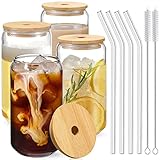
- PRODUCT CONFIGURATION: Drinking glass set includes 4 glass cups [ Diameter - 3 inches, Height - 5.6 inches ],4 nature bamboo lids, 4 reusable glass straws and 2 cleaning brushes, Classic design tumbler
- DURABLE and SAFE: The glasses are made of high-quality durable clear glass, Lead-free and BPA-free. It can be used safely for a long time. This thick clear glass can withstand the sudden changes in the temperature difference between -68°F to 212°F, making them dishwasher safe. If you want to decorate this glass, you can do DIY easily without breakage
- MULTI-PURPOSE: The glassware Great for any Occasion, any hot and cold drinks, home essentials. It is widely loved by families, kitchen, breweries, cafes, bars and restaurants. You can use it to make perfect tea, bubble Pearl Milk Tea, soda, water, iced coffee, smoothie, fruit juice or any other interesting holiday drinks
- AMAZING GIFT: This jar is very fashionable, aesthetic and characteristic. Excellent workmanship. Perfect Gifts for Women, House warming gifts, Tea mug Sets, Highball Glasses, Home Bar Accessories, Birthdays, Graduation, Weddings and Christmas Gifts
- SATISFIED SERVICE: This glass set is packaged in the heavy bubble holder and thick carton box to prevent damage while in transport. If the glass set you received was damaged or imperfect or you are not satisfied, we will offer a satisfactory solution
10. Pour and Serve:
- What to do: Pour the cooled, concentrated brewed coffee over the ice in the glass.
- What “good” looks like: The coffee is chilled and ready to drink.
- Common mistake: Pouring too fast, causing splashing.
- Avoid it: Pour gently to avoid spills.
11. Optional: Add Sweetener and Creamer:
- What to do: Stir in your preferred sweetener (sugar, syrup) and creamer (milk, half-and-half, non-dairy alternative) if desired.
- What “good” looks like: Your iced coffee is customized to your taste.
- Common mistake: Adding these before the coffee is cooled, which can affect how they incorporate.
- Avoid it: Wait until the coffee has cooled to room temperature or is over ice for best results.
Common Mistakes (and What Happens If You Ignore Them)
| Mistake | What it Causes | Fix |
|---|---|---|
| Brewing hot coffee directly over ice | Over-dilution, weak flavor, melted ice quickly. | Cool brewed coffee to room temperature before pouring over ice. |
| Using a standard coffee-to-water ratio | Weak, watery iced coffee. | Increase coffee grounds or decrease water for a concentrated brew. |
| Not grinding coffee fresh | Stale, flat flavor, loss of aroma. | Grind whole beans immediately before brewing. |
| Using pre-ground coffee | Loss of volatile oils and aromas, leading to a less vibrant taste. | Grind your beans just before you brew for maximum freshness. |
| Using tap water with off-flavors | Unpleasant taste in the final iced coffee, masking the coffee’s natural notes. | Use filtered or bottled water for a cleaner, purer coffee flavor. |
| Brewing with water that’s too cool | Under-extraction, sour, weak, and underdeveloped flavor. | Ensure brewing water is between 195°F and 205°F. |
| Brewing with water that’s too hot | Over-extraction, bitter, burnt, or harsh flavor. | Let boiling water sit for 30-60 seconds to reach the optimal brewing temperature. |
| Not cleaning the coffee maker regularly | Rancid oils and mineral buildup leading to bitter, stale coffee. | Clean your brewer and carafe after each use and descale periodically. |
| Using too fine a grind for drip/pour-over | Clogged filter, slow drip, over-extraction, and bitter taste. | Use a medium to medium-fine grind for most drip and pour-over methods. |
| Using too coarse a grind for drip/pour-over | Under-extraction, weak, sour, and watery coffee. | Adjust your grinder to a finer setting for better extraction. |
| Pouring hot coffee directly into a cold glass | Thermal shock, potentially cracking the glass. | Allow brewed coffee to cool to room temperature before pouring over ice, or use tempered glass. |
Decision Rules for Making Iced Coffee From Brewed Coffee
- If your iced coffee tastes weak and watery, then you likely used too much water or not enough coffee. Because you need a concentrated brew to stand up to the ice.
- If your iced coffee tastes bitter, then your coffee might have been over-extracted, or you used stale beans. Because over-extraction and stale coffee both contribute to bitterness.
- If your iced coffee tastes sour, then it’s likely under-extracted, possibly due to too coarse a grind or water that wasn’t hot enough. Because under-extraction leads to sourness.
- If your iced coffee has a papery taste, then you probably didn’t rinse your paper filter. Because rinsing removes the papery residue.
- If you’re making iced coffee for multiple people, then brew a larger, concentrated batch at once. Because it’s more efficient than brewing single servings repeatedly.
- If you want to speed up the cooling process without diluting, then consider using a coffee “chiller” or chilling your brewed coffee in the refrigerator beforehand. Because this lowers the temperature before it hits the ice.
- If you prefer a very cold drink immediately, then brew your coffee directly over ice (Japanese-style iced coffee). Because this method flash-chills the coffee as it brews, minimizing dilution.
- If you notice off-flavors that aren’t related to the beans, then check your water quality. Because poor water quality is a common culprit for bad coffee taste.
- If you want a cleaner, brighter iced coffee, then use a paper filter. Because paper filters remove more oils and sediment.
- If you prefer a richer, fuller-bodied iced coffee, then consider a metal filter or French press. Because these allow more of the coffee’s natural oils to pass through.
FAQ
Q: Can I just pour hot coffee over ice and drink it?
A: You can, but it will result in a very diluted and often lukewarm drink. It’s best to cool the coffee first or brew it stronger.
Q: How much stronger should I brew my coffee for iced coffee?
A: Aim for a ratio that uses about 1.5 to 2 times the amount of coffee you would normally use for the same volume of water. For example, if you use 2 tablespoons of coffee for 6 oz of hot water, try 3-4 tablespoons for 6 oz of water for iced coffee.
Q: What kind of ice is best for iced coffee?
A: Large, solid ice cubes melt slower than smaller, hollow ones, leading to less dilution. Coffee ice cubes (made from frozen coffee) are another great option to avoid diluting your drink.
Q: Can I use leftover hot coffee from yesterday?
A: While possible, yesterday’s coffee will have lost much of its freshness and flavor. It’s best to brew fresh coffee, even if you plan to chill it for iced coffee.
Q: Does the type of coffee bean matter for iced coffee?
A: Absolutely. Medium to dark roasts often lend themselves well to iced coffee, offering richer, chocolatey, or nutty notes. However, lighter roasts can also be refreshing, highlighting brighter, fruitier flavors.
Q: What’s the difference between cold brew and iced coffee made from hot brew?
A: Cold brew is steeped in cold water for 12-24 hours, resulting in a very smooth, low-acid concentrate. Iced coffee made from hot brew is simply hot coffee that has been chilled, retaining more of the acidity and bright notes of the original brew.
Q: How long does brewed coffee last in the refrigerator?
A: For best quality, it’s recommended to consume brewed coffee within 24-48 hours. After that, it can start to taste stale.
Q: Can I make instant coffee into iced coffee?
A: Yes, you can dissolve instant coffee in a small amount of hot water to make a concentrate, then cool it and pour it over ice. However, the flavor profile will be different from that of freshly brewed coffee.
What This Page Does Not Cover (and Where to Go Next)
- Detailed comparisons of specific coffee maker models for brewing hot coffee.
- Recipes for flavored syrups or homemade creamers.
- Advanced techniques like Japanese-style flash brewing (brewing hot coffee directly over ice).
- The science behind coffee extraction and the specific chemical compounds involved.
- Troubleshooting for complex espresso machine issues.
If you’re looking to dive deeper, consider exploring resources on:
- Home espresso machine maintenance.
- Specialty coffee brewing methods.
- Understanding coffee bean origins and roast profiles.
- Creating custom coffee blends.