
Making Espresso With Your Coffee Maker
Quick answer
- Espresso machines force hot water through finely ground coffee under pressure.
- Not all “coffee makers” can make true espresso.
- Look for machines with “espresso” in the name and a portafilter.
- Use fresh, finely ground coffee.
- Dial in your grind size for proper extraction.
- Cleanliness is key for good shots.
Who this is for
- You’ve got a machine that says “espresso” on it and want to use it.
- You’re curious about making espresso at home without a massive investment.
- You’re ready to move beyond drip coffee and explore a richer brew.
What to check first
Brewer type and filter type
First off, is it actually an espresso machine? Most drip coffee makers aren’t built for the pressure needed. You’re looking for a machine with a portafilter – that’s the handle thing you put the coffee grounds in. If yours is a simple pod machine or a drip brewer, you’re probably out of luck for true espresso. Check the manual if you’re not sure.
Water quality and temperature
Good water makes good coffee. Use filtered water if your tap water tastes funky. Tap water with too many minerals can mess with your machine and your brew. For espresso, water temp is usually around 195-205°F. Most machines handle this automatically, but it’s good to know.
Grind size and coffee freshness
This is huge for espresso. You need a fine grind, like powdered sugar or a bit coarser. If it’s too coarse, water rushes through, and you get weak, sour shots. Too fine, and it clogs, leading to bitter, burnt-tasting coffee. Always use freshly roasted beans – ideally within a few weeks of the roast date. Grind right before you brew.
For the best results, always use freshly roasted espresso beans, ideally within a few weeks of the roast date. Grinding them right before you brew is key to unlocking their full flavor potential.
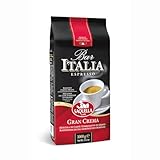
- AUTHENTIC ITALIAN ESPRESSO EXPERIENCE: From Saquella Caffè, family coffee roasters in Italy since 1856 — blending heritage, passion, and quality in every bean.
- FULL-BODIED & CREAMY FLAVOR: A signature Arabica and Robusta blend that delivers a bold espresso with a thick, velvety crema and lingering chocolate notes.
- MEDIUM-DARK ROAST: Carefully roasted for a rich aroma and balanced taste — smooth yet intense, ideal for espresso, cappuccino, or macchiato.
- CONSISTENT QUALITY: Beans are slow-roasted and expertly blended to ensure uniform extraction and a true Italian café-style experience at home.
- MADE IN ITALY: Imported directly from Italy — Saquella Bar Italia Gran Crema is the choice of professional baristas and espresso lovers worldwide.
Coffee-to-water ratio
For espresso, a common starting point is a 1:2 ratio. This means for every gram of dry coffee grounds, you want about two grams (or milliliters) of liquid espresso. So, if you use 18 grams of coffee, aim for about 36 grams of espresso. This is a guideline; you’ll adjust based on taste.
Cleanliness/descale status
Gunk builds up. Old coffee oils turn rancid and will ruin your espresso. Run a cleaning cycle regularly. Descale your machine according to the manufacturer’s instructions. A clean machine makes clean-tasting coffee. Seriously, don’t skip this.
Step-by-step (brew workflow)
1. Grind your coffee.
- What “good” looks like: A fine, consistent powder. It should feel slightly gritty but not coarse like sand.
- Common mistake: Using pre-ground coffee or a blade grinder. This leads to uneven particle sizes and poor extraction. Use a burr grinder and grind just before brewing.
2. Dose the portafilter.
- What “good” looks like: The correct amount of coffee grounds for your basket size (e.g., 18 grams for a double shot).
- Common mistake: Under- or over-filling the portafilter. Too little coffee leads to weak espresso; too much can prevent proper sealing and extraction.
3. Distribute the grounds.
- What “good” looks like: Evenly spread grounds with no clumps. You can tap the portafilter gently or use a distribution tool.
- Common mistake: Leaving pockets of dense grounds. This causes channeling, where water finds easy paths, leading to uneven extraction.
4. Tamp the coffee.
- What “good” looks like: A firm, level tamp. Aim for consistent pressure, about 30 lbs of force.
- Common mistake: Uneven or weak tamping. This also causes channeling. A level tamp is crucial.
5. Clean the portafilter rim.
- What “good” looks like: A clean rim free of loose grounds.
- Common mistake: Leaving grounds on the rim. This can create a poor seal with the group head, leading to leaks and messy shots.
6. Flush the group head.
- What “good” looks like: A brief stream of hot water from the group head.
- Common mistake: Not flushing. This can lead to burnt grounds in your shot and thermal shock to the coffee.
7. Lock in the portafilter.
- What “good” looks like: A secure fit.
- Common mistake: Not locking it in completely. This can cause a dangerous blowout.
8. Start the brew.
- What “good” looks like: A steady stream of espresso flowing from the spouts. It should start dark and then lighten to a caramel color.
- Common mistake: Starting too fast or too slow. This is where grind size and tamping really matter.
9. Monitor the shot.
- What “good” looks like: The shot should take around 25-30 seconds to yield the desired volume.
- Common mistake: Letting the shot run too long. This results in bitter, over-extracted coffee. Stop when it starts to look watery and blonde.
10. Stop the brew.
- What “good” looks like: The machine stops, and you have your espresso.
- Common mistake: Forgetting to stop the machine. This leads to over-extraction and wasted coffee.
11. Remove and clean the portafilter.
- What “good” looks like: A “puck” of used grounds that comes out relatively clean.
- Common mistake: Leaving the used puck in the machine. This can lead to a mess and stale coffee oils.
Common mistakes (and what happens if you ignore them)
| Mistake | What it causes | Fix |
|---|---|---|
| Using pre-ground coffee | Inconsistent extraction, weak or bitter shots | Grind fresh beans just before brewing with a burr grinder. |
| Incorrect grind size (too coarse) | Water flows too fast, leading to sour, weak coffee | Adjust grinder finer until you achieve a 25-30 second extraction. |
| Incorrect grind size (too fine) | Water flows too slow or clogs, leading to bitter, burnt coffee | Adjust grinder coarser. |
| Uneven distribution of grounds | Channeling, leading to uneven extraction | Distribute grounds evenly in the portafilter before tamping. |
| Inconsistent or weak tamping | Channeling, leading to uneven extraction | Tamp firmly and evenly, ensuring a level surface. |
| Dirty machine/portafilter | Rancid flavors, stale coffee | Clean your machine and portafilter regularly. Descale as needed. |
| Using old, stale beans | Flat, dull flavor, lack of crema | Use beans roasted within the last 1-4 weeks and store them properly. |
| Over-extraction (shot runs too long) | Bitter, burnt, harsh taste | Stop the shot when it starts to look watery and blonde. Adjust grind. |
| Under-extraction (shot runs too short) | Sour, thin, weak taste | Adjust grind finer. Ensure proper tamping and distribution. |
| Incorrect coffee-to-water ratio | Imbalanced flavor (too strong or too weak) | Weigh your coffee and espresso yield for consistency. |
Decision rules (simple if/then)
- If your espresso tastes sour, then grind finer because the water is flowing too fast.
- If your espresso tastes bitter, then grind coarser because the water is flowing too slow.
- If your espresso shot runs in under 20 seconds, then grind finer because it’s too fast.
- If your espresso shot runs in over 35 seconds, then grind coarser because it’s too slow.
- If you see spurts of water from the portafilter, then check your distribution and tamping because you likely have channeling.
- If your machine is making weird noises, then check the water level or look for blockages because something might be wrong.
- If your espresso lacks crema, then check the freshness of your beans or your grind size because they might be off.
- If your espresso tastes weak and watery, then check your coffee dose and grind size because you might be under-extracting.
- If your espresso tastes too strong and concentrated, then check your coffee dose or the yield amount because you might be over-extracting for the volume.
- If your coffee tastes like old coffee grounds, then it’s time to clean your machine because oils build up.
- If you’re getting inconsistent results, then start weighing your coffee and espresso yield because consistency is key.
FAQ
Can any coffee maker make espresso?
Generally, no. True espresso requires high pressure, which most standard drip coffee makers can’t produce. You need a machine specifically designed for espresso, usually with a portafilter.
What’s the difference between espresso and regular coffee?
Espresso is brewed under high pressure with finely ground coffee, resulting in a concentrated shot with a rich crema. Regular coffee is brewed by letting hot water drip through coarser grounds, creating a larger, less concentrated beverage.
How do I get good crema on my espresso?
Good crema comes from fresh, properly roasted beans, a fine and consistent grind, and optimal pressure during brewing. If your beans are old or your grind is off, you won’t get much crema.
Is it worth buying a dedicated espresso machine?
If you love espresso drinks like lattes and cappuccinos, a dedicated machine can be very rewarding. However, entry-level machines can be affordable, while high-end ones are a significant investment.
What kind of coffee beans should I use for espresso?
Medium to dark roasts are common for espresso, but it’s really about preference. What matters most is that the beans are fresh and roasted for espresso.
How much coffee do I use for a single shot?
A common starting point for a single shot is around 7-10 grams of coffee, but this can vary by machine and basket size. Always check your machine’s recommendations.
My espresso tastes bitter. What did I do wrong?
Bitterness usually means over-extraction. This can be caused by grinding too fine, tamping too hard, or letting the shot run for too long. Try adjusting your grind coarser or stopping the shot sooner.
My espresso tastes sour. What did I do wrong?
Sourness often indicates under-extraction. This happens when the water flows too quickly through the coffee. Try grinding finer, tamping more firmly, or ensuring your coffee-to-water ratio is correct.
What this page does NOT cover (and where to go next)
- Detailed troubleshooting for specific machine error codes. (Check your manual for brand-specific fixes.)
- Advanced espresso techniques like latte art. (Look for milk steaming guides.)
- Commercial espresso machine operation. (These have their own complexities.)
- The science of coffee roasting and bean varietals. (Explore coffee sourcing and roasting resources.)