
Making Cold Brew Coffee With Instant Coffee Grounds
Quick answer
- Yes, you can make cold brew coffee using instant coffee grounds.
- It’s a significantly faster method than traditional cold brew.
- The flavor profile will differ from traditional cold brew, often being less nuanced.
- You’ll need less equipment and time.
- Adjust the instant coffee to water ratio to achieve your desired strength.
- Ensure the instant coffee fully dissolves for a smooth texture.
Who this is for
- Busy individuals who want a quick cold coffee fix.
- Those new to making cold coffee beverages at home.
- Anyone curious about alternative methods for cold coffee without traditional brewing equipment.
What to check first
Brewer type and filter type
For this method, traditional brewers and filters are not the primary concern. You’ll primarily be mixing ingredients directly. However, if you decide to strain your final mixture for an extra-smooth texture, a fine-mesh sieve or a cheesecloth can be useful.
Water quality and temperature
While cold brew traditionally uses cold, filtered water, for this instant coffee method, room temperature or even slightly cool water works well. The key is that the water helps dissolve the instant coffee. Using filtered water will always contribute to a cleaner taste, regardless of temperature.
Grind size and coffee freshness
With instant coffee, the concept of “grind size” is irrelevant as the coffee is already dissolved. The “freshness” of instant coffee is also less of a factor than with whole beans, though very old instant coffee might lose some of its aroma and flavor intensity.
Coffee-to-water ratio
This is crucial for achieving your desired strength. A common starting point for iced coffee is around 1 to 2 tablespoons of instant coffee per 6-8 ounces of water. You can adjust this significantly based on your preference for a stronger or weaker brew.
Cleanliness/descale status
Even though you’re not using a traditional brewer, it’s important to use clean containers and utensils. Any residue or lingering flavors from previous beverages can affect the taste of your instant cold coffee.
Step-by-step (brew workflow)
1. Gather your ingredients: You’ll need instant coffee grounds, cold or room temperature water, and a glass or container. Optional additions include sweetener and milk or creamer.
- What “good” looks like: You have all necessary components readily available.
- Common mistake: Forgetting to have your ice ready if you want it immediately chilled.
- How to avoid it: Prepare your ice beforehand or have it readily accessible.
For this quick cold brew, you’ll need good quality instant coffee grounds. We recommend this popular option for its smooth flavor.
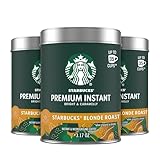
- PREMIUM INSTANT COFFEE: Enjoy the Starbucks coffee you love at home with 3 tins of Starbucks Blonde Roast Premium Instant Coffee—scoop your way up to 105 cups of oh so delicious instant coffee
- DELICATE: Starbucks Blonde Roast Premium Instant Coffee is a delicate coffee—approachable and light-bodied with bright flavor, featuring delicious caramel notes
- EASY TO PREPARE: It’s easy to make a smooth and delicious cup of instant hot or iced coffee—simply add instant coffee, pour water, stir and enjoy premium-tasting instant coffee at home
- CRAFT IT YOUR WAY: Starbucks Premium Instant Coffee lets you adjust how much coffee you add, so you can instantly stir up a cup, just the way you love it
- HOT OR ICED COFFEE: Enjoy your coffee your way—brew it hot or over ice for a refreshing pick-me-up. Add your favorite coffee creamer for a personalized touch, or enjoy balanced, black coffee for a satisfying sip any time of day
2. Measure your instant coffee: Start with your desired amount. For example, 2 tablespoons of instant coffee for a strong brew.
- What “good” looks like: The correct amount of coffee is measured out.
- Common mistake: Eyeballing the amount, leading to an inconsistent or overly strong/weak brew.
- How to avoid it: Use measuring spoons for accuracy.
To avoid an inconsistent brew, using a set of measuring spoons is key. This ensures you get the perfect coffee-to-water ratio every time.

- Treat Yourself To A Set Worth Having - With single metal construction and heavy duty premium Stainless Steel, these measuring spoons were built with endurance in mind. No more worrying about rusting or bending. Get this set that looks beautiful, performs incredibly and will seemingly last forever.
- Magnetic For Easy Use And Storage - These magnetic spoons let you use one spoon at a time and then they nest together for easy storage. Quickly grab the spoon you need without having to fumble with opening and closing a ring. They even have U.S. and metric measurement markings that are easy to read and won't fade or rub off. You'll wonder how you ever lived without them.
- Save Time And Hassle With Your New Favorite Tool - Dual sided: The oval end is narrow to fit into most spice jars. You won't need to shake spices onto the spoon so you will save more and waste less of your expensive spices. The round end is perfect for liquids. The spoons also lay flat on the counter without spilling their contents. Save precious time too since they are dishwasher safe.
- Complete, Accurate Set To Help You Get Healthy, Measure Medicine And More - Precise quantity of ingredients is what you need to get great results with cooking and baking. It's even easier now with the included Leveler that helps you measure the exact amount required the first time.
- You can also make tasty recipes to help you lose weight with these amazing spoons. 7 spoons in Convenient Sizes: 1/8 tsp, 1/4 tsp, 1/2 tsp, 3/4 tsp, 1 tsp, 1/2 Tbsp, 1 Tbsp plus Leveler.
3. Measure your water: Pour the corresponding amount of cold or room temperature water into your glass or container. For 2 tablespoons of coffee, you might start with 6-8 ounces of water.
- What “good” looks like: The water is measured and ready to be combined with the coffee.
- Common mistake: Adding water to the coffee grounds directly, which can cause clumping.
- How to avoid it: Pour the water into the container first, then add the coffee.
4. Combine coffee and water: Add the measured instant coffee grounds to the water.
- What “good” looks like: The coffee grounds are in the water, ready to dissolve.
- Common mistake: Not adding the coffee to the water, or vice versa, in the correct order.
- How to avoid it: Follow the step of adding coffee to water.
5. Stir vigorously: Stir the mixture thoroughly with a spoon or whisk until all the instant coffee grounds are completely dissolved.
- What “good” looks like: No visible clumps of instant coffee remain, and the liquid is uniform.
- Common mistake: Incomplete stirring, leaving undissolved coffee at the bottom.
- How to avoid it: Stir for at least 30-60 seconds, ensuring you scrape the bottom and sides of the container.
6. Taste and adjust (optional): If you prefer, taste the mixture and add more instant coffee for strength or a touch of sweetener if desired.
- What “good” looks like: The flavor is to your liking before chilling or adding other ingredients.
- Common mistake: Adding sweetener too early before tasting the base coffee strength.
- How to avoid it: Taste the coffee concentrate first, then adjust sweetness.
7. Add ice: Fill a separate serving glass with ice cubes.
- What “good” looks like: A glass full of ice is ready to receive your coffee mixture.
- Common mistake: Not using enough ice, leading to a diluted drink as it melts.
- How to avoid it: Use a generous amount of ice.
8. Pour over ice: Pour the dissolved instant coffee mixture over the ice in your serving glass.
- What “good” looks like: The coffee mixture is poured over ice, ready for dilution and additions.
- Common mistake: Pouring the mixture too quickly, potentially splashing.
- How to avoid it: Pour slowly and steadily.
9. Add milk or creamer (optional): Pour in your preferred amount of milk, cream, or dairy-free alternative.
- What “good” looks like: Your desired amount of creamy addition is mixed into the coffee.
- Common mistake: Adding too much milk, which can overpower the coffee flavor.
- How to avoid it: Start with a small amount and add more as needed.
10. Stir and serve: Stir everything together gently and enjoy your instant cold coffee.
- What “good” looks like: All ingredients are well combined, and the drink is ready to be consumed.
- Common mistake: Not stirring enough, leaving layers of coffee and milk.
- How to avoid it: Stir gently until the color is uniform.
Common mistakes (and what happens if you ignore them)
| Mistake | What it causes | Fix |
|---|---|---|
| Not stirring enough | Undissolved coffee grounds at the bottom, gritty texture, uneven flavor. | Stir vigorously for at least 30-60 seconds until no clumps remain. |
| Using too little instant coffee | A weak, watery “coffee-flavored water” instead of a satisfying cold brew. | Increase the amount of instant coffee per ounce of water, starting with 1-2 tbsp per 6-8 oz. |
| Using too much instant coffee | An overly bitter, harsh, and potentially undrinkable coffee concentrate. | Reduce the amount of instant coffee. It’s easier to add more than to fix an over-extracted brew. |
| Using hot water to dissolve | Can sometimes lead to a slightly more bitter taste compared to cool water. | Use cold or room temperature water for the smoothest flavor profile. |
| Not tasting and adjusting the concentrate | The final drink might be too weak, too strong, or not sweet enough. | Taste the coffee and water mixture before adding ice and milk to adjust strength and sweetness. |
| Adding milk before dissolving coffee | Can cause the instant coffee to clump and not dissolve properly. | Ensure the instant coffee is fully dissolved in water before adding any milk or creamer. |
| Using stale or poor-quality instant coffee | A dull, flat, or off-flavor that detracts from the beverage. | Use fresh, good-quality instant coffee. While less critical than beans, it still impacts taste. |
| Not using enough ice | The drink becomes diluted too quickly as the ice melts. | Fill your serving glass generously with ice cubes. |
| Over-sweetening the concentrate | The final drink will be cloyingly sweet and difficult to balance. | Add sweetener incrementally after tasting the coffee concentrate. |
Decision rules (simple if/then)
- If you want a quick morning coffee, then use instant coffee and water because it bypasses brewing time.
- If you have clumps of undissolved coffee, then stir longer because vigorous stirring is needed for full dissolution.
- If your drink tastes weak, then add more instant coffee to the concentrate because you need a higher coffee-to-water ratio.
- If your drink tastes bitter, then use less instant coffee next time because too much coffee can lead to bitterness.
- If you prefer a smoother texture, then strain the dissolved mixture through a fine-mesh sieve because this removes any micro-clumps.
- If you’re short on time, then instant coffee is your best bet because it requires minimal preparation.
- If you want a less nuanced flavor profile than traditional cold brew, then using instant coffee is acceptable because its flavor is inherently different.
- If you notice an off-flavor, then check the freshness of your instant coffee because older coffee can lose its quality.
- If you want to control the sweetness, then add sweetener after dissolving the coffee and before adding milk because this allows for precise adjustment.
- If you’re making a large batch, then ensure you stir very thoroughly to evenly distribute the instant coffee.
- If you want to chill the concentrate quickly, then add it to a glass with ice and stir until chilled, but be mindful of dilution.
FAQ
Can I use any type of instant coffee?
Yes, you can use any brand or type of instant coffee (e.g., regular, decaf, dark roast, blonde roast). The flavor will vary depending on the type of instant coffee you choose.
How much instant coffee should I use?
A good starting point is 1 to 2 tablespoons of instant coffee for every 6 to 8 ounces of water. Adjust this ratio based on how strong you like your coffee.
Will this taste exactly like traditional cold brew?
No, the flavor profile will be different. Traditional cold brew is known for its smooth, low-acidity taste derived from a long steeping process with coffee grounds. Instant coffee creates a different flavor, often less complex but still refreshing.
Do I need special equipment?
No, you don’t need specialized cold brew equipment. A glass or jar, a spoon for stirring, and a serving glass with ice are usually sufficient.
Can I make a concentrate that I can store?
Yes, you can make a stronger concentrate by using more instant coffee and less water. Store this concentrate in an airtight container in the refrigerator for a few days. Dilute it with water and ice when ready to serve.
What if my instant coffee doesn’t dissolve completely?
Ensure you are stirring vigorously and for long enough. If clumps persist, you can try using slightly warmer (not hot) water, or strain the mixture through a fine-mesh sieve.
Can I add sweeteners or flavorings?
Absolutely. You can add sugar, syrup, or other sweeteners to the mixture. Vanilla extract, cinnamon, or cocoa powder can also be added for extra flavor.
Is this method healthier than regular iced coffee?
It depends on what you add. The base coffee itself is similar to brewed coffee. Adding excessive sugar, cream, or flavored syrups can make it less healthy, just like with any coffee drink.
What this page does NOT cover (and where to go next)
- Detailed comparisons of different instant coffee brands for cold brew applications. (Next: Explore reviews and taste tests of various instant coffees.)
- Advanced techniques for creating layered cold coffee drinks. (Next: Look into recipes for coffee mocktails and layered beverages.)
- The science behind the chemical compounds in coffee that create flavor during brewing. (Next: Research coffee chemistry and extraction principles.)
- Specific recommendations for espresso-based cold drinks like iced lattes or cappuccinos made with instant coffee. (Next: Investigate methods for making espresso-like coffee at home without a machine.)