
Making Coffee Without Hot Water: Cold Brew Guide
Quick answer
- Cold brew coffee uses time, not heat, to extract flavor.
- You’ll need coarse-ground coffee and cold, filtered water.
- Steep for 12-24 hours at room temperature or in the fridge.
- Strain it well for a smooth, less acidic drink.
- Dilute the concentrate with water or milk to taste.
- It’s a patient game, but worth the wait.
Who this is for
- Anyone who finds hot coffee too acidic or bitter.
- Campers or folks without immediate access to boiling water.
- Those who like to prep ahead and have coffee ready to go.
What to check first
Brewer type and filter type
You can use almost anything to steep. A French press, a large mason jar, even a pitcher. The key is having a way to separate the grounds from the liquid later. Fine mesh strainers, cheesecloth, or dedicated cold brew filters work. A paper filter can also work, but it might clog.
A simple mason jar with a lid is a fantastic and affordable option for steeping your cold brew. You can easily find a suitable mason jar with lid to get started.
No products found.
Water quality and temperature
Use cold, filtered water. Tap water can have off-flavors that will show up in your cold brew. Think about what you’d drink straight – that’s the water you want. The temperature should just be cold, straight from the tap or fridge. No need to overthink this one.
Grind size and coffee freshness
Go coarse. We’re talking breadcrumb or sea salt texture. Too fine, and you’ll get sludge and over-extraction. Freshly roasted beans are best, but for cold brew, coffee that’s a few weeks past roast date is usually fine. Grind it right before you brew if you can.
For cold brew, a coarse grind is essential. You can find excellent coarse ground coffee options online, perfect for achieving that breadcrumb or sea salt texture.
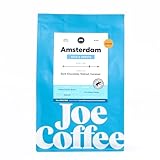
- Rich, sweet, and comforting, Amsterdam is the perfect drip coffee option for those who seek a deeper roast profile.
- We select the components for this coffee for their ability to stand up to a more developed roast, without ever tasting over-roasted or smoky. Instead, we pull out classic notes of chocolate, nut, and toffee.
- One 12 ounce bag
Coffee-to-water ratio
This is where you dial it in. A good starting point is 1:4 to 1:8 by weight. That means 1 part coffee to 4 to 8 parts water. For example, 4 oz of coffee to 32 oz of water (1:8 ratio). You’re making a concentrate, so it’ll be strong.
Cleanliness/descale status
Make sure your brewing vessel and any straining equipment are clean. Old coffee oils can go rancid and ruin your batch. If you use a machine that requires descaling, do that. While cold brew doesn’t involve heating elements, general cleanliness prevents funky flavors.
Step-by-step (brew workflow)
1. Measure your coffee.
- What to do: Weigh out your coarse-ground coffee. A common starting point is a 1:8 ratio (e.g., 4 oz coffee to 32 oz water).
- What “good” looks like: Evenly distributed grounds, ready for water.
- Common mistake: Using too fine a grind. Avoid this by ensuring your grinder is set to its coarsest setting.
2. Add coffee to your brewer.
- What to do: Place the grounds into your chosen vessel – a jar, pitcher, or French press.
- What “good” looks like: All the coffee grounds are in the container.
- Common mistake: Not getting all the grounds in. A little extra coffee is better than leaving some behind.
3. Add cold, filtered water.
- What to do: Slowly pour your cold, filtered water over the coffee grounds. Ensure all grounds are saturated.
- What “good” looks like: The grounds are uniformly wet, no dry pockets.
- Common mistake: Pouring too fast, which can create dry clumps. A gentle, slow pour is key.
4. Stir gently.
- What to do: Use a long spoon to gently stir the mixture. Just enough to make sure all the coffee is interacting with the water.
- What “good” looks like: A consistent slurry of coffee and water.
- Common mistake: Over-stirring, which can break up the grounds and lead to bitterness.
5. Cover and steep.
- What to do: Cover your brewer tightly. Let it sit at room temperature or in the refrigerator for 12-24 hours. Longer steeping means stronger flavor.
- What “good” looks like: The vessel is sealed, and the coffee is undisturbed.
- Common mistake: Leaving it uncovered, which can let in fridge odors or dust.
6. Prepare for straining.
- What to do: Set up your straining setup. If using a French press, you’re almost there. For a jar, line a fine-mesh sieve with cheesecloth or a coffee filter.
- What “good” looks like: Your straining station is ready to go, no leaks.
- Common mistake: Not having enough layers of filtration if using cheesecloth, leading to sediment.
7. Strain the coffee concentrate.
- What to do: Slowly pour the steeped coffee through your strainer into a clean container. Do this in batches if necessary.
- What “good” looks like: Clear or mostly clear liquid is flowing into the new container.
- Common mistake: Rushing the pour, which can push grounds through the filter. Patience is your friend here.
8. Second strain (optional but recommended).
- What to do: For an extra-clean brew, strain the concentrate again through a paper coffee filter.
- What “good” looks like: The liquid is significantly clearer, with minimal sediment.
- Common mistake: Using a paper filter on a very full batch, which can overflow or clog quickly.
9. Dilute to taste.
- What to do: Cold brew concentrate is strong. Mix it with cold water, milk, or ice. Start with a 1:1 ratio and adjust.
- What “good” looks like: The coffee tastes balanced, not too strong or too weak for you.
- Common mistake: Drinking the concentrate straight. It’s meant to be diluted!
10. Serve and enjoy.
- What to do: Pour over ice, add your favorite additions, and sip.
- What “good” looks like: A refreshing, smooth cup of coffee.
- Common mistake: Not tasting as you dilute. Always adjust to your personal preference.
Common mistakes (and what happens if you ignore them)
| Mistake | What it causes | Fix |
|---|---|---|
| Using finely ground coffee | Muddy, bitter, over-extracted coffee | Switch to a coarse grind (like breadcrumbs). |
| Using tap water | Off-flavors, metallic or chemical notes | Use filtered water. |
| Not saturating all grounds | Uneven extraction, weak spots, bitter pockets | Pour water slowly and stir gently to ensure full saturation. |
| Steeping for too short a time | Weak, watery coffee with little flavor | Extend steeping time to at least 12 hours. |
| Steeping for too long a time | Bitter, sometimes sour or astringent coffee | Limit steeping to 24 hours. Taste and adjust in future batches. |
| Not straining thoroughly | Gritty, sludgy coffee with sediment | Strain multiple times, using fine mesh and/or paper filters. |
| Straining too aggressively | Pushing fine particles through the filter | Pour slowly and let gravity do the work. Avoid squeezing the grounds. |
| Forgetting to dilute the concentrate | Incredibly strong, potentially undrinkable coffee | Always dilute to taste, starting with a 1:1 ratio with water or ice. |
| Using stale coffee beans | Flat, dull flavor profile | Use beans roasted within the last few months for best results. |
| Not cleaning brewing equipment | Rancid oil flavors, off-putting coffee taste | Wash all equipment thoroughly after each use. |
Decision rules (simple if/then)
- If your cold brew tastes bitter, then try a coarser grind or a shorter steep time because finer grinds and longer steeps extract more bitter compounds.
- If your cold brew is weak, then try a finer grind (but still coarse!), a longer steep time, or a higher coffee-to-water ratio because you’re not extracting enough flavor.
- If you have sediment in your cup, then strain more thoroughly or use a finer filter (like a paper filter) because your initial straining wasn’t fine enough.
- If your cold brew has a sour taste, then you might have over-extracted or used beans that are naturally acidic, so try a shorter steep or a different bean.
- If you’re in a hurry, then cold brew is not your best option because it requires a long steeping time.
- If you want a smoother texture, then strain your concentrate through a paper filter because it catches the finest particles.
- If you’re using a French press, then press the plunger gently after steeping to separate the grounds because aggressive pressing can force fines through the filter.
- If you want to avoid fridge odors, then store your brewing vessel in a sealed container or a dedicated mini-fridge because open containers can absorb smells.
- If you’re making a large batch, then plan for multiple straining sessions because a full pitcher can clog a small strainer quickly.
- If you notice a “funky” taste, then check your equipment for old coffee oils and clean everything thoroughly because rancidity is a common culprit.
- If you’re new to cold brew, then start with a 1:8 ratio and adjust from there because it’s easier to add water than to fix an already weak brew.
FAQ
Can I use pre-ground coffee for cold brew?
Yes, but it’s not ideal. If you must use pre-ground, aim for the coarsest grind available, often labeled for French press. Otherwise, it will likely be too fine and result in a muddy brew.
How long can I store cold brew concentrate?
Properly stored in an airtight container in the refrigerator, cold brew concentrate can last for about 1-2 weeks. It’s best to use it within the first week for optimal flavor.
What kind of coffee beans are best for cold brew?
Medium to dark roasts generally perform well in cold brew, as their inherent flavors are robust and hold up to the long steeping process. However, experimenting with lighter roasts can yield interesting results too.
Why is my cold brew so acidic?
Cold brew is known for being less acidic than hot coffee. If yours is still acidic, it could be due to using too fine a grind, over-extraction, or the specific beans you’re using.
Can I reheat cold brew?
You can, but it defeats some of the purpose. Cold brew is meant to be refreshing. If you heat it, you’ll likely lose some of its smooth characteristics and might even introduce bitterness.
Do I need a special cold brew maker?
Nope. A simple mason jar, a pitcher, and a strainer will work perfectly fine. Dedicated cold brew makers are convenient but not essential for good results.
What’s the difference between cold brew and iced coffee?
Iced coffee is typically hot coffee that’s been cooled down and served over ice. Cold brew is brewed with cold water over a long period, resulting in a smoother, less acidic concentrate.
Can I use instant coffee for cold brew?
No, instant coffee is already fully dissolved. Cold brew relies on the physical process of extracting flavor from coffee grounds over time.
What this page does NOT cover (and where to go next)
- Specific coffee bean origins and their flavor profiles in cold brew. (Explore single-origin coffee guides.)
- Advanced techniques like Japanese-style iced coffee (which involves hot coffee brewed directly over ice). (Look for guides on flash-chilling coffee.)
- The science behind coffee extraction and solubles. (Dive into coffee chemistry resources.)
- Detailed comparisons of commercial cold brew makers. (Check product reviews for specific brands.)
- Cold brew recipes beyond the basic concentrate. (Search for cold brew mocktail or cocktail recipes.)