
Making Coffee With Soy Milk: A Popular Vegan Option
Quick answer
- Soy milk froths up nicely, making it a good dairy-free latte base.
- It can curdle in hot coffee if added too soon or if the coffee is too acidic.
- Look for “barista blend” soy milks for best results in coffee.
- Adding soy milk to cooler coffee first, then heating, can prevent curdling.
- The flavor of soy milk can subtly change your coffee’s taste profile.
- Always check the ingredients for added sugars or flavors if you have preferences.
Who this is for
- Vegans or those avoiding dairy looking for coffee alternatives.
- Coffee drinkers curious about plant-based milk options beyond almond.
- Home baristas experimenting with latte art and milk steaming.
What to check first
Brewer type and filter type
Your coffee maker and filter are the starting point for any good cup. Whether it’s a drip machine, pour-over, or French press, they all have their own quirks. Using the right filter – paper, metal, or cloth – affects the final body and clarity. Think of it as the foundation.
Water quality and temperature
Bad water makes bad coffee. Period. If your tap water tastes off, your coffee will too. Filtered water is usually the way to go. For brewing, aim for water between 195-205°F (90-96°C). Too hot, and you’ll scorch the grounds. Too cool, and you’ll under-extract.
Grind size and coffee freshness
This is huge. Freshly roasted beans, ground right before brewing, make a world of difference. Match your grind size to your brewer: coarse for French press, medium for drip, fine for espresso. Old beans taste stale. Wrong grind size leads to bitter or weak coffee.
Coffee-to-water ratio
This is your recipe. A common starting point is about 1:15 to 1:18 coffee to water by weight. So, for 30 grams of coffee, use around 450-540 grams of water. Too much coffee? It’ll be strong and possibly bitter. Too little? Weak and watery.
Cleanliness/descale status
A dirty brewer is a flavor killer. Coffee oils build up, turning rancid. Regularly clean your brewer and descale it if you have hard water. It’s like cleaning your grill – nobody wants burnt-on gunk in their food, or coffee.
Step-by-step (brew workflow)
1. Gather your gear.
- What to do: Get your brewer, filter, grinder, kettle, fresh coffee beans, and soy milk ready.
- What “good” looks like: Everything is clean and within easy reach. No frantic searching for filters mid-brew.
- Common mistake: Forgetting to preheat your mug. Cold mug = fast-cooling coffee. Avoid this by filling your mug with hot water while brewing.
2. Weigh your coffee beans.
- What to do: Use a scale. For a standard 10-12 oz mug, start with about 20-25 grams of beans.
- What “good” looks like: Precise measurement. This ensures consistency cup after cup.
- Common mistake: Scooping by volume. Different beans have different densities. Scales are your friend here.
3. Grind your coffee.
- What to do: Grind the weighed beans to the appropriate size for your brewer. Do this just before brewing.
- What “good” looks like: Uniform particle size. No dust, no boulders.
- Common mistake: Grinding too early. Coffee stales rapidly after grinding. Grind only what you need, right before you brew.
4. Heat your water.
- What to do: Heat filtered water to 195-205°F (90-96°C). An electric gooseneck kettle is ideal for control.
- What “good” looks like: Water at the right temperature, not boiling furiously.
- Common mistake: Using boiling water. This can scorch the coffee grounds, leading to a bitter taste. Let it sit for 30-60 seconds after boiling.
5. Prepare your brewer and filter.
- What to do: Place your filter in the brewer. Rinse paper filters with hot water to remove papery taste and preheat the brewer. Discard rinse water.
- What “good” looks like: A clean, preheated brewing vessel. No residual taste from the filter.
- Common mistake: Not rinsing paper filters. This is a classic shortcut that adds a papery, unpleasant flavor.
6. Add coffee grounds.
- What to do: Add your freshly ground coffee to the prepared filter. Gently shake to level the bed.
- What “good” looks like: An even bed of grounds, ready for saturation.
- Common mistake: Tamping or packing the grounds. This restricts water flow. Just level them gently.
7. Bloom the coffee (for pour-over/drip).
- What to do: Pour just enough hot water (about twice the weight of the coffee) to saturate all the grounds. Wait 30 seconds.
- What “good” looks like: The grounds puff up and release CO2, creating a bubbly surface. This is degassing.
- Common mistake: Skipping the bloom. This step releases trapped gases that can interfere with extraction and create sour notes.
8. Continue brewing.
- What to do: Slowly pour the remaining hot water over the grounds in a controlled manner, typically in stages or a continuous spiral for pour-over. Aim for a total brew time of 2-4 minutes depending on method.
- What “good” looks like: A steady stream of brewed coffee filling your vessel. Even extraction.
- Common mistake: Pouring too fast or unevenly. This leads to channeling, where water finds easy paths, under-extracting some grounds and over-extracting others.
9. Remove brewer/grounds.
- What to do: Once brewing is complete, remove the brewer or filter basket. Discard the used grounds.
- What “good” looks like: No dripping. Grounds are relatively dry, indicating good extraction.
- Common mistake: Leaving the grounds in contact with the brewed coffee. This can lead to over-extraction and bitterness.
10. Add soy milk.
- What to do: Pour your desired amount of soy milk into the brewed coffee.
- What “good” looks like: Smooth integration. No curdling or separation.
- Common mistake: Pouring cold soy milk directly into very hot, acidic coffee. This is a prime cause of curdling. Let the coffee cool slightly or add soy milk to a cooler coffee first.
11. Steam/froth soy milk (optional).
- What to do: If making a latte or cappuccino, steam your soy milk using an espresso machine’s steam wand or a frother.
- What “good” looks like: Silky microfoam, not big, airy bubbles. Barista blends work best.
- Common mistake: Overheating the soy milk. This can scorch it and create an unpleasant flavor. Aim for around 140-150°F (60-65°C).
Barista blends work best for achieving silky microfoam, not big, airy bubbles.
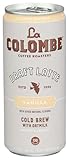
- READY TO DRINK: Experience the full taste and texture of a true cold draft latte in one convenient, pre-made, chilled can.
- REAL INGREDIENTS: Plant-based with sustainably sourced lactose-free oatmilk used in every can. Made with real vanilla and 100% arabica, single-orign, brazilian cold brew. Only 120 calories inside each coffee drink.
- THE NEXT GENERATION OF COFFEE: We use nitrous oxide to create a consistently silky, thick texture. A specially designed sip-thru lid heightens the experience with every sip.
- GET YOUR PROTEIN INTAKE: Stay caffeinated while enjoying 2 grams of protein in each can of coffee.
- SAVE MONEY, GET MORE: Get the most bang for your buck with the equivalent of 1.5 cups of coffee in each cold-pressed espresso drink.
12. Enjoy.
- What to do: Sip your delicious coffee.
- What “good” looks like: A balanced, flavorful cup tailored to your liking.
- Common mistake: Rushing the experience. Take a moment to appreciate the effort.
Common mistakes (and what happens if you ignore them)
| Mistake | What it causes | Fix |
|---|---|---|
| Using stale coffee beans | Flat, dull, or bitter taste; lack of aroma | Buy freshly roasted beans and store them in an airtight container away from light and heat. |
| Incorrect grind size | Bitter (too fine) or weak/sour (too coarse) coffee | Match grind size to your brewing method (coarse for French press, medium for drip, fine for espresso). |
| Water temperature too high/low | Scorched, bitter coffee (too hot); sour, weak coffee (too cool) | Use a thermometer or let boiling water sit for 30-60 seconds before brewing (aim for 195-205°F). |
| Not rinsing paper filters | Papery, unpleasant taste in coffee | Always rinse paper filters with hot water before adding grounds. |
| Skipping the coffee bloom | Uneven extraction, sourness, weak body | Allow 30 seconds for grounds to degas after initial wetting. |
| Pouring water too quickly/unevenly | Channeling, under-extraction, weak and bitter coffee | Pour slowly and deliberately, ensuring all grounds are saturated evenly. |
| Adding cold soy milk to hot, acidic coffee | Curdling, separation, unpleasant texture | Let coffee cool slightly, add soy milk to cooler coffee, or use barista blends. |
| Overheating soy milk | Scorched, unpleasant flavor; poor foam texture | Heat soy milk to 140-150°F (60-65°C); use a thermometer. |
| Dirty brewing equipment | Rancid oil buildup, off-flavors, dull coffee | Clean your brewer and grinder regularly. Descale if you have hard water. |
| Incorrect coffee-to-water ratio | Too strong/bitter (too much coffee) or weak/watery (too little) | Use a scale to measure coffee and water; start with a 1:15 to 1:18 ratio. |
Decision rules (simple if/then)
- If your coffee tastes bitter, then try a coarser grind because a finer grind can over-extract.
- If your coffee tastes sour or weak, then try a finer grind because a coarser grind can under-extract.
- If your soy milk curdles in your coffee, then let the coffee cool slightly before adding it because extreme heat and acidity can cause curdling.
- If you’re making a latte and the soy milk won’t froth well, then try a “barista blend” soy milk because these are formulated for better foam stability.
- If your coffee tastes flat, then check the freshness of your beans because stale beans lose their flavor.
- If your coffee has an off-flavor, then clean your brewing equipment thoroughly because old coffee oils can go rancid.
- If your pour-over coffee is brewing too fast, then grind finer because a finer grind offers more resistance.
- If your French press coffee is too muddy, then grind coarser because a coarse grind results in less sediment.
- If you want to avoid paper taste, then rinse your paper filter with hot water before brewing because this removes the papery residue.
- If your coffee is consistently too strong, then use less coffee or more water because adjusting the ratio controls strength.
- If your coffee tastes weak, then use more coffee or less water because the ratio is key to strength.
- If you notice sediment in your cup (from methods like French press), then ensure your grind is coarse enough because too fine a grind will pass through the filter.
FAQ
Can I use any soy milk in my coffee?
While any soy milk can be added, “barista blend” versions are specifically designed to steam and froth better, creating a smoother texture without curdling as easily. Regular soy milk might work, but results can vary.
Why does my soy milk curdle in coffee?
Soy milk can curdle due to the acidity of the coffee, the temperature difference, or certain ingredients in the soy milk itself. Adding soy milk to coffee that’s too hot or too acidic is a common trigger.
Does soy milk change the taste of coffee?
Yes, soy milk has its own distinct flavor, often described as slightly nutty or beany. This flavor will blend with and subtly alter the taste profile of your coffee, unlike a neutral creamer.
How do I get good foam with soy milk?
Use a barista-style soy milk and a good steam wand or frother. Aim for a temperature around 140-150°F (60-65°C) and avoid overheating, which can degrade the foam quality.
Is it better to add soy milk before or after brewing?
For drinking black coffee, you add it after. If you’re steaming soy milk for a latte, you steam it separately and then combine it with espresso. Adding cold soy milk to hot coffee can sometimes cause curdling, so letting the coffee cool slightly can help.
Can I use soy milk in an espresso machine’s steam wand?
Yes, especially barista blends. The steam wand is the best way to get a nice microfoam for lattes and cappuccinos, but be sure to clean the wand immediately after use.
What if I don’t have a fancy milk frother?
You can use a French press to froth soy milk. Heat the milk gently (don’t boil), pour it into the French press, and rapidly pump the plunger up and down until you get foam. A whisk or even a jar can also work for basic frothing.
Does the sugar content in soy milk affect my coffee?
Sweetened soy milks will, of course, add sweetness to your coffee. Unsweetened versions allow you to control the sweetness of your drink independently. It’s good to be aware of what’s in your milk.
What this page does NOT cover (and where to go next)
- Detailed espresso machine operation and maintenance.
- Advanced latte art techniques beyond basic texturing.
- Specific comparisons between different brands of soy milk.
- The science behind milk proteins and how they interact with coffee’s pH.
- Recipes for coffee-based drinks that heavily feature soy milk beyond simple additions.