
Iced Coffee At Home Without A Coffee Maker
Quick answer
- Use a cold brew method for the smoothest, least diluted iced coffee.
- If you need iced coffee quickly, a Japanese iced coffee method offers a balanced flavor.
- Pre-chill your serving glass and use plenty of ice to minimize dilution.
- Grind your coffee beans coarser for cold brew and finer for Japanese iced coffee.
- Start with a coffee-to-water ratio around 1:8 for cold brew concentrate and adjust to taste.
- Always use fresh, filtered water for the best flavor.
Who this is for
- Coffee lovers who want to enjoy iced coffee at home without owning a traditional coffee maker.
- Individuals looking for simple, effective methods to brew iced coffee using common kitchen tools.
- Anyone who wants to control the strength and flavor of their iced coffee without relying on pre-made concentrates or cafes.
What to check first
Brewer type and filter type
Since you’re making iced coffee without a coffee maker, the “brewer type” refers to the method you’ll employ. Common options include immersion (like cold brew) or pour-over techniques adapted for cold brewing. The “filter type” is crucial for clarity and taste. Paper filters can trap more oils, leading to a cleaner cup, while metal or cloth filters allow more of these oils through, contributing to a richer mouthfeel. For cold brew, a fine-mesh sieve or cheesecloth can work for initial straining, followed by a paper filter if desired. For Japanese iced coffee, a standard pour-over filter (like V60 or Kalita Wave) is often used.
For Japanese iced coffee, a standard pour-over filter like this one is often used to achieve a balanced flavor.

- Pour Over Coffee: Manual Pour Over Coffee Maker allows you to brew an excellent cup of Coffee in minutes
- Stainless steel: Includes a new and improved permanent, stainless steel mesh filter that helps extract your coffee's aromatic oils and subtle flavors instead of being absorbed by a paper filter
- Coffee Carafe: Made of durable, heat-resistant borosilicate glass with Cork Band detailing that is both functional and elegant; single wall
- Quick and Easy: Simply add coarse ground Coffee to filter, pour a small amount of water in a circular motion over ground Coffee until soaked then add the remaining water and let drip
- Servings: Pour Over Coffee Maker makes 8 cups of Coffee, 4 oz each; dishwasher safe
Water quality and temperature
The quality of your water significantly impacts the final taste of your iced coffee. Tap water with strong chlorine or mineral flavors can overpower the coffee’s subtle notes. Using filtered water, such as from a Brita pitcher or a more advanced system, will yield a cleaner, more nuanced brew. For iced coffee, the brewing temperature is key. Cold brew uses room temperature or cold water throughout the brewing process. Japanese iced coffee, however, uses hot water to brew the coffee directly over ice, rapidly chilling it. Aim for hot water around 195-205°F (90-96°C) for the latter method.
Grind size and coffee freshness
The grind size is critical for proper extraction. For cold brew, a coarse grind is recommended. This is similar to coarse sea salt. A finer grind can lead to over-extraction and bitterness, as well as making it difficult to strain. For Japanese iced coffee, a medium-fine to medium grind is usually best, akin to table salt. Freshness is also paramount. Whole beans ground just before brewing will provide the most vibrant flavor. Stale coffee, even when brewed correctly, will result in a flat or dull-tasting iced coffee.
Coffee-to-water ratio
This ratio determines the strength of your brew. For cold brew, it’s common to make a concentrate, often starting with a ratio of 1:4 to 1:8 (coffee to water by weight). This concentrate is then diluted with water or milk to your preference. For Japanese iced coffee, the ratio is typically closer to a standard hot pour-over, around 1:15 to 1:17 (coffee to water), but a portion of the water is replaced by ice. For example, if you’re brewing 16 oz of coffee, you might use 10 oz of hot water and 6 oz of ice.
Cleanliness/descale status
Even without a dedicated coffee maker, the vessels and tools you use must be clean. Any residue from previous brews, oils, or cleaning agents can impart off-flavors to your iced coffee. Ensure your brewing container, strainers, and serving glasses are thoroughly washed and rinsed. If you are using any equipment that might accumulate mineral deposits (like a kettle for hot water), descaling it periodically will ensure optimal performance and taste.
Step-by-step (brew workflow)
Method 1: Cold Brew (Immersion)
1. Measure your coffee.
- What “good” looks like: You have the correct amount of whole beans or grounds for your desired batch size.
- Common mistake: Using pre-ground coffee meant for drip machines, which can be too fine and result in sediment.
- Avoid it by: Buying whole beans and grinding them just before brewing, or using a coarser grind setting if your grinder allows.
2. Grind your coffee.
- What “good” looks like: A coarse, even grind resembling breadcrumbs or coarse sea salt.
- Common mistake: Grinding too fine, which can lead to bitterness and difficult straining.
- Avoid it by: Using a burr grinder set to its coarsest setting. If using a blade grinder, pulse it gently to avoid creating fine dust.
3. Combine coffee and water.
- What “good” looks like: All coffee grounds are saturated with cold or room-temperature filtered water in your brewing vessel (jar, pitcher).
- Common mistake: Not ensuring all grounds are wet, leading to uneven extraction.
- Avoid it by: Gently stirring the mixture after adding the water to make sure there are no dry pockets.
4. Steep the coffee.
- What “good” looks like: The mixture is left undisturbed at room temperature or in the refrigerator for 12-24 hours.
- Common mistake: Steeping for too short a time (under-extracted, weak coffee) or too long (over-extracted, bitter coffee).
- Avoid it by: Starting with 18 hours and adjusting in future batches based on taste.
5. Strain the coffee concentrate.
- What “good” looks like: You have a clear liquid, free of most coffee grounds.
- Common mistake: Rushing the straining process, resulting in gritty coffee.
- Avoid it by: Using a fine-mesh sieve lined with cheesecloth or a coffee filter. Strain slowly and patiently. You may need to strain twice.
6. Dilute and serve.
- What “good” looks like: A smooth, flavorful iced coffee that is to your liking.
- Common mistake: Not diluting the concentrate enough, making it too strong.
- Avoid it by: Start by mixing 1 part concentrate with 1 part cold water or milk and taste. Add more liquid as needed until you reach your desired strength.
Method 2: Japanese Iced Coffee (Flash Chilled Pour-Over)
1. Heat your water.
- What “good” looks like: Water is heated to the optimal brewing temperature, typically 195-205°F (90-96°C).
- Common mistake: Using boiling water, which can scorch the coffee grounds and create a bitter taste.
- Avoid it by: Letting boiling water sit for about 30-60 seconds before pouring, or using a thermometer.
2. Prepare your ice.
- What “good” looks like: You have enough ice to fill your serving carafe or glass.
- Common mistake: Not using enough ice, leading to a diluted and lukewarm final product.
- Avoid it by: Pre-filling your serving vessel with ice; this is where the hot coffee will drip directly onto.
Pre-filling your serving vessel with ice is crucial; consider using dedicated iced coffee glasses to keep your drink perfectly chilled.
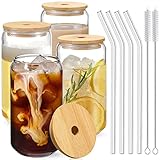
- PRODUCT CONFIGURATION: Drinking glass set includes 4 glass cups [ Diameter - 3 inches, Height - 5.6 inches ],4 nature bamboo lids, 4 reusable glass straws and 2 cleaning brushes, Classic design tumbler
- DURABLE and SAFE: The glasses are made of high-quality durable clear glass, Lead-free and BPA-free. It can be used safely for a long time. This thick clear glass can withstand the sudden changes in the temperature difference between -68°F to 212°F, making them dishwasher safe. If you want to decorate this glass, you can do DIY easily without breakage
- MULTI-PURPOSE: The glassware Great for any Occasion, any hot and cold drinks, home essentials. It is widely loved by families, kitchen, breweries, cafes, bars and restaurants. You can use it to make perfect tea, bubble Pearl Milk Tea, soda, water, iced coffee, smoothie, fruit juice or any other interesting holiday drinks
- AMAZING GIFT: This jar is very fashionable, aesthetic and characteristic. Excellent workmanship. Perfect Gifts for Women, House warming gifts, Tea mug Sets, Highball Glasses, Home Bar Accessories, Birthdays, Graduation, Weddings and Christmas Gifts
- SATISFIED SERVICE: This glass set is packaged in the heavy bubble holder and thick carton box to prevent damage while in transport. If the glass set you received was damaged or imperfect or you are not satisfied, we will offer a satisfactory solution
3. Grind your coffee.
- What “good” looks like: A medium-fine to medium grind, similar to table salt.
- Common mistake: Grinding too coarse, leading to under-extraction and weak coffee, or too fine, which can clog the filter and cause over-extraction.
- Avoid it by: Aiming for a consistent grind that allows water to flow through at a steady rate.
4. Set up your brewer.
- What “good” looks like: Your pour-over device (e.g., V60, Chemex) is securely placed over your ice-filled carafe or glass, with a filter inserted.
- Common mistake: The brewer not being stable, risking a spill.
- Avoid it by: Ensuring the brewer is centered and fits snugly on the opening of your carafe or glass.
5. Bloom the coffee.
- What “good” looks like: A small amount of hot water is poured over the grounds, causing them to puff up and release CO2.
- Common mistake: Skipping the bloom or pouring too much water, leading to uneven saturation.
- Avoid it by: Pouring just enough water to wet all the grounds (about twice the weight of the coffee) and letting it sit for 30 seconds.
6. Pour the remaining water.
- What “good” looks like: Hot water is poured in slow, controlled circles, ensuring even extraction as it drips onto the ice.
- Common mistake: Pouring too quickly or unevenly, leading to channeling and inconsistent flavor.
- Avoid it by: Pouring in stages, keeping the water level consistent and avoiding pouring directly down the sides of the filter.
7. Remove the brewer and serve.
- What “good” looks like: You have a chilled, flavorful iced coffee ready to drink.
- Common mistake: Leaving the brewer on too long, allowing hot water to continue dripping and over-diluting the coffee.
- Avoid it by: Removing the brewer as soon as the dripping finishes.
Common mistakes (and what happens if you ignore them)
| Mistake | What it causes | Fix |
|---|---|---|
| Using stale coffee beans | Flat, dull, or bitter taste | Use freshly roasted whole beans and grind them just before brewing. |
| Incorrect grind size (too fine) | Bitter, muddy coffee, difficult to strain | Use a coarse grind for cold brew; a medium-fine for Japanese iced coffee. |
| Incorrect grind size (too coarse) | Weak, under-extracted, sour coffee | Adjust to a finer grind for cold brew if too weak; ensure medium-fine for Japanese iced coffee. |
| Not using enough ice (Japanese method) | Lukewarm, over-diluted coffee | Fill your serving vessel generously with ice before brewing. |
| Rushing the straining process | Gritty, sediment-filled cold brew | Strain slowly and patiently, potentially through multiple layers of filter (cheesecloth, paper). |
| Using poor quality water | Off-flavors, muted coffee notes | Use filtered water for brewing. |
| Brewing too long (cold brew) | Bitter, harsh, over-extracted cold brew | Stick to the 12-24 hour range for cold brew; adjust based on taste. |
| Brewing too short (cold brew) | Weak, sour, under-extracted cold brew | Extend steeping time; aim for at least 12 hours. |
| Using water that’s too hot (Japanese) | Scorched coffee, bitter taste | Ensure water is around 195-205°F (90-96°C), not boiling. |
| Not stirring the cold brew slurry | Uneven extraction, pockets of unbrewed coffee | Gently stir the coffee and water mixture after combining to ensure full saturation. |
Decision rules (simple if/then)
- If you want the smoothest, least acidic iced coffee, then use the cold brew method because the cold water extracts fewer bitter compounds.
- If you need iced coffee quickly, then use the Japanese iced coffee method because the hot water brews it rapidly over ice.
- If your cold brew tastes weak, then try a finer grind or a higher coffee-to-water ratio for your next batch because you might be under-extracting.
- If your Japanese iced coffee tastes bitter, then try a coarser grind or ensure your water isn’t too hot because over-extraction is likely.
- If you notice sediment in your cold brew, then strain it more carefully or use a finer filter because you likely didn’t capture all the grounds.
- If your iced coffee tastes watery, then use less ice or a more concentrated brew ratio because it’s being diluted too much.
- If you want to reduce acidity, then choose cold brew over other methods because it naturally produces a less acidic beverage.
- If you are using pre-ground coffee, then opt for the Japanese iced coffee method or be very careful with the grind size for cold brew because pre-ground coffee is often too fine.
- If you want to control the strength of your iced coffee, then make a cold brew concentrate and dilute it to your preference because this offers the most flexibility.
- If your iced coffee has an off-flavor, then check the cleanliness of your brewing tools and the quality of your water because these are common culprits.
FAQ
What’s the best way to make iced coffee without a machine?
The two most popular methods are cold brew and Japanese iced coffee. Cold brew involves steeping coarse grounds in cold water for 12-24 hours, resulting in a smooth, low-acid concentrate. Japanese iced coffee involves brewing hot coffee directly over ice, which quickly chills it and locks in aromatics.
Can I use instant coffee for iced coffee?
Yes, you can. Instant coffee is the quickest method. Simply mix instant coffee granules with a small amount of hot water to dissolve them, then add cold water, ice, and any desired sweeteners or milk. However, the flavor profile will be different from brewed coffee.
How long does cold brew last?
Cold brew concentrate can typically be stored in an airtight container in the refrigerator for up to 1-2 weeks. It’s best to consume it within the first week for optimal flavor.
What kind of coffee beans should I use for iced coffee?
Medium to dark roasts often perform well for iced coffee, as their bolder flavors can stand up to dilution from ice. However, lighter roasts can also be excellent, especially for Japanese iced coffee, offering brighter, more nuanced notes. Freshly roasted whole beans are always recommended.
How do I avoid a watery iced coffee?
To avoid a watery iced coffee, use plenty of ice and consider brewing a more concentrated coffee. For cold brew, make a concentrate that you dilute. For Japanese iced coffee, ensure a significant portion of your brewing liquid is ice.
Is cold brew or Japanese iced coffee healthier?
Both methods, when brewed black, are generally healthy. Cold brew tends to be lower in acidity, which can be beneficial for those with sensitive stomachs. The calorie and sugar content will depend entirely on what you add to your coffee, such as milk, cream, or sweeteners.
Can I use a French press for cold brew?
Absolutely. A French press is an excellent tool for cold brew. After steeping your coarse grounds in water, you can use the plunger to press down the grounds, which acts as a primary filter. You may still want to strain it further through a paper filter for a cleaner cup.
How much coffee should I use for cold brew?
A common starting point for cold brew concentrate is a ratio of 1:4 to 1:8 (coffee to water by weight). For example, 1 cup of coffee grounds to 4 cups of water. You will then dilute this concentrate to your desired strength.
What this page does NOT cover (and where to go next)
- Specific brand recommendations for coffee beans or brewing equipment.
- Detailed analysis of different coffee roast profiles and their impact on iced coffee flavor.
- Advanced techniques for espresso-based iced drinks like iced lattes or cappuccinos.
- Information on commercial-grade iced coffee brewing systems.