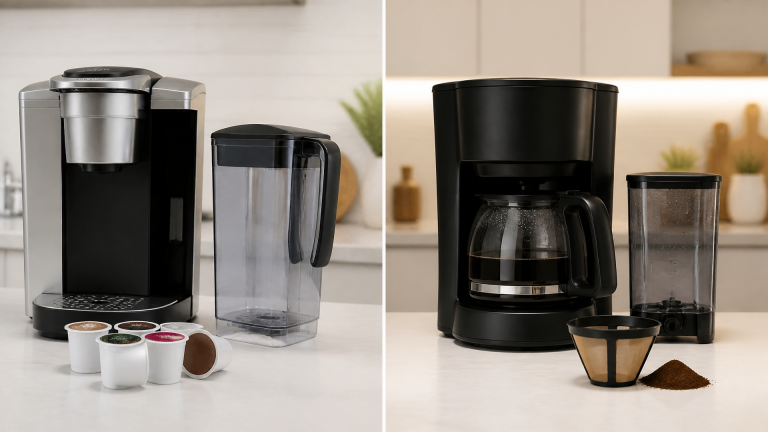
How To Use Your Cuisinart Coffee Maker
Quick Answer
- Always use fresh, filtered water. It makes a huge difference.
- Grind your beans right before brewing for peak flavor.
- Get your coffee-to-water ratio dialed in. Start with 1:15 and adjust.
- Keep your Cuisinart clean. Descale it regularly.
- Use the right filter for your brew. Paper or permanent, make sure it fits.
- Pre-heat your carafe if you can. Keeps coffee hot longer.
Who This Is For
- Anyone who just unboxed a new Cuisinart coffee maker and wants to get started.
- Folks who’ve had their Cuisinart for a while but feel like their coffee could be better.
- Coffee lovers who want to maximize the flavor from their beans with a reliable drip machine.
What To Check First
Brewer Type and Filter Type
Your Cuisinart probably has a specific filter basket size and shape. Most use standard basket filters, but some might have a permanent gold-tone filter. Always check what your model calls for. Using the wrong filter can lead to grounds in your cup or a messy overflow. Grab the right ones before you start.
Water Quality and Temperature
Tap water can have minerals and chlorine that mess with coffee flavor. Filtered water is the way to go. Think of it as a clean canvas for your coffee. For temperature, most automatic drip machines heat water to the right range, usually between 195°F and 205°F. You can’t really control this on most Cuisinarts, but if yours has a temperature setting, aim for that sweet spot.
Grind Size and Coffee Freshness
This is crucial. For drip coffee makers like most Cuisinarts, you want a medium grind. Too fine and it’ll clog and over-extract (bitter). Too coarse and it’ll under-extract (weak, sour). Freshness matters even more. Buy whole beans and grind them just before you brew. Pre-ground coffee loses its zing fast.
Coffee-to-Water Ratio
This is your control knob for strength. A good starting point is a 1:15 ratio. That means for every 1 gram of coffee, use 15 grams of water. Or, for home cooks, about 2 tablespoons of ground coffee per 6 oz of water. Measure both, don’t guess. You can always tweak it later to your taste.
Cleanliness/Descale Status
A dirty coffee maker is a flavor killer. Old coffee oils build up and go rancid. Mineral deposits from water (scale) can clog things and affect temperature. Most Cuisinarts have a clean cycle or indicator light. Run it regularly, especially if you have hard water. It’s a simple step that pays off big time.
Step-by-Step Brew Workflow
1. Fill the Water Reservoir: Pour fresh, filtered cold water into the reservoir.
- Good looks like: The water level is between the min and max lines, and you can see the water clearly.
- Common mistake: Using hot water or tap water. Avoid this to prevent scale buildup and ensure pure flavor.
2. Prepare the Filter Basket: Place the correct filter (paper or permanent) into the filter basket.
- Good looks like: The filter sits snugly in the basket without folding or gaps.
- Common mistake: Using a filter that’s too small or too large. This causes overflow or grounds escaping.
3. Add Ground Coffee: Measure your freshly ground coffee and add it to the filter.
- Good looks like: An even bed of grounds. For a standard 12-cup maker, try 8-10 tablespoons for a full pot.
- Common mistake: Scooping coffee directly from a bag without measuring. This leads to inconsistent strength.
4. Assemble the Brewer: Close the filter basket lid securely and ensure the carafe is properly seated on the warming plate.
- Good looks like: Everything clicks into place. The carafe should align with the brew-through lid.
- Common mistake: Not seating the carafe correctly. The machine won’t brew, or it’ll spill everywhere.
5. Select Brew Options (if applicable): Choose brew strength, number of cups, or program timer if your Cuisinart has these features.
- Good looks like: You’ve selected your desired settings. For a basic model, this step might be skipped.
- Common mistake: Forgetting to set the timer or strength. You might end up with weak coffee when you wanted strong.
6. Start the Brew Cycle: Press the brew button or turn the machine on.
- Good looks like: The machine lights up, and you hear it start heating water.
- Common mistake: Thinking the machine will start automatically without pressing the button.
7. Monitor the Brew: Watch as the coffee brews. The water should heat and drip through the grounds.
- Good looks like: A steady stream of dark liquid filling the carafe. The “bloom” phase (initial bubbling) is a good sign.
- Common mistake: Leaving the machine unattended if you’re worried about overflow. Most Cuisinarts have anti-drip features.
8. Wait for Completion: Let the brew cycle finish completely. Some machines beep.
- Good looks like: The dripping stops, and the warming plate engages.
- Common mistake: Removing the carafe too early. You’ll miss out on the last bit of coffee and make a mess.
9. Serve the Coffee: Carefully remove the carafe and pour.
- Good looks like: Hot, aromatic coffee filling your mug.
- Common mistake: Pouring too quickly and splashing.
10. Turn Off/Keep Warm: If your machine has a keep-warm function, ensure it’s set for the desired duration. Turn off if not using.
- Good looks like: The warming plate is on for a set time or off.
- Common mistake: Leaving the warming plate on indefinitely. Coffee can get burnt tasting.
Common Mistakes (and What Happens If You Ignore Them)
| Mistake | What It Causes | Fix |
|---|---|---|
| Using stale coffee beans | Weak, flat, or bitter coffee | Buy whole beans and grind them just before brewing. |
| Using pre-ground coffee | Loss of aroma and flavor, stale taste | Grind your own beans fresh for every pot. |
| Incorrect grind size (too fine) | Bitter coffee, slow brew, potential overflow | Use a medium grind; check your Cuisinart manual for recommendations. |
| Incorrect grind size (too coarse) | Weak, sour, under-extracted coffee | Use a medium grind; aim for consistency. |
| Using tap water | Off-flavors, scale buildup, shorter lifespan | Use filtered or bottled water. |
| Not cleaning the machine regularly | Rancid oil taste, slow brewing, mineral buildup | Run a clean cycle monthly or use a descaling solution as recommended. |
| Incorrect coffee-to-water ratio | Coffee too strong or too weak | Measure coffee and water. Start with 1:15 and adjust to your liking. |
| Using old or dirty filters | Off-flavors, grounds in coffee | Use fresh filters or clean your permanent filter thoroughly. |
| Not seating the carafe properly | Coffee spills, machine won’t brew | Ensure the carafe is firmly in place before starting. |
| Leaving coffee on the warming plate too long | Burnt, bitter coffee | Serve immediately or transfer to a thermal carafe. |
| Using hot water in the reservoir | Potential damage, scale buildup | Always use cold, filtered water. |
Decision Rules
- If your coffee tastes bitter, then try a coarser grind because it might be over-extracting.
- If your coffee tastes weak or sour, then try a finer grind because it might be under-extracting.
- If you notice mineral buildup or your coffee tastes “off,” then descale your machine because it’s likely clogged.
- If you’re brewing a full pot and it tastes weak, then add more coffee grounds because your ratio is likely too high on the water side.
- If you’re getting grounds in your cup, then check your filter and grind size; it’s likely too fine or the filter isn’t seated right.
- If your Cuisinart is brewing slowly, then it needs descaling because mineral deposits are restricting water flow.
- If your coffee doesn’t taste fresh, then check your bean freshness and grind method because stale beans are the usual culprit.
- If your coffee is consistently too strong, then reduce the amount of coffee grounds you’re using because your ratio is too high on the coffee side.
- If your machine makes weird noises or steams excessively, then check the water level; it might be too low.
- If you want to improve flavor significantly, then switch to filtered water because tap water can really mess things up.
FAQ
Q: How often should I clean my Cuisinart coffee maker?
A: For optimal flavor and machine health, aim to run a clean cycle or descale your machine at least once a month. If you have hard water, you might need to do it more often.
Q: What’s the best coffee-to-water ratio for my Cuisinart?
A: A good starting point is a 1:15 ratio (1 gram of coffee to 15 grams of water). For home use, that’s roughly 2 tablespoons of coffee for every 6 ounces of water. Adjust to your personal taste preference.
Q: My coffee tastes bitter. What did I do wrong?
A: Bitter coffee usually means over-extraction. Try a slightly coarser grind, ensure your water isn’t too hot (though most Cuisinarts regulate this well), and make sure the machine is clean.
Q: My coffee is weak. How can I fix it?
A: Weak coffee is typically under-extracted. Try a slightly finer grind, use more coffee grounds relative to your water, and ensure your water is reaching the proper brewing temperature.
Q: Can I use any type of filter in my Cuisinart?
A: Not always. Check your specific Cuisinart model. Some use standard basket filters, others might have a permanent gold-tone filter. Using the wrong type can cause issues.
Q: Why does my coffee taste stale even with fresh beans?
A: If you’re not grinding your beans right before brewing, they lose freshness quickly. Also, ensure your Cuisinart is clean, as old coffee oils can make even fresh beans taste off.
Q: My Cuisinart coffee maker has an auto-shutoff. How does it work?
A: Most Cuisinart models have a warming plate that automatically shuts off after a set period, usually 1-4 hours, for safety and energy saving. Check your manual for your specific model’s duration.
Q: What kind of water should I use in my Cuisinart?
A: Always use fresh, cold, filtered water. Tap water can contain minerals and chlorine that negatively affect coffee flavor and can cause scale buildup in your machine.
What This Page Does Not Cover (and Where to Go Next)
- Specific troubleshooting for error codes or unusual noises. (Check your Cuisinart’s troubleshooting section in the manual.)
- Advanced brewing techniques like pour-over or espresso. (Explore dedicated guides for those methods.)
- Detailed comparisons of different Cuisinart coffee maker models. (Visit Cuisinart’s official site or product review sites.)
- Information on Cuisinart’s specialized coffee makers (like grinders or espresso machines). (Consult the product-specific manuals or Cuisinart’s website.)
- Deep dives into the science of coffee extraction. (Look for resources on coffee chemistry and brewing science.)