
How to Make Barley Coffee: Step-by-Step Guide
Quick answer
- Barley coffee is a caffeine-free alternative to traditional coffee.
- It’s made by roasting and grinding barley, then brewing it like coffee.
- You can use most coffee makers, but a French press or pour-over often works best.
- Start with a coarser grind than you’d use for espresso.
- Experiment with ratios to find your preferred strength.
- It has a nutty, slightly bitter flavor profile.
Who this is for
- Folks looking for a caffeine-free coffee experience.
- Anyone wanting to try a unique, earthy beverage.
- People who enjoy experimenting with alternative brewing methods.
What to check first
Brewer type and filter type
Your standard drip machine can work, but some methods shine. A French press or a pour-over cone lets you control the brew more precisely. If using a drip machine, a paper filter is standard. For a French press, it’s all about that metal filter.
Water quality and temperature
Good water makes good coffee, or in this case, good barley brew. Filtered water is your best bet. Aim for water that’s just off the boil, around 195-205°F. Too hot, and you can scorch the barley.
Grind size and coffee freshness
This is key for barley. You want a grind that’s coarser than espresso, maybe similar to a coarse sea salt. Too fine, and it’ll be muddy. Freshly roasted and ground barley is ideal, just like with coffee beans. If you buy pre-ground, use it up fast.
For the best flavor, start with high-quality, freshly roasted barley coffee beans. If you’re buying pre-ground, use it quickly.
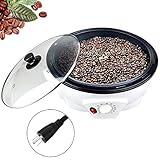
- 【Premium Quality】Operating at 110V and 800W, this electric coffee bean roaster features a non-stick chassis for easy cleaning. Equipped with a stirring rod, it ensures even roasting by continuously agitating the beans during the process. The professional thermostat provides automatic, constant temperature heating, and allows for adjustable temperature settings, enabling you to roast a variety of cereals to perfection.
- 【Honeycomb Non-Stick Bottom】The roasting chamber features a honeycomb-shaped design with a black food-grade Teflon coating. This ensures safe, easy cleaning and provides even, uniform heating for consistently perfect roasts.
- 【Professionally designed】The roaster features a heat-resistant, durable transparent cover with a four-hole ventilation system. This allows you to monitor the roasting process and observe changes in the coffee beans effortlessly while maintaining optimal ventilation.
- 【Large Capacity】Featuring an 800g tank, this roaster can accommodate a substantial amount of coffee beans, allowing you to roast in larger batches quickly and conveniently. For optimal results, we recommend roasting between 300g and 500g of beans at a time.
- 【Multifunction Use】This versatile machine is not only perfect for roasting coffee beans but also for baking a variety of other items, including beans, peanuts, chestnuts, barley, dried fruit, and popcorn. Ideal for home use, coffee shops, or restaurants, it allows you to craft and customize your unique coffee flavors to your preference.
Coffee-to-water ratio
This is where you dial it in. A good starting point is about 1:15, meaning 1 gram of barley to 15 grams of water. For a standard 12oz cup (about 350g water), that’s roughly 23g of barley. Adjust from there.
Cleanliness/descale status
Just like with regular coffee, a clean machine is a happy machine. Make sure your brewer and any filters are clean. If you haven’t descaled your coffee maker in a while, now’s a good time. Old residue can mess with the flavor.
Step-by-step (brew workflow)
Here’s how to get a good cup of barley coffee going.
1. Measure your barley. Use a scale for accuracy. For a 12oz cup, start with around 23 grams.
- What “good” looks like: Accurate measurement, consistent results.
- Common mistake: Eyeballing it. This leads to weak or overly strong brews. Use a scale.
2. Grind the barley. Aim for a coarse grind, like coarse sea salt.
- What “good” looks like: Evenly ground particles, no fine dust.
- Common mistake: Grinding too fine. This can clog filters and create a muddy cup. Coarse is the way.
3. Heat your water. Bring filtered water to just off the boil, 195-205°F.
- What “good” looks like: Water at the right temperature, not boiling aggressively.
- Common mistake: Using boiling water. This can scald the barley and create a bitter taste. Let it sit for 30 seconds after boiling.
4. Prepare your brewer. If using a pour-over, add your filter and rinse it with hot water. Discard the rinse water. For a French press, make sure it’s clean.
- What “good” looks like: A clean brewing setup, filter rinsed to remove paper taste.
- Common mistake: Not rinsing the paper filter. This can leave a papery taste in your final brew.
If you’re using a pour-over coffee set, remember to rinse your filter with hot water before adding the grounds.

- [Electric Operation, One-Button Control, Jam-Free Grinding] Experience the ease and comfort of electric grinding, a perfect upgrade from traditional manual grinders. Simply double-click to start, and the grinder automatically shuts off 5 seconds after finishing, or you can single-click to stop at any time. The double-click feature prevents accidental starts in daily use, and the thoughtful jam-free design ensures a smooth and convenient grinding process, saving you time and energy, making it the ideal choice for fresh coffee lovers on the go.
- [Stainless Steel Conical Burr, Precision Dual Bearings, Adjustable Grind Settings] The stainless steel five-star conical burr, paired with precision dual bearings, ensures consistent and even grinding, providing you with a personalized and professional coffee experience. With 24+ gears of adjustable grind settings, you can easily switch from fine to coarse, making it perfect for espresso, moka, pour-over, French press, cold brew, and more. Enjoy your perfect cup of coffee anytime, anywhere.
- [Safe and Powerful Battery, Wireless Enjoyment] Equipped with 2X800mAh battery, enjoy approximately 30 sessions on medium grind settings on a full charge. Whether at home, outdoors, in the office, or on the go, you can always have freshly ground coffee at your fingertips. The insulated, high-temperature-resistant battery pack ensures safe and reliable use. The universal Type-C port supports 2A fast charging and can be powered by a power bank, allowing you to grind while charging. No waiting—just fresh coffee whenever you desire.
- [Portable Design, Stylish and Perfect for Gifting] This lightweight grinder, weighing only 580 grams, easily fits into any daily bag. The body is made from skin-friendly, spray-coated aluminum alloy, and the bean cup is crafted from high-temperature-fired clear glass. The components are seamlessly connected, resulting in a minimalist and elegant design. With a gift box and a limited-edition velvet storage pouch included, this product is ideal for personal use or as a thoughtful gift.
- [Velvet Pouch Storage, Easy Cleaning and Maintenance] The product comes with a branded brush and a velvet storage pouch for convenient cleaning and storage. Use the brush to clean the main unit and grinding chamber, while the coffee powder cup can be easily rinsed with water. The main unit should be cleaned with the brush or wiped with a dry cloth—avoid using water to clean the main unit.
5. Add ground barley to the brewer. Place the ground barley into your filter or French press.
- What “good” looks like: Even bed of grounds.
- Common mistake: Uneven distribution. This can lead to channeling and uneven extraction.
6. Bloom the barley (optional but recommended). Pour just enough hot water over the grounds to saturate them. Let it sit for 30 seconds. You’ll see it expand.
- What “good” looks like: Gentle bubbling and expansion of the grounds.
- Common mistake: Skipping the bloom. This releases CO2 and helps with even extraction. Don’t skip it.
7. Pour the remaining water. Slowly pour the rest of your hot water over the grounds in a circular motion.
- What “good” looks like: Steady, controlled pouring.
- Common mistake: Pouring too fast or all at once. This can disrupt the coffee bed and lead to poor extraction.
8. Brewing time. For pour-over, let it drip through. For French press, let it steep for about 4 minutes.
- What “good” looks like: A steady drip or a controlled steep.
- Common mistake: Brewing too long or too short. This affects strength and flavor. Stick to the recommended times.
9. Press (French press only). Gently press the plunger down.
- What “good” looks like: Smooth, even press.
- Common mistake: Forcing the press. This can push fine particles through the filter. Go slow.
10. Serve immediately. Pour your barley coffee into your favorite mug.
- What “good” looks like: A hot, aromatic beverage ready to enjoy.
- Common mistake: Letting it sit on a hot plate. This can make it taste burnt.
Common mistakes (and what happens if you ignore them)
| Mistake | What it causes | Fix |
|---|---|---|
| Using stale or old barley | Flat, dull, or burnt flavor | Use freshly roasted and ground barley. Check roast dates. |
| Grind too fine | Muddy cup, bitter taste, clogged filter | Use a coarser grind, like coarse sea salt. |
| Grind too coarse | Weak, watery, under-extracted flavor | Adjust grinder to a finer setting, but still coarser than espresso. |
| Water too hot | Scorched flavor, excessive bitterness | Let water sit for 30 seconds after boiling (195-205°F). |
| Water too cool | Under-extracted, sour, weak flavor | Ensure water is within the target temperature range. |
| Incorrect coffee-to-water ratio | Too weak or too strong, unbalanced flavor | Use a scale and start with a 1:15 ratio, then adjust to taste. |
| Not rinsing paper filter (pour-over) | Papery taste in the final brew | Always rinse paper filters with hot water before brewing. |
| Forcing the French press plunger | Gritty, silty coffee at the bottom | Press the plunger down slowly and steadily. |
| Letting brewed barley coffee sit | Burnt, stale flavor | Serve immediately; avoid leaving it on a warming plate. |
| Using dirty equipment | Off-flavors, stale taste | Clean your brewer and accessories regularly. Descale as needed. |
Decision rules (simple if/then)
- If your barley coffee tastes bitter, then try a coarser grind because too-fine grinds can over-extract.
- If your barley coffee tastes weak, then use more barley or a finer grind because you might be under-extracting.
- If your barley coffee tastes sour, then ensure your water is hot enough because too-cool water leads to sourness.
- If your barley coffee is muddy, then use a coarser grind and be gentle with the French press because fine particles are escaping.
- If your pour-over is dripping too fast, then grind a bit finer because a coarser grind lets water pass through too quickly.
- If your pour-over is taking too long to drip, then grind a bit coarser because a too-fine grind can clog the filter.
- If your barley coffee has a papery taste, then make sure you rinsed your paper filter thoroughly because that removes the papery residue.
- If your barley coffee tastes burnt, then ensure your water isn’t too hot and you’re not leaving it on a hot plate because those can scorch the grounds.
- If you’re new to barley coffee, then start with a French press because it’s forgiving and lets you taste the pure flavor.
- If you want a cleaner cup with less sediment, then a pour-over with a good paper filter is your best bet because it filters out more fine particles.
- If you find the flavor too intense, then reduce the amount of barley you use or increase the water because a lower ratio results in a milder taste.
FAQ
Is barley coffee the same as coffee?
No, barley coffee is made from roasted barley grains, not coffee beans. It’s caffeine-free and has a different flavor profile, often described as nutty and earthy.
Can I use my regular coffee maker for barley coffee?
Yes, most standard drip coffee makers can brew barley coffee. However, methods like French press or pour-over can offer more control and often yield better results.
How much barley should I use?
A good starting point is a ratio of about 1:15 (barley to water by weight). For a 12oz cup (roughly 350g of water), that’s about 23 grams of barley. Adjust based on your preference.
What kind of grind do I need for barley coffee?
You’ll generally want a coarser grind than you’d use for espresso, similar to coarse sea salt. Too fine a grind can lead to a bitter taste and a muddy cup.
Does barley coffee have caffeine?
No, barley coffee is naturally caffeine-free. This makes it a great option for those sensitive to caffeine or looking for a decaf alternative.
Since barley coffee is a naturally caffeine-free coffee alternative, it’s a perfect choice for those looking to reduce their caffeine intake.

- CLOSE TO COFFEE TASTE: Experience a delightful Turkish-style sip with this coffee substitute; its flavor profile is made from healthy date seeds but resembles traditional coffee; perfect for those seeking a non coffee alternative
- CAFFEINE-FREE DELIGHT: Enjoy the rich aroma crafted from decaffeinated date seeds, you can enjoy the delicious taste of coffee without compromising on taste or experiencing side effects from caffeine
- VEGAN FRIENDLY CHOICE: Our herbal beverage is ideal for vegans or those following a plant-based diet; enjoy the closer-to-coffee taste without any animal products
- EASY TO MAKE: Our coffee alternative is made just like regular Turkish coffee; simply add one to two teaspoons of our ground Eastern Brew to your cezve filled with water for a perfect brew
- ORGANIC & HEALTHY: A healthy coffee alternative, date seeds are a natural source of antioxidants and polyphenols, which may help promote heart health; gluten-free, no artificial ingredients, colors, or flavors
How should barley coffee taste?
It typically has a nutty, earthy, and slightly bitter flavor, often compared to roasted grains. Some people detect hints of chocolate or caramel depending on the roast.
Can I add milk or sugar?
Absolutely. Just like regular coffee, barley coffee can be enjoyed black or with your favorite additions like milk, cream, or sweeteners.
How do I store roasted barley?
Store roasted barley in an airtight container at room temperature, away from light and moisture. For best results, grind it just before brewing.
What this page does NOT cover (and where to go next)
- Specific brand recommendations for roasted barley. (Explore specialty food stores or online retailers.)
- Advanced roasting techniques for barley at home. (Look for resources on home roasting.)
- Detailed health benefits of barley. (Consult health and nutrition websites.)
- Espresso-based barley drinks. (This requires specialized equipment and techniques.)