
How To Make A Basic Iced Coffee At Home
Quick answer
- Brew your coffee strong. Really strong.
- Let it cool down before pouring over ice.
- Use good quality ice. Don’t skimp.
- Start with a 1:1 ratio of coffee to water for brewing.
- Freshly ground beans make a world of difference.
- Keep your brewing gear clean. Seriously.
Who this is for
- Anyone who wants a refreshing coffee drink without hitting the coffee shop.
- People who are tired of watery iced coffee from home brews.
- Those looking for a simple, no-fuss method to enjoy cold coffee.
What to check first
Brewer type and filter type
What are you using to brew? Drip machine? Pour-over? French press? Each has its quirks. Filter paper can affect taste. Paper filters catch more oils, giving a cleaner cup. Metal filters let more oils through, adding body. Know your setup.
Water quality and temperature
Tap water can have off-flavors. Filtered water is usually best. For hot brewing, aim for water between 195-205°F. Too cool, and you won’t extract enough flavor. Too hot, and you can scorch the grounds. For cold brew, obviously, temperature isn’t an issue.
Grind size and coffee freshness
This is huge. For drip or pour-over, a medium grind is typical. French press needs coarse. Espresso is fine. And use beans that were roasted recently. Pre-ground stuff loses its punch fast. Aim for beans roasted within the last few weeks.
Coffee-to-water ratio
This is your strength dial. A good starting point for hot coffee is around 1:15 to 1:17. That’s grams of coffee to grams of water. For iced coffee, you’ll want to go stronger, maybe 1:10 or 1:12. We’ll get to that.
Cleanliness/descale status
Gunk builds up. In drip machines, mineral deposits are a pain. Old coffee oils can go rancid. Clean your brewer regularly. Descale your machine at least once a month, more if you have hard water. It’s not fun, but it’s essential.
Step-by-step (brew workflow)
1. Brew your coffee extra strong.
- What to do: Use more coffee grounds than usual for the amount of water you’re brewing. A good starting point is a 1:10 to 1:12 coffee-to-water ratio.
- What “good” looks like: A concentrated, flavorful brew that will stand up to dilution from ice. It might taste a bit too intense if you drank it hot.
- Common mistake: Brewing at your normal strength. This leads to watery disappointment. Avoid it by doubling your coffee grounds or halving your water for the same amount of grounds.
2. Brew using your preferred hot method.
- What to do: Use your drip machine, pour-over, or French press with the strong coffee-to-water ratio.
- What “good” looks like: A full-bodied, aromatic coffee.
- Common mistake: Using cold brew for this method if you want it fast. Cold brew is great, but it takes 12-24 hours. Stick to hot brewing for a quick iced coffee.
3. Let the coffee cool slightly.
- What to do: Don’t pour steaming hot coffee directly over ice. Let it sit on the counter for 10-15 minutes.
- What “good” looks like: The coffee is still warm, but not boiling hot. This prevents excessive ice melt and dilution.
- Common mistake: Pouring hot coffee straight onto ice. This melts the ice too quickly, watering down your drink. Patience here pays off.
4. Prepare your serving glass.
- What to do: Grab a tall glass. Fill it generously with ice.
- What “good” looks like: A glass packed with ice cubes. The more ice, the less dilution as you drink.
- Common mistake: Using too little ice. Your coffee will warm up too fast and become a sad, watery mess.
For an even better experience, consider using dedicated iced coffee glasses; they often have a design that helps keep your drink colder longer. You can find some great options online.
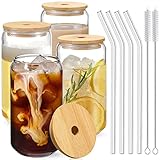
- PRODUCT CONFIGURATION: Drinking glass set includes 4 glass cups [ Diameter - 3 inches, Height - 5.6 inches ],4 nature bamboo lids, 4 reusable glass straws and 2 cleaning brushes, Classic design tumbler
- DURABLE and SAFE: The glasses are made of high-quality durable clear glass, Lead-free and BPA-free. It can be used safely for a long time. This thick clear glass can withstand the sudden changes in the temperature difference between -68°F to 212°F, making them dishwasher safe. If you want to decorate this glass, you can do DIY easily without breakage
- MULTI-PURPOSE: The glassware Great for any Occasion, any hot and cold drinks, home essentials. It is widely loved by families, kitchen, breweries, cafes, bars and restaurants. You can use it to make perfect tea, bubble Pearl Milk Tea, soda, water, iced coffee, smoothie, fruit juice or any other interesting holiday drinks
- AMAZING GIFT: This jar is very fashionable, aesthetic and characteristic. Excellent workmanship. Perfect Gifts for Women, House warming gifts, Tea mug Sets, Highball Glasses, Home Bar Accessories, Birthdays, Graduation, Weddings and Christmas Gifts
- SATISFIED SERVICE: This glass set is packaged in the heavy bubble holder and thick carton box to prevent damage while in transport. If the glass set you received was damaged or imperfect or you are not satisfied, we will offer a satisfactory solution
5. Pour the cooled coffee over ice.
- What to do: Slowly pour the slightly cooled, strong coffee over the ice in your glass.
- What “good” looks like: The coffee cascades over the ice, chilling rapidly without completely melting it all at once.
- Common mistake: Dumping the coffee in too fast. This can cause splashing and uneven chilling.
6. Taste and adjust (optional).
- What to do: Take a sip. Is it too strong? Too weak? Add a splash of cold water or a few more ice cubes.
- What “good” looks like: A balanced, refreshing taste that hits the spot.
- Common mistake: Not tasting and assuming it’s perfect. Your taste buds are the final judge.
7. Add sweeteners or milk (optional).
- What to do: Stir in your favorite sweetener (sugar, syrup, etc.) or milk/cream.
- What “good” looks like: Your coffee is now customized to your liking.
- Common mistake: Adding milk to very hot coffee. It can sometimes scald or create an odd texture. Let it cool a bit first.
8. Stir and enjoy.
- What to do: Give it a good stir to incorporate any additions.
- What “good” looks like: A perfectly chilled, delicious iced coffee ready to go.
- Common mistake: Forgetting to stir. You might end up with a sweet layer at the bottom and plain coffee on top.
Common mistakes (and what happens if you ignore them)
| Mistake | What it causes | Fix |
|---|---|---|
| Brewing at normal strength | Watery, weak iced coffee | Use a 1:10 to 1:12 coffee-to-water ratio for brewing. |
| Pouring hot coffee directly on ice | Rapid ice melt, diluted coffee | Let brewed coffee cool for 10-15 minutes before pouring over ice. |
| Using stale, pre-ground coffee | Flat, dull, or bitter taste | Grind beans fresh just before brewing. |
| Using poor quality or tap water | Off-flavors that ruin the coffee | Use filtered or bottled water. |
| Not cleaning the coffee maker | Rancid oils and mineral buildup affecting taste | Clean and descale your brewer regularly. |
| Using too little ice | Coffee warms up too quickly, becomes unappealing | Fill your glass generously with ice. |
| Incorrect grind size for the brewer | Under-extraction (sour) or over-extraction (bitter) | Match grind size to your brewer type (e.g., coarse for French press). |
| Not cooling the coffee enough | Excessive ice melt, diluted flavor | Allow hot coffee to cool slightly before chilling. |
| Over-extracting during brewing | Bitter, harsh coffee that doesn’t improve when cold | Control brew time and water temperature. |
| Under-extracting during brewing | Sour, weak coffee that tastes even worse iced | Ensure water is hot enough and brew time is adequate. |
Decision rules (simple if/then)
- If your iced coffee tastes watery, then you likely brewed it too weak. Use more coffee grounds next time.
- If your iced coffee tastes bitter, then you might have over-extracted. Check your grind size and brew time.
- If your iced coffee tastes sour, then you likely under-extracted. Ensure your water is hot enough and you’re brewing for long enough.
- If you want iced coffee fast, then brew hot coffee strong and cool it. Don’t try to rush cold brew.
- If you have hard water, then descale your machine more often to prevent mineral buildup.
- If you’re using a paper filter and the coffee tastes weak, then try a finer grind or a stronger ratio.
- If you’re using a metal filter and the coffee tastes too oily, then try a slightly coarser grind or a paper filter.
- If your coffee tastes stale, then your beans are too old. Buy freshly roasted beans and grind them yourself.
- If you want a smoother iced coffee, then consider cold brew. It takes longer but yields a different profile.
- If you want to avoid dilution, then use larger ice cubes. They melt slower.
- If you’re adding milk or cream, then let the coffee cool down first to prevent curdling or scalding.
FAQ
How do I make iced coffee without it being watery?
The key is brewing your coffee extra strong to begin with. Use a higher coffee-to-water ratio, like 1:10 or 1:12, so the ice doesn’t dilute it into weakness.
Can I just pour hot coffee over ice?
You can, but it’s not ideal. Pouring very hot coffee directly onto ice melts it rapidly, resulting in a watered-down drink. Let it cool for a bit first.
What’s the best way to cool hot coffee for iced coffee?
Letting it sit on the counter for 10-15 minutes is usually enough. You can also speed this up by pouring it into a metal container and placing that container in an ice bath.
How much coffee should I use for iced coffee?
For a strong base, aim for a ratio of about 1 part coffee to 10-12 parts water when brewing hot. This is much stronger than a typical hot coffee ratio.
Does the type of ice matter?
Yes! Larger ice cubes melt slower than smaller ones, meaning less dilution over time. Consider making your own larger cubes.
For the best results, consider investing in quality ice cube trays that produce larger cubes, which melt slower and keep your drink perfectly chilled without over-diluting it.
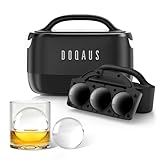
- ✅ Achieve Bar-Quality Clarity with Directional Freezing: Stop settling for cloudy, bubble-filled ice. Our clear ice cube maker utilizes advanced physics to push impurities away, creating 3 crystal-clear spheres and 4 cubes per cycle. It is the secret weapon for the home mixologist wanting presentation-ready drinks without expensive machinery.
- ✅ Preserve Complex Flavors with Slow Dilution: Designed for the purist, this whiskey ice cubes mold produces dense, 2.5-inch ice that melts 40% slower than standard ice. Enjoy your single malt or bourbon chilled but undiluted, ensuring the aromatic profile remains distinct from the first sip to the last.
- ✅ Effortless Release with Premium Hybrid Design: Unlike rigid plastic trays that crack, our flexible silicone ice ball maker mold ensures smooth removal. The non-stick material lets you pop out perfect shapes instantly, making drink preparation seamless for relaxing solo evenings or busy gatherings.
- ✅ Versatile 2-in-1 Capacity for Entertaining: Hosting a cocktail night? This round ice cube mold creates 7 pieces simultaneously, catering to different glass styles. Whether serving an Old Fashioned (sphere) or a Negroni (cube), you will have the right ice shape ready for every guest's preference.
- ✅ The Sophisticated Choice for Gifting: More than just a standard ice mold, this clear ice system is an essential upgrade for any wet bar. Packaged to impress, it creates a tangible experience, making it an ideal gift for fathers, partners, or enthusiasts who value the ritual of a perfectly poured drink.
Is cold brew better for iced coffee?
Cold brew is a different method that produces a smoother, less acidic concentrate. It’s excellent for iced coffee but requires 12-24 hours of brewing time.
How can I make my iced coffee taste better?
Start with fresh, quality beans and filtered water. Experiment with your brew strength and grind size. Don’t forget to keep your equipment clean!
Can I reuse coffee grounds for iced coffee?
No, this is a recipe for weak, bitter coffee. Always use fresh grounds for each brew.
What this page does NOT cover (and where to go next)
- Detailed instructions for every single coffee brewer type (e.g., specific pour-over cone techniques).
- Advanced iced coffee recipes like blended drinks or coffee cocktails.
- The science of extraction and how it specifically applies to cold versus hot brewing in extreme detail.
- Specific recommendations for coffee bean origins or roast profiles for iced coffee.
- Commercial-grade or professional barista techniques.