
How to Disassemble Your Bunn Coffee Maker
Quick answer
- Unplug it. Always. Safety first.
- Gather your tools: screwdrivers, maybe pliers, a clean towel.
- Locate and remove the water reservoir. It usually lifts out.
- Access the brew head. Look for screws around the spout or base.
- Remove the spray head. It might twist or have a clip.
- Check the warming plate. Screws are often underneath.
- Keep parts organized. A tray or labeled bags work well.
- Consult your manual if unsure. Bunn models vary.
Who this is for
- Anyone needing to deep clean their Bunn.
- Folks troubleshooting a malfunctioning Bunn coffee maker.
- DIYers who like to know how their gear works.
What to check first
Brewer type and filter type
Know your Bunn model. Is it a commercial-grade pour-over, or a home countertop unit? This affects how it comes apart. Most use paper filters, but some older or commercial models might have permanent screens. Check the manual if you’re not sure.
Water quality and temperature
While not directly related to disassembly, bad water can cause mineral buildup that makes disassembly harder. If you’ve been using hard water, expect more resistance when taking things apart. For brewing, use filtered water. It’s a game-changer for taste.
Grind size and coffee freshness
This is all about the brewing process itself. For disassembly, it’s irrelevant. But hey, if you’re taking your Bunn apart, you might as well be thinking about making a killer cup of coffee afterward. Freshly ground beans, medium grind for most drip machines, that’s the ticket.
Coffee-to-water ratio
Again, this applies to brewing, not taking apart. A good starting point for most drip coffee is around 1:15 to 1:17 coffee to water by weight. So, 1 gram of coffee for every 15-17 grams of water. Measure it out.
Cleanliness/descale status
If your Bunn is caked with mineral deposits or coffee oils, disassembly will be tougher. Regular descaling (every 2-3 months, depending on water hardness) keeps things running smoothly and makes maintenance easier. If it’s really gunked up, take your time.
Step-by-step (brew workflow)
This section assumes a standard Bunn drip coffee maker. Always refer to your specific model’s manual for exact instructions.
1. Unplug the machine.
- What “good” looks like: The power cord is completely disconnected from the wall outlet. No power means no surprises.
- Common mistake: Forgetting to unplug it. This can lead to shocks or damage. Always double-check.
2. Remove the water reservoir.
- What “good” looks like: The reservoir lifts cleanly out of its housing. It might be full, so be ready to empty it.
- Common mistake: Trying to force it. Some reservoirs have clips or a specific angle to lift. Don’t yank.
3. Access the brew head area.
- What “good” looks like: You can see the screws or fasteners holding the brew head assembly in place. This is often around the spout or the plastic housing.
- Common mistake: Prying at plastic parts that aren’t meant to come off yet. Look for screws first.
4. Remove the brew head spray arm.
- What “good” looks like: The spray arm detaches, allowing for better access to internal components. It might twist off or have a small retaining clip.
- Common mistake: Bending or breaking the spray arm. Be gentle; it’s often made of plastic.
5. Examine the base and housing.
- What “good” looks like: You’ve identified all visible screws that secure the main housing or base plate.
- Common mistake: Missing screws hidden under feet or labels. Sometimes you need to peel off rubber feet to find them.
6. Start removing housing screws.
- What “good” looks like: Screws are removed and kept in a safe place, like a small tray or labeled bag.
- Common mistake: Mixing screw sizes. Bunn often uses different screw lengths. Keep them sorted.
7. Carefully separate housing sections.
- What “good” looks like: The plastic housing comes apart with minimal force, revealing the internal components.
- Common mistake: Forcing the housing apart, potentially breaking internal clips or wires. Work slowly and check for any remaining connections.
8. Identify internal components.
- What “good” looks like: You can see the water lines, heating element, and other functional parts.
- Common mistake: Dislodging wires or tubing unintentionally. Note where things are connected before you touch them.
9. Inspect the warming plate area (if applicable).
- What “good” looks like: You can access screws holding the warming plate assembly or its cover.
- Common mistake: Assuming the warming plate is integral. It’s usually attached with screws from the bottom or side.
10. Clean or replace parts as needed.
- What “good” looks like: You’ve cleaned the necessary components or identified parts for replacement.
- Common mistake: Using harsh chemicals that can damage plastic or electrical components. Stick to mild soap and water or a descaling solution.
When cleaning or replacing components, consider using high-quality Bunn coffee maker parts to ensure longevity and optimal performance. Having the right replacement parts on hand can make your repair process much smoother.
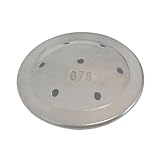
- High quality construction: Made from industrial grade stainless steel, providing a durable, rust-resistant spray head for a superior coffee brewing experience. Replace our original plastic spray head with our stainless steel version for a longer-lasting, quality coffee experience.
- Direct replacement: This is designed to fit seamlessley with GR (GRX), BX, and BT (BTN) series coffee makers.
- High flow functionality: Features 7 spray holes for maximum brewing efficiency while preventing filter overflows.
- Easy to Clean: Its distinctive silver finish aids in quickly locating it in coffee grounds if dislodged from the machine, promoting cleanliness and a hygienic brewing process.
- OCS Parts Assured Quality: At OCS parts, our products undergo meticulous examination to ensure unmatched performance and reliability. Trust OCS Parts for genuine, direct sourcing, and secure packaging, delivering a product that meets the highest standards of quality and customer satisfaction.
11. Reassembly (reverse of disassembly).
- What “good” looks like: All parts are reconnected securely, and the housing is reassembled without gaps.
- Common mistake: Forgetting to reconnect wires or hoses. Test functionality before fully reassembling.
Common mistakes (and what happens if you ignore them)
| Mistake | What it causes | Fix |
|---|---|---|
| Forgetting to unplug the machine | Electric shock, damage to components | Always ensure the power cord is disconnected. |
| Forcing parts that are stuck | Broken plastic clips, damaged components | Use penetrating oil if needed, or consult the manual for specific steps. |
| Mixing up screws of different lengths | Housing won’t fit together, stripped screw holes | Use a tray or labeled bags to keep screws organized by size and location. |
| Not emptying the water reservoir | Spills, water damage to surrounding surfaces | Empty the reservoir before attempting removal. |
| Forgetting to disconnect wires/hoses | Damage to electrical connections or tubing | Note connections before disconnecting; take pictures if needed. |
| Using harsh cleaning chemicals | Damaged plastic, degraded seals, altered taste | Use mild soap, water, or manufacturer-recommended descalers. |
| Not checking the manual | Incorrect disassembly, potential damage | Always refer to your specific Bunn model’s manual. |
| Reassembling too quickly | Misplaced parts, loose connections, leaks | Take your time during reassembly, checking each step. |
| Over-tightening screws | Stripped threads, cracked plastic | Tighten screws until snug, then a quarter turn more. Don’t force it. |
Decision rules (simple if/then)
- If the brew head is clogged with grounds, then you likely need to disassemble the brew head to clean it thoroughly because dried grounds can become very stubborn.
- If your Bunn is dripping water from the base, then check the internal tubing and seals for cracks or disconnections because a leak usually indicates a compromised seal or hose.
- If the coffee tastes burnt or off after cleaning, then ensure no cleaning residue remains in the water lines or brew basket because lingering chemicals can affect flavor.
- If you can’t find a specific screw, then check under any rubber feet or decorative covers because manufacturers sometimes hide fasteners.
- If the plastic housing feels brittle, then handle it with extra care because age and heat can make plastic fragile.
- If you are unsure about a particular step, then stop and consult your Bunn coffee maker’s manual because forcing it can cause more damage.
- If you are dealing with significant mineral buildup, then pre-soaking relevant parts in a descaling solution might loosen deposits before disassembly.
- If you’re replacing a part, then ensure you order the exact OEM replacement to maintain proper function.
- If the machine is making unusual noises, then check for loose internal components or obstructions in the water pump or heating element area.
- If you’ve disassembled it and still have issues, then it might be time to consider professional repair or replacement because some problems are more complex.
FAQ
Do I need special tools to take apart a Bunn coffee maker?
Usually, no. A standard Phillips head screwdriver is most common. Some models might use Torx bits, but it’s rare for home units. Pliers can be helpful for stubborn parts, but use them gently.
How often should I descale my Bunn coffee maker?
This depends on your water. If you have hard water, every 2-3 months is a good rule of thumb. If your water is soft, you might get away with 4-6 months. Look for signs like slower brewing or mineral deposits.
My Bunn is leaking. Can I fix it myself?
Often, yes. Leaks are usually caused by worn-out seals or cracked tubing. Disassembling the machine allows you to inspect these parts and replace them if necessary. Check the manual for part numbers.
Is it safe to clean the heating element?
Be cautious. Always unplug the machine. You can usually wipe down the exterior of the heating element with a damp cloth. Avoid getting water into electrical connections. If it’s heavily scaled, a descaling solution is best.
How do I remove the brew basket holder?
This varies by model. Some lift straight up, while others might have a clip or screw at the back. Gently wiggle it and check around the base for any securing mechanisms.
What if I can’t find a replacement part for my older Bunn?
For older models, finding exact OEM parts can be tough. You might need to check specialty appliance part stores online or look for compatible universal parts. Sometimes, a good cleaning can extend the life of existing components.
Can I just rinse parts or do I need to use soap?
For general cleaning, mild dish soap and water are fine for most plastic and metal parts. For coffee oils, soap is necessary. Always rinse thoroughly to avoid soapy taste. For mineral buildup, a descaling solution is the way to go.
What this page does NOT cover (and where to go next)
- Detailed electrical component testing or repair.
- Advanced troubleshooting for pump failures or complex electronic issues.
- Specific part replacement guides for every single Bunn model variant.
- Commercial-grade Bunn machine disassembly (these often have different construction).
Next steps could include consulting Bunn’s official support website, searching for model-specific repair videos on platforms like YouTube, or contacting a qualified appliance repair technician if the issue seems beyond your DIY comfort level.