
How to Brew the Perfect Matcha Coffee
Quick answer
- Use high-quality matcha powder. Don’t skimp here.
- Whisk your matcha first with a little hot water to make a smooth paste.
- Brew your coffee strong. Think espresso or a concentrated pour-over.
- Combine the matcha paste and coffee while both are hot.
- Adjust sweetness and milk to your liking. Start light.
- Taste and tweak. It’s your drink, after all.
Who this is for
- Coffee lovers looking to shake things up.
- Matcha enthusiasts curious about a caffeine boost.
- Anyone wanting a unique, energizing morning ritual.
What to check first
Brewer type and filter type
Your coffee brewer sets the stage. A French press gives you body. An espresso machine offers intensity. A pour-over can highlight nuanced flavors. Make sure your filter is clean, whether it’s paper, metal, or cloth. A dirty filter is a flavor killer.
Water quality and temperature
This is huge. Filtered water tastes way better than tap. For matcha, aim for around 175°F. Too hot, and it gets bitter. Too cool, and it won’t dissolve well. For coffee, your brewer’s manual is your best bet, but generally, 195-205°F is the sweet spot.
Grind size and coffee freshness
Freshly ground beans are non-negotiable. Buy whole beans and grind them right before brewing. The grind size depends on your brewer. Espresso needs fine, pour-over medium-fine, French press coarse. Matcha, on the other hand, doesn’t need grinding; you buy it as a powder.
Coffee-to-water ratio
This impacts strength. For a strong coffee base, you’ll want more coffee grounds relative to water. A common starting point for pour-over is around 1:15 (coffee to water by weight). For espresso, it’s much more concentrated. For matcha, a teaspoon of powder to a couple of ounces of water is a good start.
Cleanliness/descale status
Seriously, clean your gear. Old coffee oils or mineral buildup from hard water will ruin your matcha coffee’s taste. Descale your machine regularly. Rinse your pour-over cone. Wash your French press carafe. It makes a world of difference.
Step-by-step (brew workflow)
1. Gather your ingredients: You’ll need good matcha powder, fresh coffee beans, filtered water, and any milk or sweetener you like.
- What “good” looks like: Everything is ready to go, no scrambling.
- Common mistake: Realizing you’re out of matcha mid-brew. Plan ahead.
2. Heat your water: Heat your filtered water to the correct temperatures for both your coffee and your matcha.
- What “good” looks like: Two kettles or a temperature-controlled one set for both.
- Common mistake: Using boiling water for matcha. It’ll make it taste like grass.
3. Grind your coffee: Grind your coffee beans to the appropriate size for your chosen brewing method.
- What “good” looks like: A consistent grind, not too fine or too coarse.
- Common mistake: Using pre-ground coffee. It loses flavor fast.
4. Prepare your matcha paste: In a small bowl or mug, add about 1 teaspoon of matcha powder. Add 2 oz of your hot (175°F) water.
- What “good” looks like: A smooth, lump-free green paste.
- Common mistake: Just dumping matcha powder into hot liquid. It clumps.
5. Whisk the matcha paste: Use a bamboo whisk (chasen) or a small regular whisk to vigorously whisk the matcha and water into a smooth paste.
- What “good” looks like: No dry powder or big clumps remain.
- Common mistake: Not whisking enough. You’ll get gritty bits.
For the smoothest matcha paste, a traditional bamboo matcha whisk is ideal. It helps break down clumps effectively for a lump-free texture.
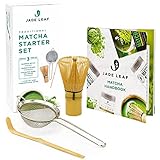
- Everything You Need to Begin – Includes traditional bamboo chasen (whisk), chashaku (scoop), stainless-steel sifter, and an easy-to-follow full-color preparation guide—ideal for both newcomers and matcha aficionados.
- Complete Beginner-Friendly Kit – Inspired by best-selling matcha sets on Amazon, this starter set mirrors the completeness of top kits—providing all core tools for a seamless preparation experience.
- Perfect Gift for Matcha Tea Lovers – With elegant packaging and thoughtful inclusions, this starter set makes a meaningful, stylish gift—combining tradition, beauty, and utility.
- Expert-Guided, No Guesswork – With our step-by-step handbook, creating smooth, whisked matcha becomes easy and enjoyable—even if it’s your first time.hose discovering matcha
- JADE LEAF MATCHA: Jade Leaf is proudly the #1 Matcha brand in the US*. We source our matcha directly from family owned partner farms across the Uji and Kagoshima regions. Our tea masters fuse traditional and modern techniques to cultivate leaves brimming with flavor and nutrients, creating well rounded flavor blends, not found anywhere else.
6. Brew your coffee: Brew your coffee using your preferred method. Aim for a strong brew.
- What “good” looks like: A concentrated, flavorful coffee base.
- Common mistake: Brewing weak coffee. It gets lost against the matcha.
7. Combine the matcha and coffee: While both are still hot, pour your strong brewed coffee into a mug. Add the prepared matcha paste.
- What “good” looks like: The liquids are ready to mix.
- Common mistake: Letting either the coffee or matcha cool too much before combining.
8. Stir or whisk gently: Stir or gently whisk the mixture to combine the coffee and matcha thoroughly.
- What “good” looks like: A uniform color, no distinct layers.
- Common mistake: Not mixing well. You’ll get pockets of coffee and matcha.
9. Add milk and sweetener (optional): Add your preferred milk (dairy or non-dairy) and sweetener, if desired.
- What “good” looks like: The additions enhance, not overpower, the core flavors.
- Common mistake: Adding too much too soon. You can always add more.
10. Taste and adjust: Take a sip. Does it need more sweetness? More milk? A bit more coffee strength? Adjust as needed.
- What “good” looks like: It tastes just right to you.
- Common mistake: Settling for “okay” when you could have “great.”
Common mistakes (and what happens if you ignore them)
| Mistake | What it causes | Fix |
|---|---|---|
| Using low-quality matcha | Bitter, grassy, or dull flavor; poor color | Invest in ceremonial or culinary grade matcha from a reputable source. |
| Not whisking matcha into a paste first | Clumpy matcha in the final drink; gritty texture | Always whisk matcha with a small amount of hot water into a smooth paste before adding to coffee. |
| Brewing weak coffee | The coffee flavor gets overpowered by the matcha | Use a higher coffee-to-water ratio or a more concentrated brew method like espresso. |
| Using stale coffee beans | Flat, dull coffee flavor that doesn’t complement the matcha | Use freshly roasted, whole beans and grind them right before brewing. |
| Incorrect water temperature for matcha | Bitter taste (too hot) or poor dissolving (too cool) | Aim for 175°F for matcha. Check your kettle or let boiling water sit for a minute. |
| Dirty brewing equipment | Off-flavors from old coffee oils or mineral buildup | Clean your brewer, grinder, and any vessels thoroughly after each use. Descale regularly. |
| Adding milk or sweetener too early | Can mask subtle flavors or make it harder to judge the balance | Brew the coffee and matcha first, taste, then add milk and sweetener to adjust. |
| Not tasting and adjusting | A drink that’s “almost” right but not quite perfect | Always take a sip before you’re done. You can always tweak sweetness, milk, or even add a splash more coffee. |
| Using tap water with off-flavors | The off-flavors in the water will negatively impact both coffee and matcha taste | Use filtered water for brewing. It’s a simple upgrade with big results. |
| Not letting the matcha paste fully dissolve | Bits of undissolved matcha powder can be unpleasant | Whisk thoroughly until the paste is smooth and there are no visible dry clumps. |
Decision rules (simple if/then)
- If your matcha tastes bitter, then reduce the water temperature for whisking because hotter water extracts more bitterness.
- If your coffee tastes weak, then increase your coffee dose or decrease your water volume because a stronger coffee base is needed.
- If your drink is too sweet, then add more unsweetened coffee or a splash of plain milk because sweetness is hard to remove once added.
- If your drink has a gritty texture, then whisk your matcha paste more thoroughly because undissolved matcha is the culprit.
- If you want a richer, creamier mouthfeel, then use whole milk or a creamy non-dairy alternative like oat milk because fat content matters.
- If you’re new to matcha, then start with a smaller amount of matcha powder and gradually increase it because matcha has a distinct flavor.
- If your drink tastes muddy, then ensure your coffee is brewed cleanly (e.g., no fines in French press) because off-flavors can muddy the profile.
- If you want to highlight the coffee’s origin notes, then use a lighter roast coffee and less sweetener because these allow the coffee’s nuances to shine.
- If you’re sensitive to caffeine, then consider using decaf coffee or a smaller portion of both coffee and matcha because this is a double-caffeine hit.
- If you’re looking for a quick fix, then use an espresso shot as your coffee base because it’s concentrated and fast.
- If you want to experiment with flavor, then add a tiny pinch of sea salt to enhance sweetness or a dash of cinnamon because complementary spices can work well.
FAQ
What kind of matcha should I use?
Use a good quality culinary or ceremonial grade matcha. Avoid low-grade matcha meant for baking, as it can be too bitter. The better the matcha, the better your drink will taste.
Can I use any coffee?
Yes, but the type of coffee matters. A medium or dark roast often pairs well, but a bright, fruity light roast can also be interesting. Freshly roasted and ground beans are key.
How much caffeine is in a matcha coffee?
It’s higher than a regular cup of coffee. Matcha contains caffeine, and coffee contains caffeine. You’re essentially doubling up, so be mindful of your intake.
Do I need special equipment?
A bamboo whisk (chasen) is traditional for matcha, but a small regular whisk or even a milk frother works well. Otherwise, your usual coffee brewing gear is fine.
What if I don’t like the taste of matcha?
Start with less matcha and more coffee. You can gradually increase the matcha ratio as you get used to the flavor. Sweeteners and milk also help mellow it out.
Can I make this iced?
Absolutely. Brew your coffee strong and let it cool. Whisk your matcha paste, then combine with cooled coffee, milk, and ice. It’s a great summer drink.
How do I store leftover matcha?
Store your matcha powder in an airtight container in the refrigerator to preserve its freshness and vibrant color. Use it within a few weeks for best results.
What this page does NOT cover (and where to go next)
- Specific brand recommendations for matcha or coffee beans. (Next: Research reputable roasters and matcha suppliers.)
- Detailed guides on advanced coffee brewing techniques like siphon or Aeropress. (Next: Explore specialized brewing guides for your chosen coffee method.)
- Nutritional breakdowns or health benefits of matcha and coffee. (Next: Consult health and nutrition resources.)
- Troubleshooting complex espresso machine issues. (Next: Refer to your espresso machine’s manual or a professional technician.)