
Homemade Sweet Vanilla Iced Coffee
Quick Answer
- Use cold brew for a smoother, less acidic base.
- Sweeten your coffee before chilling it for better dissolution.
- Vanilla extract is your friend, but use it judiciously.
- Start with a 1:8 coffee-to-water ratio for brewing, then dilute to taste.
- Ice is crucial, but melt-off can dilute flavor. Consider coffee ice cubes.
- Freshly ground beans make a world of difference.
Who This Is For
- Anyone craving a delicious, customizable iced coffee at home.
- Folks who want to ditch expensive cafe runs for a budget-friendly option.
- Home baristas looking to nail that perfect sweet vanilla flavor without the fuss.
What to Check First
Before you even think about brewing, let’s get a few things dialed in. This is where the magic starts.
Brewer Type and Filter Type
What are you using to make your coffee? Drip machine? French press? Pour-over? Each has its own quirks. The filter matters too – paper filters catch more oils, leaving a cleaner cup. Metal filters let more through, giving a richer mouthfeel. For iced coffee, especially cold brew, a coarser grind and a filter that can handle it are key.
Water Quality and Temperature
Tap water can sometimes have off-flavors that mess with your coffee. If yours tastes funky, try filtered or bottled water. For hot brewing methods, water temperature is critical – aim for 195-205°F. Too cool, and you get sour coffee. Too hot, and it’s bitter. For cold brew, obviously, it’s all about room temp or cold water.
Grind Size and Coffee Freshness
This is a big one. Stale coffee is just sad. Buy beans roasted recently, and grind them right before you brew. The grind size depends on your brewer. Coarse for French press and cold brew, medium for drip, finer for espresso (though we’re not doing espresso here). For sweet vanilla iced coffee, a medium-coarse grind usually works well.
Coffee-to-Water Ratio
This is your strength dial. A common starting point for hot coffee is around 1:15 to 1:18 (coffee to water by weight). For cold brew, you’ll often go stronger, like 1:4 to 1:8, because you’ll dilute it later. Don’t be afraid to experiment. I usually start around 1:8 for cold brew concentrate and then add water or milk until it tastes right.
Cleanliness/Descale Status
Seriously, clean your gear. Old coffee oils go rancid and will ruin even the best beans. If you have a drip machine, descale it regularly according to the manufacturer’s instructions. A quick rinse after each use goes a long way. Your coffee will thank you.
Step-by-Step: Crafting Your Sweet Vanilla Iced Coffee
Let’s get this done. We’ll focus on a cold brew method for that smooth base.
1. Gather your ingredients. You’ll need coffee beans, water, vanilla extract, and your sweetener of choice (sugar, simple syrup, etc.). Make sure your beans are fresh.
- Good looks like: Everything is within reach, and you’re ready to roll.
- Common mistake: Realizing halfway through you’re out of sweetener. Avoid this by prepping ahead.
2. Grind your coffee. Aim for a coarse grind, like sea salt. This is key for cold brew to prevent over-extraction and sediment.
- Good looks like: Evenly sized particles, no fine dust.
- Common mistake: Grinding too fine. This leads to a muddy, bitter brew that’s hard to filter.
3. Combine coffee and water. For a concentrate, try a ratio of 1 part coffee to 4-8 parts water (by weight or volume, just be consistent). A good starting point is 1 cup of coffee grounds to 4 cups of water.
- Good looks like: All the grounds are saturated with water.
- Common mistake: Not wetting all the grounds initially. This can lead to uneven extraction. Give it a gentle stir.
4. Steep. Cover the container and let it steep at room temperature for 12-24 hours. Longer steeping means a stronger flavor. I usually go for 18 hours.
- Good looks like: Time has passed, and the water has turned dark brown.
- Common mistake: Steeping for too short a time (weak coffee) or too long (bitter coffee). Experiment to find your sweet spot.
5. Filter the concentrate. Use a fine-mesh sieve lined with cheesecloth or a dedicated cold brew filter bag. Filter slowly and patiently. You might need to filter twice for a super-clean result.
- Good looks like: Clear, dark liquid with minimal sediment.
- Common mistake: Rushing the filtering process. This pushes fine particles through, making your coffee gritty.
6. Prepare your vanilla sweetener. While the coffee brews/filters, make your simple syrup. Dissolve equal parts sugar and water over low heat until clear, then stir in a good splash of vanilla extract. Let it cool.
- Good looks like: A syrupy liquid with a nice vanilla aroma.
- Common mistake: Adding vanilla extract directly to hot syrup. It can evaporate. Add it after it cools slightly.
7. Dilute the concentrate. Pour your desired amount of cold brew concentrate into a glass. Start with a 1:1 ratio of concentrate to water or milk, and adjust to your taste.
- Good looks like: A pleasant, drinkable coffee strength.
- Common mistake: Not diluting enough. You’ll have super-strong, potentially bitter coffee.
8. Add sweetener and ice. Stir in your vanilla simple syrup or other sweetener to taste. Then, fill your glass with ice.
- Good looks like: Sweetness is balanced, and your drink is nice and cold.
- Common mistake: Adding sweetener after the ice. It won’t dissolve as easily in cold liquid.
9. Taste and adjust. Take a sip. Need more sweetness? More vanilla? A splash more milk or water? Make it perfect for you.
- Good looks like: Pure coffee bliss.
- Common mistake: Settling for “good enough.” This is your coffee; make it great!
10. Enjoy! Kick back and savor your homemade creation. You earned it.
Once your delicious vanilla iced coffee is ready, pour it into some stylish iced coffee glasses to complete the experience. These glasses are perfect for showcasing your homemade creation.
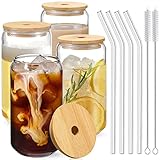
- PRODUCT CONFIGURATION: Drinking glass set includes 4 glass cups [ Diameter - 3 inches, Height - 5.6 inches ],4 nature bamboo lids, 4 reusable glass straws and 2 cleaning brushes, Classic design tumbler
- DURABLE and SAFE: The glasses are made of high-quality durable clear glass, Lead-free and BPA-free. It can be used safely for a long time. This thick clear glass can withstand the sudden changes in the temperature difference between -68°F to 212°F, making them dishwasher safe. If you want to decorate this glass, you can do DIY easily without breakage
- MULTI-PURPOSE: The glassware Great for any Occasion, any hot and cold drinks, home essentials. It is widely loved by families, kitchen, breweries, cafes, bars and restaurants. You can use it to make perfect tea, bubble Pearl Milk Tea, soda, water, iced coffee, smoothie, fruit juice or any other interesting holiday drinks
- AMAZING GIFT: This jar is very fashionable, aesthetic and characteristic. Excellent workmanship. Perfect Gifts for Women, House warming gifts, Tea mug Sets, Highball Glasses, Home Bar Accessories, Birthdays, Graduation, Weddings and Christmas Gifts
- SATISFIED SERVICE: This glass set is packaged in the heavy bubble holder and thick carton box to prevent damage while in transport. If the glass set you received was damaged or imperfect or you are not satisfied, we will offer a satisfactory solution
Common Mistakes (and What Happens If You Ignore Them)
| Mistake | What It Causes | Fix |
|---|---|---|
| Using stale coffee beans | Flat, dull, or bitter coffee | Buy freshly roasted beans and grind them right before brewing. |
| Grinding coffee too fine for cold brew | Muddy, over-extracted, bitter coffee | Use a coarse grind; filter thoroughly, maybe twice. |
| Incorrect water temperature (hot brew) | Sour (too cool) or bitter (too hot) coffee | Use a thermometer or let boiling water sit for 30-60 seconds. |
| Not stirring grounds initially (cold brew) | Uneven extraction, weak spots, sourness | Ensure all grounds are saturated at the start; give a gentle stir. |
| Rushing the filtering process | Gritty, sludgy coffee | Filter slowly and patiently; consider a second filtering pass. |
| Adding vanilla extract to hot liquid | Vanilla flavor dissipates | Add vanilla extract to cooled simple syrup or directly to cold brew. |
| Over-sweetening | Cloying, masks coffee flavor | Add sweetener gradually; taste as you go. |
| Using tap water with off-flavors | Unpleasant, chemical, or metallic taste | Use filtered or bottled water for a cleaner coffee profile. |
| Not cleaning equipment regularly | Rancid oils make coffee taste bad | Rinse brewer after each use; descale machines as recommended. |
| Using too much ice | Diluted, weak coffee | Consider coffee ice cubes or use less ice and dilute less. |
Decision Rules for Better Iced Coffee
- If your coffee tastes bitter, then try a coarser grind or a shorter steep time (for cold brew) because over-extraction is likely.
- If your coffee tastes sour, then try a finer grind or a longer steep time (for cold brew) because under-extraction is likely.
- If your cold brew concentrate is too strong, then dilute it with more water or milk because that’s the point of making a concentrate.
- If you want a smoother, less acidic iced coffee, then use the cold brew method because it extracts fewer bitter compounds.
- If your sweetener isn’t dissolving, then try making a simple syrup or adding it while the coffee is still warm (if hot brewing) because sugar dissolves better in warmer liquids.
- If your iced coffee tastes weak, then use more coffee grounds next time or a stronger brew ratio because you’re not getting enough coffee flavor.
- If you notice sediment in your cup, then filter your cold brew again through a finer material because you likely have fine particles passing through.
- If your vanilla flavor is weak, then use a higher quality vanilla extract or add a bit more because the intensity varies by brand.
- If you want to avoid watery iced coffee, then use coffee ice cubes because they chill your drink without diluting it.
- If your hot-brewed coffee tastes dull, then check your water temperature and grind size because these are critical for proper extraction.
FAQ
What’s the best coffee to use for sweet vanilla iced coffee?
Medium to dark roasts often work well for iced coffee, as their bolder flavors stand up better to dilution and sweetness. Freshly roasted beans are always best, regardless of roast level.
How do I make vanilla syrup?
Combine 1 cup of sugar and 1 cup of water in a saucepan. Heat gently, stirring until the sugar dissolves completely. Remove from heat, stir in 1-2 teaspoons of vanilla extract, and let it cool before using.
Can I use regular sugar instead of simple syrup?
Yes, but it’s trickier. Granulated sugar dissolves poorly in cold liquids. You’ll get better results if you stir it into warm coffee (if hot brewing) or make a simple syrup first.
How long does cold brew concentrate last?
Stored in an airtight container in the refrigerator, cold brew concentrate should last about 1-2 weeks. It’s best enjoyed within the first week for optimal flavor.
What’s the difference between cold brew and iced coffee?
Iced coffee is typically hot-brewed coffee that’s chilled, often leading to a more acidic or sometimes bitter taste. Cold brew is brewed with cold water over a long period, resulting in a smoother, less acidic, and often sweeter profile.
Can I add milk or cream?
Absolutely. Dairy milk, oat milk, almond milk, or heavy cream all work great. Add them after diluting your concentrate and before adding ice for best mixing.
How much vanilla extract should I use?
Start with a small amount, like 1/2 teaspoon for a single serving, and add more to taste. Too much can make it taste artificial or medicinal.
What if I don’t have a fancy cold brew maker?
No problem! A large jar, a fine-mesh sieve, and some cheesecloth or a nut milk bag will do the trick. Just follow the filtering steps carefully.
What This Page Does Not Cover (and Where to Go Next)
- Advanced latte art techniques for your iced drinks.
- Specific recommendations for espresso machines or grinders.
- Detailed comparisons of different coffee bean origins and their flavor profiles.
- Troubleshooting issues with automatic drip coffee makers beyond basic cleaning.
- The science behind caffeine extraction and its effects.