
Ground Coffee From 1 Tablespoon Of Beans
Quick answer
- A tablespoon of whole coffee beans yields roughly 1.5 to 2 tablespoons of ground coffee.
- This is a small amount, perfect for a single, strong cup or a tasting sample.
- The exact yield depends on the bean’s density and how finely you grind it.
- It’s a good starting point for experimenting with different beans.
- For a full pot, you’ll need a lot more beans.
- This is way less than a standard scoop, so adjust your expectations.
Key terms and definitions
- Whole Bean: Coffee beans that have not been ground.
- Grind Size: The coarseness or fineness of the ground coffee particles.
- Tablespoon (tbsp): A common unit of volume, roughly 0.5 fluid oz or 15 ml.
- Density: How much mass is packed into a given volume. Denser beans weigh more per tablespoon.
- Extraction: The process of dissolving soluble compounds from coffee grounds into water.
- Brewing: The method used to extract coffee, like drip, pour-over, or French press.
- Ratio: The proportion of coffee grounds to water used in brewing.
- Bloom: The initial release of CO2 when hot water first hits fresh coffee grounds.
- Aroma: The smell of coffee, a key indicator of freshness and flavor.
- Flavor Profile: The specific taste characteristics of a coffee.
How it works
- Whole beans are hard and dense.
- Grinding breaks down the bean structure.
- This increases the surface area exposed to water.
- More surface area means faster extraction.
- The volume of the coffee increases when ground.
- Think of it like breaking up a rock – it takes up more space.
- This expansion is why 1 tablespoon of beans becomes more than 1 tablespoon of grounds.
- The finer the grind, the more compact the grounds can be.
- But too fine can lead to over-extraction.
- It’s a simple physical transformation.
What affects the result
- Bean Density: Heavier, denser beans will yield slightly less volume when ground compared to lighter ones. Some origins are just naturally denser.
- Roast Level: Darker roasts are often less dense because the beans expand and lose moisture during roasting. A dark roast tablespoon might be lighter than a light roast one.
- Grind Size: A finer grind will pack more densely than a coarse grind, leading to a slightly smaller volume of grounds from the same amount of beans.
- Grinder Type: Blade grinders can create uneven particle sizes, while burr grinders offer more consistency. This can affect how the grounds settle.
- Bean Shape: Some beans are naturally rounder, others more oval. This can influence how they pack together.
- Moisture Content: Beans with higher moisture content might have slightly different densities.
- How you measure: Are you leveling the tablespoon, or is it heaped? This makes a difference.
- Bean Age: While not a direct volume changer, older beans can be more brittle and might break down differently.
- Altitude of Origin: Beans grown at higher altitudes can sometimes be denser.
- Processing Method: How the coffee cherry was processed can affect bean density.
- Packing: How tightly the grounds are packed into the measuring spoon.
- Bean Variety: Different coffee varietals can have inherent density differences.
Pros, cons, and when it matters
- Pro: Perfect for tasting: A tablespoon of beans is ideal for a quick single-serving sample of a new coffee. You can grind it fresh and try it out.
- Con: Tiny yield: You won’t get much coffee from this small amount. Don’t expect a full mug.
- Pro: Freshness focus: Grinding just what you need ensures maximum freshness for that small brew.
- Con: Inaccurate for recipes: This is not a standard measurement for most brewing recipes. You’ll need to scale up.
- Pro: Great for experimentation: Want to try a specific brewing method with a very small amount of a rare bean? This is your ticket.
- Con: Inconsistent for regular brewing: Relying on a tablespoon for daily coffee will be tedious and often result in weak brews.
- Pro: Easy to measure: A tablespoon is a common kitchen tool.
- Con: Volume vs. Weight: Coffee is best measured by weight for consistency, and a tablespoon is a volume measure.
- Pro: Good for travel: If you have a small hand grinder and a few beans, you can make a quick cup anywhere.
- Con: Not cost-effective for large batches: Buying beans and grinding them by the tablespoon is inefficient.
- Pro: Quick to grind: A few beans are easy to grind with a small hand grinder.
- Con: Can lead to over-extraction if not careful: Because it’s a small amount, brewing variables can be harder to control.
Common misconceptions
- Myth: A tablespoon of beans always makes exactly X amount of grounds. Nope. As we covered, density and grind size mess with volume.
- Myth: You need a fancy grinder for a tablespoon of beans. Not at all. A decent hand grinder works fine for small batches.
- Myth: Ground coffee from a tablespoon is enough for a standard mug. It’s usually way less. Think espresso shot or a small tasting cup.
- Myth: It doesn’t matter if you grind beans just before brewing. It absolutely matters. Freshly ground coffee has way more flavor.
- Myth: All coffee beans are the same size and density. They’re not. Think of it like comparing a pebble to a small rock.
- Myth: You can just eyeball the amount for a single cup. For consistency, especially with small amounts, measuring matters.
- Myth: A tablespoon of grounds is the same as a tablespoon of beans. It’s not. Grinding increases the volume.
- Myth: Lighter roasts yield more grounds than dark roasts. Lighter roasts are denser, so a tablespoon might weigh more, but the volume of grounds can be similar or even slightly less depending on grind. It’s complicated.
- Myth: Using a tablespoon of beans is a waste of good coffee. It’s only a waste if you brew it poorly or don’t enjoy the result. It’s great for sampling.
- Myth: The water temperature doesn’t matter for small brews. It totally does. Consistent temperature is key for good extraction, no matter the batch size.
FAQ
Q: How much ground coffee does 1 tablespoon of whole beans make?
A: Generally, about 1.5 to 2 tablespoons of ground coffee. It varies with bean density and grind size.
Q: Is this enough coffee for a full cup?
A: Probably not. This is a small amount, best for a strong single shot, a tasting sample, or a very small, weak cup.
This small amount is perfect for a single, strong cup, especially when paired with a compact single cup coffee maker.
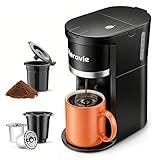
- Brew in Two Ways: Horavie single serve coffee maker supports both k pod and ground coffee, offering flexible brew sizes from 6 to 12oz to meet your varying coffee needs. Whether you want a quick cup or to savor a slow drink, it handles both with ease
- Safe and High-Quality Materials: Made from BPA-free and heat-resistant materials, this single cup coffee maker ensures durability and safety. The built-in water tank with view window allows you to monitor the water level at any time, preventing issues during brewing
- One-Touch Quick Brewing: This coffee machine combines fast brewing technology with one button operation mode that is simple and fast for any user. Simply press the button and enjoy hot coffee in just 120s, perfect for busy mornings or office use
- Compact Size fits Anywhere: Whether at home, in the office, or while traveling, the Horavie small coffee maker seamlessly fits into your lifestyle. Its compact design and light weight make it ideal for small kitchens, office or RVs, especially in space-limited environments
- Descaling Reminder & Self-Cleaning: The mini one cup coffee maker features an automatic descaling reminder that illuminates in red when cleaning is needed. Simply add a descaling solution and press the buttons for 2 seconds to initiate the self-cleaning process. This feature helps prevent clogging and ensures optimal performance, significantly extending the lifespan of your K-Pod coffee maker
Q: What’s the best way to grind 1 tablespoon of beans?
A: A small hand grinder is perfect for this. It gives you control and consistency for such a small batch.
Q: Should I measure my beans before or after grinding?
A: For consistency, it’s always best to measure your coffee beans by weight before grinding. But if you’re just using a tablespoon, measure the whole beans first.
Q: Does the type of bean affect the yield?
A: Yes. Denser beans might yield slightly less volume when ground compared to less dense beans.
Q: How fine should I grind the beans for this amount?
A: It depends on your brewing method. For espresso, grind fine. For pour-over, medium. For French press, coarse. Check your brewer’s recommendations.
Q: Can I use this to make espresso?
A: You could try, but 1 tablespoon of beans makes a very small amount of espresso, maybe a single shot if you’re lucky.
Q: What if my grounds look too fluffy?
A: That likely means they are very coarse. You might need to grind finer, or you’ve got a less dense bean.
Q: Is there a way to be more precise than a tablespoon?
A: Absolutely. Using a kitchen scale to weigh your beans is the most accurate method for any brew.
What this page does NOT cover (and where to go next)
- Precise weight conversion for specific bean types. (Look up bean density charts or use a scale).
- Detailed guides on specific brewing methods. (Search for “pour-over brewing guide” or “French press technique”).
- Comparisons of different coffee grinder brands. (Research “best coffee grinders for home use”).
- The chemical compounds responsible for coffee flavor. (Explore coffee science resources).
- How to store coffee beans for optimal freshness. (Read about coffee storage best practices).