
Finding Coffee Maker Replacement Parts
Quick answer
- Check the coffee maker’s manual for manufacturer contact information or a parts list.
- Visit the manufacturer’s official website, which often has a dedicated “support” or “parts” section.
- Search online retailers using your coffee maker’s exact model number and the part name.
- Look for authorized parts distributors that specialize in small appliances.
- Consider if a universal replacement part might suffice, but verify compatibility carefully.
- If the part is a common wear item like a filter basket or carafe, it may be easier to find than specialized components.
What this problem usually is (and is not)
- This problem typically arises when a specific component of your coffee maker breaks, becomes lost, or wears out over time.
- It is NOT about troubleshooting why your coffee maker isn’t brewing; this guide assumes you’ve identified a physical part that needs replacing.
- It does NOT cover general maintenance or cleaning issues, though some replacement parts might be related to cleaning (e.g., descaling filters).
- This is also NOT about finding a completely new coffee maker, but rather sourcing individual pieces to repair your existing one.
- Be aware that very old or discontinued models may have limited or no replacement parts available.
- The goal is to help you locate the correct part to restore your coffee maker’s functionality safely.
Likely causes (triage list)
Broken or Damaged Components:
- Physical Damage: Inspect the coffee maker for any visible cracks, breaks, or deformities on parts like the carafe, lid, filter basket, or water reservoir. This is usually evident upon visual inspection.
- Worn-Out Seals or Gaskets: If you notice leaks around the carafe spout or brewing head, seals or gaskets may have degraded. These are often rubber or silicone and can become brittle or cracked.
Lost Components:
- Missing Lids or Covers: If a lid for the water reservoir or carafe is missing, it’s a straightforward loss. Check under cabinets or behind appliances where it might have fallen.
- Misplaced Filter Basket: The filter basket can easily be misplaced during cleaning. Retrace your steps in the kitchen or laundry area.
Functional Failures Requiring Replacement:
- Faulty Carafe: If your carafe is cracked, chipped, or the handle is loose, it needs replacement for safety and functionality.
- Clogged or Damaged Brew Head: While often a cleaning issue, if the brew head itself is physically damaged or permanently clogged, it may require replacement. Look for obstructions that cannot be removed.
Wear and Tear:
- Degraded Water Reservoir: Over time, plastic reservoirs can become cloudy or develop internal scaling that’s hard to remove, affecting water flow or taste.
- Filter Holder Issues: If the holder for the filter basket is warped or broken, it will prevent proper brewing.
If your water reservoir is cloudy or has hard-to-remove scaling, it might be time for a replacement. You can often find specific coffee maker water reservoirs like this one on Amazon by searching your model number.
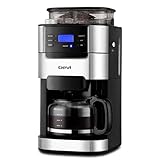
- 【𝟐-𝟏𝟎 𝐂𝐮𝐩 𝐅𝐥𝐞𝐱𝐢𝐛𝐥𝐞 𝐂𝐚𝐩𝐚𝐜𝐢𝐭𝐲】Our drip coffee maker with built-in grinder lets you brew anywhere from 2 to 10 cups. Simply use the “POWDER 2-10” button to adjust the ratio of coffee to water for your perfect strength.
- 【𝐂𝐮𝐬𝐭𝐨𝐦𝐢𝐳𝐚𝐛𝐥𝐞 𝐁𝐫𝐞𝐰 & 𝐆𝐫𝐢𝐧𝐝】This all-in-one machine with a burr grinder offers 3 grind strength levels and 8 adjustable settings. Grind fresh whole beans right before brewing for consistently smooth, flavorful coffee.
- 【𝐑𝐞𝐮𝐬𝐚𝐛𝐥𝐞 & 𝐄𝐚𝐬𝐲-𝐂𝐥𝐞𝐚𝐧 𝐅𝐢𝐥𝐭𝐞𝐫】The coffee maker includes a durable reusable filter that is easy to clean—just rinse with water for quick maintenance and less waste.
- 【𝐈𝐦𝐩𝐨𝐫𝐭𝐚𝐧𝐭 𝐍𝐨𝐭𝐞】Product dimensions: 12.36"D x 8.38"W x 16.93"H. Please measure your countertop and cabinet space beforehand to ensure proper fit.
- 【𝐏𝐫𝐞-𝐁𝐫𝐞𝐰 𝐄𝐱𝐭𝐫𝐚𝐜𝐭𝐢𝐨𝐧 𝐓𝐞𝐜𝐡𝐧𝐨𝐥𝐨𝐠𝐲】Featuring advanced pre-brew technology, this black & silver coffee maker evenly saturates coffee grounds through precise temperature control, unlocking richer flavor and aroma before full brewing.
Fix it step-by-step (brew workflow)
This workflow focuses on the process of finding and acquiring the replacement part, not the installation itself.
1. Identify the Specific Part Needed:
- What to do: Carefully examine the broken or missing part. Note its shape, size, material, and any identifying marks or numbers.
- What “good” looks like: You can clearly describe or photograph the part you need.
- Common mistake: Assuming a generic part will fit.
- How to avoid: Take precise measurements and note any unique features.
2. Locate Your Coffee Maker’s Model Number:
- What to do: Find the manufacturer’s label on your coffee maker. It’s usually on the bottom, back, or side.
- What “good” looks like: You have the exact model number (e.g., “BrewMaster 5000,” “CafePro Deluxe X2”).
- Common mistake: Using a general product name instead of the specific model number.
- How to avoid: Write down the full alphanumeric code.
3. Consult Your Coffee Maker’s Manual:
- What to do: If you still have it, check the manual for a parts list, diagrams, or manufacturer contact information.
- What “good” looks like: The manual provides a part number or directs you to a support resource.
- Common mistake: Discarding the manual without realizing its value.
- How to avoid: Keep manuals in a designated place or download digital copies from the manufacturer’s website.
4. Visit the Manufacturer’s Official Website:
- What to do: Navigate to the manufacturer’s website. Look for sections like “Support,” “Parts,” “Accessories,” or “Service.”
- What “good” looks like: You find a page where you can search for parts by model number or part name.
- Common mistake: Getting lost on a generic company website without finding the specific support section.
- How to avoid: Use the website’s search bar with terms like “parts” and your model number.
5. Search Online Retailers:
- What to do: Use major online shopping platforms (e.g., Amazon, eBay, specialty appliance parts sites). Enter your coffee maker’s model number and the name of the part (e.g., “BrewMaster 5000 carafe,” “CafePro Deluxe X2 filter basket”).
- What “good” looks like: You find listings for the exact part you need, often with compatible model numbers listed.
- Common mistake: Searching only by part name without including the model number.
- How to avoid: Always combine the model number with the part name for more accurate results.
6. Identify Authorized Parts Distributors:
- What to do: Some manufacturers partner with specific online stores or local businesses that are authorized to sell their replacement parts.
- What “good” looks like: You find a reputable distributor that guarantees genuine parts.
- Common mistake: Buying from an unverified seller who might offer counterfeit or incompatible parts.
- How to avoid: Look for “authorized dealer” badges or check the manufacturer’s website for a list of partners.
7. Consider Universal or Compatible Parts (with Caution):
- What to do: For very common items like carafes or filter baskets, universal replacements might exist. Carefully check dimensions and compatibility notes.
- What “good” looks like: The description clearly states it fits your model or a wide range of similar models, and dimensions match.
- Common mistake: Assuming a “universal” part will work without verification.
- How to avoid: Always measure your original part and compare it to the dimensions of the universal one.
8. Verify Compatibility and Return Policies:
- What to do: Before purchasing, double-check that the part is listed as compatible with your specific coffee maker model. Review the seller’s return policy in case of an error.
- What “good” looks like: You have confidence the part will fit, and you know your options if it doesn’t.
- Common mistake: Not checking compatibility or return policies, leading to wasted money and time.
- How to avoid: Read product descriptions thoroughly and look for clear compatibility statements.
9. Place Your Order:
- What to do: Complete the purchase through your chosen retailer or distributor.
- What “good” looks like: You receive an order confirmation with shipping details.
- Common mistake: Rushing through the checkout process and making an error in shipping information.
- How to avoid: Review all order details before submitting payment.
Prevent it next time
- Regular Cleaning: Clean your coffee maker, including removable parts like the carafe and filter basket, after each use.
- Deep Cleaning & Descaling: Follow your manual’s instructions for periodic deep cleaning and descaling (typically monthly or quarterly, depending on water hardness).
- Use Filtered Water: Employ filtered water to minimize mineral buildup, which can extend the life of internal components and prevent scale.
- Proper Storage: Store your coffee maker and its accessories in a dry place, away from direct sunlight and extreme temperatures.
- Handle with Care: Avoid dropping or mishandling parts like the carafe or water reservoir to prevent cracks and breaks.
- Inspect Regularly: Periodically check for any signs of wear, such as loose handles, cracked plastic, or degraded seals.
- Use Correct Coffee Grind: Ensure you are using the correct grind size for your coffee maker (usually medium). Too fine a grind can clog the filter and strain the machine.
- Filter Placement: Always ensure the coffee filter and filter basket are properly seated before brewing.
- Don’t Force Parts: If a part doesn’t fit easily, don’t force it. Re-check compatibility or consult your manual.
- Keep Manual Accessible: Store your coffee maker’s manual digitally or in a safe place for future reference.
Common mistakes (and what happens if you ignore them)
| Mistake | What it causes | Fix |
|---|---|---|
| Not using the exact model number | Ordering incompatible parts, wasted money, frustration. | Always search using the full model number found on the coffee maker’s label. |
| Assuming a “universal” part will fit | Leaks, poor brewing performance, potential damage to the machine. | Verify dimensions and compatibility with your specific model. Measure your original part if possible. |
| Buying from unverified online sellers | Receiving counterfeit, damaged, or incompatible parts; no recourse for returns. | Stick to the manufacturer’s website, authorized dealers, or well-known retailers with clear return policies. |
| Forcing a part that doesn’t seem to fit | Breaking the new part or damaging the coffee maker itself. | Stop immediately. Re-check the part number and compatibility. Consult your manual or the manufacturer’s support. |
| Ignoring a cracked carafe | Risk of burns from hot coffee spills, potential for glass shards in coffee. | Replace the carafe immediately. Do not attempt to use a cracked or chipped carafe. |
| Not checking return policies | Being stuck with an unusable part if it’s incorrect or faulty. | Always review the seller’s return and exchange policy <em>before</em> purchasing. |
| Over-tightening screws or connections | Stripping threads, cracking plastic components, making future removal difficult. | Tighten until snug. If a screw feels like it’s going to strip or crack plastic, stop. Consult instructions if available. |
| Not cleaning old parts before disposal | Potential for lingering coffee oils or residue to contaminate new parts. | Clean old parts thoroughly before discarding them, especially if they are being returned or sent for inspection. |
| Relying solely on product images | Parts may look similar but have subtle differences in connection or size. | Always prioritize written specifications, model compatibility lists, and part numbers over visual appearance alone. |
| Not documenting the original part’s state | Difficulty in describing the issue or part to support if problems arise. | Take clear photos of the broken part and its location on the machine before attempting to find a replacement. |
Decision rules (simple if/then)
- If your carafe is cracked, then replace the carafe immediately because a cracked carafe poses a safety hazard and can lead to spills.
- If you cannot find the model number, then check the bottom or back of the coffee maker, or search online for your coffee maker’s brand and general model type to find common label locations because the model number is crucial for finding the correct part.
- If the manufacturer’s website does not list replacement parts, then try searching major online retailers using your exact model number and part name because third-party sellers often stock parts.
- If a part is listed as “compatible” but you are unsure, then contact the seller or manufacturer directly to confirm compatibility before purchasing because a mismatch can lead to a non-functional brew or damage.
- If you are looking for a common wear item like a filter basket or carafe, then check if a high-quality universal replacement is available, but always verify dimensions because these parts are more likely to have standardized options.
- If the part you need is a complex electronic component or a specialized brewing mechanism, then it is often more cost-effective and safer to contact the manufacturer or an authorized service center because these parts can be expensive and difficult to install correctly.
- If your coffee maker is very old or has been discontinued, then replacement parts may be unavailable, and you may need to consider purchasing a new machine because manufacturers typically stop supporting older models.
- If you suspect a part is damaged but are unsure, then consult your coffee maker’s manual for troubleshooting steps or contact customer support because they can help diagnose the issue and confirm if a part replacement is needed.
- If you find a part at a significantly lower price than other retailers, then be cautious and check seller reviews and authenticity claims because extremely low prices can sometimes indicate counterfeit or low-quality products.
- If the replacement part requires disassembly of the coffee maker, then ensure you have the right tools and follow instructions carefully, or consider professional repair if you are uncomfortable because improper reassembly can lead to further damage or safety issues.
FAQ
Q: How do I find the model number of my coffee maker?
A: Look for a sticker or plate on the bottom, back, or side of your coffee maker. It usually contains the brand name and a specific model number.
Q: Can I use a part from a different brand of coffee maker?
A: Generally, no. Coffee maker parts are designed for specific models and brands. Using incompatible parts can cause damage or poor performance.
Q: What if the manufacturer no longer makes my part?
A: For very old or discontinued models, parts can be hard to find. You might look for used parts on auction sites or consider purchasing a new coffee maker.
Q: How do I know if a “universal” part will fit?
A: Check the product description carefully for compatibility lists. Measure your original part and compare its dimensions to the universal part’s specifications.
Q: Is it safe to buy used coffee maker parts?
A: It can be, but proceed with caution. Ensure the seller is reputable and inspect photos closely for damage. Wear and tear on used parts might be significant.
Q: Where can I find diagrams of my coffee maker’s parts?
A: Your coffee maker’s manual is the best source. If you don’t have it, search the manufacturer’s website for a downloadable version.
Q: What should I do if the replacement part doesn’t work?
A: First, double-check that you ordered the correct part for your model. Then, review the seller’s return policy to arrange for an exchange or refund.
Q: How often do coffee maker parts typically need replacing?
A: This varies greatly. Carafes and filter baskets are common replacements due to breakage or wear. Internal components may last the life of the machine if well-maintained.
Q: Can I fix a broken plastic part myself?
A: For minor cracks, some specialized plastic epoxies might work temporarily, but it’s generally not recommended for parts that come into contact with hot water or food. Replacement is usually the safest option.
What this page does NOT cover (and where to go next)
- Troubleshooting brewing issues: This guide focuses on replacing parts, not diagnosing why your coffee isn’t brewing correctly (e.g., weak coffee, slow brewing).
- Electrical or internal component repair: Complex internal repairs or electrical fixes are beyond the scope of this guide.
- Installation of replacement parts: While we guide you on finding parts, the actual installation process can vary greatly by model.
- Recommendations for specific brands or retailers: This article provides general advice on where and how to search.
Where to go next:
- Consult your coffee maker’s troubleshooting section in the manual.
- Search for model-specific repair videos online.
- Contact the coffee maker’s manufacturer for technical support.
- Consider professional appliance repair services for complex issues.