
Filter Size For A 12-Cup Coffee Maker
Quick Answer
- Most 12-cup coffee makers use standard #4 cone filters.
- Some use basket-style filters, often 8-12 cup size.
- Always check your coffee maker’s manual or the old filter.
- Measure the diameter of your old filter if unsure.
- Cone filters are usually around 4 inches across the top.
- Basket filters tend to be flatter and wider.
Key Terms and Definitions
- Cone Filter: A coffee filter shaped like a cone, designed to sit in a cone-shaped brew basket.
- Basket Filter: A coffee filter shaped like a basket, typically used in flat-bottomed brew baskets.
- #4 Cone Filter: A specific size designation for cone coffee filters, commonly used in many drip coffee makers.
- Drip Coffee Maker: An automatic coffee machine that heats water and drips it through coffee grounds in a filter.
- Brew Basket: The removable part of a coffee maker that holds the coffee grounds and filter.
- Filter Diameter: The measurement across the widest part of a coffee filter.
- Filter Height: The measurement from the bottom of a filter to its top rim.
- Paper Filter: Disposable filters made from paper, designed for single use.
- Reusable Filter: Filters made from metal mesh or cloth, designed to be washed and reused.
- Carafe: The pot that collects brewed coffee.
How It Works
- Water heats up in the reservoir of your coffee maker.
- Hot water is then funneled over the coffee grounds.
- The grounds sit in the filter, held within the brew basket.
- As water passes through the grounds, it extracts coffee flavor.
- This liquid coffee then drips through the filter material.
- The filter traps the coffee grounds, letting only the brewed coffee pass.
- The brewed coffee then flows into the carafe below.
- This process continues until all the water has passed through.
What Affects The Result
- Filter Size: Too small, and grounds spill over. Too big, and it might not sit right.
- Filter Type: Cone vs. basket matters for brew basket shape.
- Filter Material: Paper can affect taste slightly. Metal lets more oils through.
- Coffee Grind Size: Too fine can clog the filter. Too coarse can lead to weak coffee.
- Coffee-to-Water Ratio: The amount of coffee grounds versus water. This is key for strength.
- Water Temperature: Ideal is between 195-205°F (90-96°C). Too cool or too hot messes things up.
- Water Quality: Filtered water usually tastes better than tap water.
- Coffee Freshness: Freshly roasted and ground beans make a big difference.
- Brew Time: How long the water is in contact with the grounds.
- Brewer Cleanliness: Old coffee oils can make your brew taste bitter.
- Filter Sealing: Make sure the filter is seated properly in the brew basket.
- Filter Material Thickness: Thicker paper filters can slow down flow rate.
Pros, Cons, and When It Matters
- Standard #4 Cone Filters:
- Pros: Widely available, fits many makers, good filtration.
- Cons: Can be messy if not seated right.
- Matters: If your maker has a cone-shaped brew basket.
- Basket Filters (8-12 Cup Size):
- Pros: Easy to use, often fit flat-bottomed baskets, less spill risk.
- Cons: Less common than #4 cones in some areas.
- Matters: If your maker has a flat-bottomed brew basket.
- Paper Filters:
- Pros: Easy cleanup, good at trapping fine particles.
- Cons: Can impart a slight papery taste if not rinsed.
- Matters: For a cleaner cup and simple disposal.
- Reusable Filters (Metal/Cloth):
- Pros: Eco-friendly, saves money long-term, allows more oils through for richer flavor.
- Cons: Requires cleaning, can let more sediment through.
- Matters: If you want a bolder cup and are okay with cleaning.
- Choosing the Right Size:
- Pros: Prevents overflow and grounds in your coffee.
- Cons: Can be frustrating if you buy the wrong size.
- Matters: Every single time you brew.
- Brand-Specific Filters:
- Pros: Guaranteed to fit your specific machine.
- Cons: Can be more expensive and harder to find.
- Matters: If your maker has a non-standard brew basket.
- Overfilling the Basket:
- Pros: None, really.
- Cons: Leads to grounds escaping and a messy cleanup.
- Matters: When you’re trying to make a full pot.
- Underfilling the Basket:
- Pros: None.
- Cons: Weak, watery coffee.
- Matters: For decent tasting coffee.
- Filter Placement:
- Pros: Ensures proper water flow.
- Cons: A poorly placed filter can cause bypass, leading to weak coffee.
- Matters: For consistent brewing.
- Rinsing Paper Filters:
- Pros: Removes paper taste, helps filter stick to the basket.
- Cons: Adds an extra step.
- Matters: If you’re sensitive to subtle taste differences.
For an eco-friendly and cost-effective option, consider a reusable metal coffee filter. These filters allow more of the coffee’s natural oils to pass through, resulting in a richer flavor, and can be washed and reused many times.
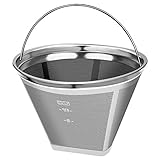
- ★ 【Serves You The Superior Taste Coffee Reusable Coffee Filters 4】: Upgrade stainless steel reusable cone coffer filter, makes you healthier and it is durable for years, no plastic and other material,
- ★ 【 Eco-Friendly】:The stainless steel Reusable #4 Cone Permanent Coffee Filter serve the original coffee to You, use your own fresh coffee , reduce cone disposable paper filter waste, enjoy your favorite coffee, excellent for your personal enjoyment;
- ★ 【Easy To Use & Clean】: Replace the cone #4 disposable paper filter and 4# plastic filter, washed it in the dishwasher or under running water;
- ★ 【Universal for All 8-14 Cup Cone Coffee Maker & #4 Pour Over Coffee Dripper】: Perfect fit for Cuisinart coffee makers and other models: DCC-3400, DCC-3200, DCC-1000BK, DTC-975BKN, DCC-750 Series, DCC-1100 Series DCC-1200 Series, DCC-2200, DCC-2600, DCC-2650, DCC-2750, DCC-2800, DCC-2900, SS-15,SS-20 , CHW-12 and CHW-14;
- ★ 【Customer Support】: We strive to provide unmatched customer service & support. we offer a no-questions asked and 2 years warranty policy along with good customer support for all purchases.
Common Misconceptions
- All 12-cup makers use the same filter: Nope. While #4 cones are common, basket styles exist.
- Bigger is always better for filters: Not true. You need the right size, not just a large one.
- Paper filters are bad for coffee flavor: Not necessarily. A quick rinse usually takes care of any paper taste.
- Reusable filters are always superior: They offer a different taste profile, but paper filters are fine for many.
- You can just eyeball the filter size: You can try, but it’s a gamble. Measuring or checking the manual is best.
- Any filter will work if it fits loosely: A loose fit can lead to overflow and grounds in your pot.
- The number of cups dictates the filter shape: It usually dictates the volume capacity, not the shape.
- You need special filters for “strong” coffee: Grind size and coffee-to-water ratio matter more than filter type for strength.
- Once the filter is in, you’re good to go: Making sure it’s properly sealed against the brew basket is important.
- All cone filters are the same size: The #4 designation is key. There are other cone sizes.
FAQ
What is the most common filter size for a 12-cup coffee maker?
Most 12-cup drip coffee makers use a standard #4 cone filter. These are readily available in most stores.
How do I know if I need a cone or basket filter?
Look at your coffee maker’s brew basket. If it’s shaped like a cone, you need cone filters. If it’s flat-bottomed, you likely need basket filters.
Can I use a filter that’s slightly too big?
It’s not ideal. A filter that’s too big might not sit correctly, leading to bypass or grounds spilling over the sides.
What if I lost my old filter and don’t know the size?
You can measure the diameter of your brew basket. For cone filters, measure the top opening. For basket filters, measure the diameter of the flat bottom.
Does the filter material affect the coffee taste?
Yes, paper filters can sometimes impart a slight taste if not rinsed. Metal filters allow more oils through, resulting in a richer, bolder cup.
Are there filters specifically for 12-cup machines?
Yes, you’ll see filters labeled for 8-12 cup machines, especially basket filters. For cone filters, the #4 size is typically designed for this capacity range.
What happens if I use a filter that’s too small?
Coffee grounds can easily spill over the edges of the filter and into your carafe, making a mess and resulting in gritty coffee.
Do I need to rinse paper filters before use?
It’s recommended, especially for better-tasting coffee. Rinsing helps remove any paper dust or taste and also helps the filter adhere to the brew basket.
Where can I find the filter size information for my specific coffee maker?
The best place to look is your coffee maker’s user manual. If you don’t have it, check the manufacturer’s website.
Can I reuse a paper coffee filter?
No, paper filters are designed for single use. Reusing them can lead to mold and affect the taste of your coffee.
What This Page Does Not Cover (and Where to Go Next)
- Specific coffee maker models: This guide is general. For your exact machine, check the manual.
- Advanced brewing techniques: We’re talking filters, not pour-over perfection.
- Coffee bean sourcing and roasting: That’s a whole other can of worms.
- Detailed comparison of filter brands: There are many, and personal preference plays a role.
- Maintenance and descaling of coffee makers: Keep your machine running smoothly.
- Alternative brewing methods: French press, AeroPress, and espresso are different beasts.