
Fast Iced Coffee Using Hot Coffee
Quick answer
- Brew your coffee strong. Think double strength.
- Use a heat-safe container for brewing.
- Chill your brew container beforehand.
- Pour hot coffee over ice.
- Adjust ice amount for desired strength and chill.
- Sweeten and add milk after chilling.
Who this is for
- Anyone craving iced coffee now.
- Coffee lovers who don’t have time for cold brew.
- People who want to use their existing hot coffee maker.
What to check first
Brewer type and filter type
You’re using a hot brewer, so that’s a given. But know what you’ve got. Drip machine? Pour-over? French press? Each has its own quirks. Filter paper can affect taste. Paper filters trap more oils, leading to a cleaner cup. Metal filters let more oils through for a richer flavor. Just make sure your filter is clean and fits right. Nobody wants paper bits in their coffee.
Water quality and temperature
Good coffee starts with good water. If your tap water tastes funky, your coffee will too. Filtered water is your friend here. For hot coffee, water temp is key. Most brewers aim for 195-205°F. Too cold and you get sour coffee. Too hot and you risk scorching the grounds. Your brewer usually handles this, but it’s good to know.
Grind size and coffee freshness
This is huge for flavor. Freshly ground beans are always best. Pre-ground stuff goes stale fast. For hot brewing, the grind size depends on your method. Coarse for French press, medium for drip, finer for espresso (though we’re not doing espresso here). A burr grinder gives you a consistent grind, which means a more even extraction.
Coffee-to-water ratio
This is about strength. For iced coffee made with hot coffee, you need to go stronger. A good starting point for hot coffee is around 1:15 to 1:18 (coffee to water by weight). For this fast iced coffee method, aim for something like 1:8 to 1:12. This means more coffee grounds for the same amount of water, or less water for the same amount of coffee. It’s your shortcut to a strong base.
Cleanliness/descale status
A dirty brewer is a flavor killer. Coffee oils build up. Mineral deposits from water (scale) can clog things up and affect temperature. Run a cleaning cycle or a vinegar/water solution through your machine regularly. If it’s been a while, give it a good scrub. Your iced coffee will thank you.
Step-by-step (brew workflow)
1. Choose your coffee. Pick a bean you like. Medium to dark roasts often work well for iced coffee, but it’s personal preference.
- What “good” looks like: You’ve got beans you’re excited to brew.
- Common mistake: Using stale, old beans. Avoid it: Always check the roast date.
2. Grind your beans. Grind them just before brewing for maximum freshness. Aim for a medium-fine grind for most drip brewers.
- What “good” looks like: A uniform pile of fragrant coffee grounds.
- Common mistake: Grinding too fine (clogs filter, over-extracts) or too coarse (under-extracts, weak coffee). Avoid it: Know your brewer’s recommended grind.
3. Prepare your brewing vessel. If using a drip machine, insert a clean filter. If using a pour-over, rinse your paper filter with hot water to remove papery taste.
- What “good” looks like: A ready-to-go brewing setup, no loose bits.
- Common mistake: Forgetting the filter or using a dirty one. Avoid it: Double-check before adding grounds.
4. Measure your coffee grounds. Use more grounds than usual for a concentrated brew. For example, if you normally use 2 tablespoons per 6 oz water, try 4 tablespoons.
- What “good” looks like: A generous pile of grounds in your filter.
- Common mistake: Using the standard ratio, resulting in weak coffee. Avoid it: Err on the side of more coffee.
5. Measure your hot water. Use less water than you normally would for a full batch. Aim for about half the usual amount.
- What “good” looks like: The correct amount of water ready to go.
- Common mistake: Using too much water, diluting the concentrate. Avoid it: Measure carefully.
6. Heat your water (if not using an auto-brewer). Bring your measured water to just off the boil, around 195-205°F.
- What “good” looks like: Water at the right temperature, not actively boiling.
- Common mistake: Using boiling water (scorches coffee) or water that’s too cool (under-extracts). Avoid it: Let boiling water sit for 30 seconds.
7. Brew the coffee. Start the brewing process. Pour the hot water over the grounds. If using a drip machine, let it run its course.
- What “good” looks like: A rich, dark stream of coffee filling your brewing vessel.
- Common mistake: Pouring too fast (uneven extraction) or too slow (can lead to over-extraction). Avoid it: Aim for a steady pour, saturating all grounds.
8. Pre-chill your serving glass. Fill your serving glass or heat-safe pitcher with ice. This is crucial for rapid chilling.
- What “good” looks like: A glass packed with ice, ready to receive hot coffee.
- Common mistake: Not having enough ice, leading to watered-down coffee. Avoid it: Fill it up!
To ensure your iced coffee chills rapidly and doesn’t become watered down, it’s essential to pre-chill your serving glass. Filling it with ice beforehand is a crucial step for this fast iced coffee method.
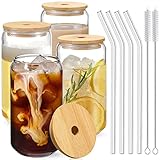
- PRODUCT CONFIGURATION: Drinking glass set includes 4 glass cups [ Diameter - 3 inches, Height - 5.6 inches ],4 nature bamboo lids, 4 reusable glass straws and 2 cleaning brushes, Classic design tumbler
- DURABLE and SAFE: The glasses are made of high-quality durable clear glass, Lead-free and BPA-free. It can be used safely for a long time. This thick clear glass can withstand the sudden changes in the temperature difference between -68°F to 212°F, making them dishwasher safe. If you want to decorate this glass, you can do DIY easily without breakage
- MULTI-PURPOSE: The glassware Great for any Occasion, any hot and cold drinks, home essentials. It is widely loved by families, kitchen, breweries, cafes, bars and restaurants. You can use it to make perfect tea, bubble Pearl Milk Tea, soda, water, iced coffee, smoothie, fruit juice or any other interesting holiday drinks
- AMAZING GIFT: This jar is very fashionable, aesthetic and characteristic. Excellent workmanship. Perfect Gifts for Women, House warming gifts, Tea mug Sets, Highball Glasses, Home Bar Accessories, Birthdays, Graduation, Weddings and Christmas Gifts
- SATISFIED SERVICE: This glass set is packaged in the heavy bubble holder and thick carton box to prevent damage while in transport. If the glass set you received was damaged or imperfect or you are not satisfied, we will offer a satisfactory solution
9. Pour hot coffee over ice. Once brewed, immediately pour the hot, concentrated coffee directly over the ice-filled glass.
- What “good” looks like: The hot coffee hitting the ice and cooling down rapidly.
- Common mistake: Letting the hot coffee sit too long, losing heat and aroma. Avoid it: Pour it straight away.
10. Stir and taste. Give it a good stir to ensure even chilling. Taste it. Is it too strong? Too weak?
- What “good” looks like: A well-mixed, chilled coffee.
- Common mistake: Not stirring enough, leading to uneven temperatures. Avoid it: Stir until the ice is mostly melted.
11. Adjust and serve. Add more ice if needed for more chill, or a splash of water if it’s too strong. Add sweetener and milk/cream to your liking.
- What “good” looks like: Your perfect iced coffee, ready to enjoy.
- Common mistake: Adding milk/sweetener before chilling, which can affect taste. Avoid it: Adjust after the coffee is chilled.
Common mistakes (and what happens if you ignore them)
| Mistake | What it causes | Fix |
|---|---|---|
| Using stale, pre-ground coffee | Flat, dull flavor; lacks aroma; weak taste. | Use freshly roasted and ground beans. |
| Incorrect grind size | Over-extracted (bitter) or under-extracted (sour, weak) coffee. | Match grind size to your brewing method. Consult brewer manual or online guides. |
| Using tap water with off-flavors | Unpleasant taste in the final brew. | Use filtered or bottled water. |
| Brewing at the wrong temperature | Sour (too cool) or bitter/burnt (too hot) coffee. | Ensure your brewer heats water to the optimal range (195-205°F) or adjust manual pouring. |
| Using a standard coffee-to-water ratio | Weak, watery iced coffee that tastes diluted. | Double the coffee grounds or halve the water for a concentrated base. |
| Not pre-chilling the serving glass/pitcher | Coffee doesn’t chill fast enough, melts ice too quickly, results in weak brew. | Fill your serving glass or pitcher with ice <em>before</em> brewing. |
| Pouring hot coffee into a lukewarm glass | Same as above – inefficient chilling. | Always use a glass packed with ice. |
| Not stirring after pouring hot coffee over ice | Uneven chilling, hot spots, and weak areas in the drink. | Stir thoroughly until the ice is mostly melted or the drink is uniformly cold. |
| Using too much ice initially | Melts too fast, dilutes the coffee before it’s properly chilled. | Start with a good amount of ice, but be prepared to add more <em>after</em> initial chilling if needed. |
| Neglecting brewer cleanliness | Bitter, stale flavors; potential for mold or mineral buildup. | Descale and clean your brewer regularly according to manufacturer instructions. |
Decision rules (simple if/then)
- If your iced coffee tastes weak and watery, then you need to use more coffee grounds next time because you under-extracted.
- If your iced coffee tastes bitter, then you might have used too fine a grind or brewed too hot because over-extraction causes bitterness.
- If your iced coffee tastes sour, then you likely used too coarse a grind or the water wasn’t hot enough because under-extraction leads to sourness.
- If you’re in a hurry, then brew your coffee double-strength and pour it over ice because this is the fastest way to get iced coffee from hot coffee.
- If you have time, then consider cold brew because it produces a smoother, less acidic iced coffee without the need for rapid chilling.
- If your coffee tastes like paper, then rinse your paper filter with hot water before brewing because this removes any papery taste.
- If your brewer is old or hasn’t been cleaned, then descale it before brewing because mineral buildup affects taste and performance.
- If you want a richer iced coffee, then consider using a metal filter for your hot brew because metal filters allow more oils to pass through.
- If you prefer a cleaner-tasting iced coffee, then stick with paper filters because they trap more oils and sediment.
- If your coffee isn’t cooling down fast enough, then add more ice to your serving glass next time because more ice means faster chilling.
- If you’re adding milk and sweetener, then do it after the coffee is chilled because adding them to hot coffee can sometimes affect the flavor profile.
FAQ
Can I just pour hot coffee over ice and call it a day?
You can, but it’s not ideal. Pouring hot coffee directly onto ice melts it way too fast, diluting your coffee and making it taste weak. Brewing it strong first is the key.
How much ice should I use?
Pack your glass or pitcher full of ice. You want enough to chill the coffee quickly without it all melting before the coffee cools. It’s a balancing act.
Will this method make my coffee taste burnt?
Not if you do it right. Brewing it concentrated means you’re using less water, so the coffee extracts faster. Pouring it over ice immediately stops the extraction process.
What’s the best coffee to use for this method?
Honestly, use what you like! Medium to dark roasts are popular for iced coffee because their bolder flavors hold up well. But if you love a light roast, go for it.
Do I need a special coffee maker?
Nope. Any brewer that makes hot coffee will work. Drip machines, pour-overs, French presses – they all fit the bill. Just adjust your grind and ratio.
How do I make it stronger if it’s still too weak?
Next time, use even more coffee grounds or even less water. You’re aiming for a concentrate that can stand up to the melting ice.
Can I make a big batch this way?
Absolutely. Just scale up your brewing and use a larger, heat-safe pitcher filled with ice to chill it.
What about adding milk and sugar?
Add them after the coffee is chilled. This lets you control the sweetness and creaminess better without warming up the coffee too much.
What this page does NOT cover (and where to go next)
- Detailed explanations of different coffee bean origins and roast profiles. (Explore coffee guides for bean specifics.)
- Advanced brewing techniques like siphon or AeroPress for iced coffee. (Look into dedicated AeroPress or siphon brewing resources.)
- The science behind extraction and solubility for coffee. (Dive into coffee science articles.)
- Commercial iced coffee machines or professional barista techniques. (Check out resources for coffee shop operations.)
- Making flavored syrups or homemade coffee creamers. (Search for recipes on beverage blogs.)