
Easy Homemade Iced Coffee: Refreshing and Simple
Quick answer
- Brew coffee double strength.
- Chill it fast.
- Use good ice.
- Don’t over-dilute.
- Taste and adjust.
- Keep it simple.
Who this is for
- Anyone craving a cold coffee fix without the coffee shop price tag.
- Home brewers who want to elevate their iced coffee game.
- Folks who appreciate a good, simple recipe that just works.
What to check first
Brewer type and filter type
This is your starting point. Are you using a drip machine, a pour-over, or a French press? Each has its own way of brewing. Your filter choice matters too – paper filters catch more oils, while metal or cloth filters let more through. For iced coffee, a cleaner cup often starts with a paper filter.
Water quality and temperature
Good coffee starts with good water. If your tap water tastes funky, your iced coffee will too. Filtered water is your friend here. For brewing hot coffee that you’ll then chill, use water that’s hot but not boiling, usually between 195-205°F.
Grind size and coffee freshness
The grind size needs to match your brewing method. Too fine, and you get bitterness. Too coarse, and it’s weak. Freshly ground beans are a game-changer. Look for a roast date, not just a “best by” date. Even a week or two after roasting makes a difference.
Coffee-to-water ratio
This is key for that strong base. For iced coffee, you generally want more coffee grounds than you would for a hot cup of the same volume. A good starting point is often a 1:15 ratio (grams of coffee to grams of water), but for iced, try something closer to 1:10 or 1:12.
Cleanliness/descale status
A dirty brewer or a machine full of mineral buildup will wreck your flavor. Give your equipment a good clean. If you’ve got a drip machine, run a descaling cycle every few months. It’s a quick win for better taste.
Step-by-step (brew workflow)
1. Choose your coffee. Pick a bean you like. Medium to dark roasts often shine in iced coffee.
- Good looks like: Beans that smell fresh and inviting.
- Common mistake: Using old, stale beans. Avoid this by checking roast dates.
2. Grind your beans. Aim for a medium-coarse grind, similar to coarse sea salt.
- Good looks like: Uniform particle size, no fine dust.
- Common mistake: Grinding too fine for a drip brewer, leading to a muddy, bitter cup. Use a burr grinder for consistency.
3. Measure your coffee and water. For a stronger brew, use more coffee. Try 60 grams of coffee for 400 grams (about 13.5 oz) of water.
- Good looks like: Accurate measurements using a scale.
- Common mistake: Guessing the amount. This leads to inconsistent results.
4. Heat your water. Bring filtered water to about 200°F.
- Good looks like: Water just off the boil, not actively bubbling.
- Common mistake: Using boiling water, which can scorch the grounds and create bitterness.
5. Brew your coffee. Use your preferred method (drip, pour-over, French press). Pour about half the water over the grounds, let it bloom for 30 seconds, then add the rest.
- Good looks like: A steady stream of coffee filling your carafe.
- Common mistake: Rushing the pour. This leads to uneven extraction.
6. Chill the brew rapidly. The best way is to brew directly over ice. Fill a thermal carafe or heat-safe container with ice, then brew your hot coffee over it. The ice melts, diluting and chilling the coffee simultaneously.
- Good looks like: Coffee that’s cold enough to drink almost immediately.
- Common mistake: Letting hot coffee sit at room temperature for too long. This can develop off-flavors.
7. Strain if needed. If you used a French press or a method that might leave sediment, strain the coffee through a fine-mesh sieve or paper filter.
- Good looks like: A clear, smooth liquid.
- Common mistake: Not straining, resulting in gritty coffee.
8. Taste and adjust. Before adding more ice, taste the chilled coffee. Is it strong enough? Too bitter?
- Good looks like: A balanced flavor profile.
- Common mistake: Adding too much ice right away, making it watery before you even taste it.
9. Add your favorite additions. Pour the chilled coffee into a glass filled with fresh ice. Add milk, cream, sweetener, or enjoy it black.
- Good looks like: A refreshing beverage tailored to your taste.
- Common mistake: Overdoing the additions, masking the coffee flavor.
Pour the chilled coffee into a glass filled with fresh ice. For the best experience, consider using dedicated iced coffee glasses to keep your drink perfectly chilled.
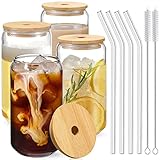
- PRODUCT CONFIGURATION: Drinking glass set includes 4 glass cups [ Diameter - 3 inches, Height - 5.6 inches ],4 nature bamboo lids, 4 reusable glass straws and 2 cleaning brushes, Classic design tumbler
- DURABLE and SAFE: The glasses are made of high-quality durable clear glass, Lead-free and BPA-free. It can be used safely for a long time. This thick clear glass can withstand the sudden changes in the temperature difference between -68°F to 212°F, making them dishwasher safe. If you want to decorate this glass, you can do DIY easily without breakage
- MULTI-PURPOSE: The glassware Great for any Occasion, any hot and cold drinks, home essentials. It is widely loved by families, kitchen, breweries, cafes, bars and restaurants. You can use it to make perfect tea, bubble Pearl Milk Tea, soda, water, iced coffee, smoothie, fruit juice or any other interesting holiday drinks
- AMAZING GIFT: This jar is very fashionable, aesthetic and characteristic. Excellent workmanship. Perfect Gifts for Women, House warming gifts, Tea mug Sets, Highball Glasses, Home Bar Accessories, Birthdays, Graduation, Weddings and Christmas Gifts
- SATISFIED SERVICE: This glass set is packaged in the heavy bubble holder and thick carton box to prevent damage while in transport. If the glass set you received was damaged or imperfect or you are not satisfied, we will offer a satisfactory solution
10. Store leftovers properly. If you have extra, keep it in an airtight container in the fridge. It’s best within 2-3 days.
- Good looks like: Fresh-tasting coffee even after a day or two.
- Common mistake: Leaving it out on the counter. Coffee degrades quickly.
Common mistakes (and what happens if you ignore them)
| Mistake | What it causes | Fix |
|---|---|---|
| Using stale coffee beans | Flat, dull, or bitter flavor | Buy freshly roasted beans and grind just before brewing. |
| Incorrect grind size | Under-extracted (sour) or over-extracted (bitter) | Adjust grind to match your brewer; medium-coarse is a good starting point. |
| Weak coffee-to-water ratio | Watery, unsatisfying iced coffee | Brew stronger than usual; consider a 1:10 or 1:12 ratio. |
| Brewing hot coffee then cooling slowly | Off-flavors, weak taste | Chill rapidly by brewing over ice or using an immersion chiller. |
| Using tap water with bad taste | Unpleasant coffee flavor | Use filtered or bottled water. |
| Dirty equipment | Bitter, stale, or chemical taste | Clean your brewer and grinder regularly. |
| Too much ice in the glass | Diluted, weak coffee | Start with less ice, add more as needed after tasting. |
| Over-extraction during brewing | Bitter, astringent taste | Control brew time and water temperature; avoid over-agitation. |
| Under-extraction during brewing | Sour, thin, weak taste | Ensure proper grind size, water temp, and brew time. |
| Not pre-chilling your serving glass | Ice melts too fast, diluting the coffee | Fill your serving glass with ice before pouring the coffee. |
Decision rules (simple if/then)
- If your coffee tastes sour, then try a finer grind because finer grounds increase extraction.
- If your coffee tastes bitter, then try a coarser grind because coarser grounds decrease extraction.
- If your iced coffee tastes weak, then brew it stronger next time because you need a higher coffee-to-water ratio.
- If your iced coffee tastes watery, then you likely added too much ice too soon, or didn’t brew it strong enough to begin with.
- If you have a cold brew setup, and it tastes weak, then try a coarser grind and a longer steep time because cold brew extracts differently.
- If your coffee has sediment, then try a paper filter or a finer straining method because your current method isn’t filtering enough.
- If your coffee tastes dull, then check the freshness of your beans and consider grinding them just before brewing because freshness is paramount.
- If your coffee tastes metallic, then clean your brewer because mineral buildup can impart off-flavors.
- If you want a cleaner cup, then use a paper filter because they trap more oils and fine particles.
- If you want a richer, fuller-bodied cup, then use a metal filter or French press because they allow more oils to pass through.
FAQ
How do I make iced coffee strong enough?
Brew your coffee double strength. This means using more coffee grounds than you normally would for the same amount of water. A common ratio for hot coffee might be 1:17, but for iced, try 1:10 or 1:12.
Should I brew hot coffee and then chill it?
Yes, this is a common and effective method. The key is to chill it rapidly, ideally by brewing directly over ice. Letting hot coffee sit and cool slowly can lead to stale flavors.
What’s the best way to chill hot coffee for iced coffee?
Brewing directly over ice is the fastest and best method. Fill a carafe or heat-safe container with ice, then brew your hot coffee into it. The melting ice dilutes and chills the coffee simultaneously.
Can I use cold brew for iced coffee?
Absolutely. Cold brew makes fantastic iced coffee because it’s naturally less acidic and smoother. It requires a different brewing process (long steep time with cold water), but the result is excellent.
How much ice should I use?
Start with a good amount of ice in your serving glass, enough to fill it. Pour your chilled, concentrated coffee over it. You can always add more ice if needed, but it’s harder to fix watery coffee.
What kind of coffee beans are best for iced coffee?
Medium to dark roasts tend to perform well. Their bolder flavors stand up better to dilution from ice and additions like milk. However, experiment with lighter roasts if you prefer.
What if my iced coffee tastes bitter?
This often means it’s over-extracted. Check your grind size (try coarser), water temperature (ensure it’s not too hot), and brew time. Also, make sure your equipment is clean.
What if my iced coffee tastes sour?
This usually indicates under-extraction. Try a finer grind, hotter water (within the 195-205°F range), and ensure your coffee grounds are fully saturated during brewing.
What this page does NOT cover (and where to go next)
- Advanced cold brew techniques (e.g., specific immersion times, Japanese iced coffee methods).
- Detailed comparisons of different coffee grinder types and their impact.
- Specific recommendations for coffee bean origins or roast profiles for iced coffee.
- Homemade coffee syrup recipes or elaborate iced coffee drink preparations.
- The science behind coffee extraction and flavor compounds.