
Does Fine Coffee Grind Make Stronger Coffee?
Quick answer
- A finer coffee grind means more surface area.
- More surface area means faster extraction.
- Faster extraction can lead to a stronger flavor, but not necessarily more caffeine.
- Too fine a grind can lead to over-extraction and bitter coffee.
- “Stronger” is subjective; it often means more intense flavor or body.
- For most drip coffee makers, a medium grind is usually best.
Key terms and definitions
- Grind Size: How finely or coarsely the coffee beans are broken down.
- Extraction: The process of dissolving soluble compounds from coffee grounds into water.
- Surface Area: The total exposed area of the coffee grounds. Finer grinds have more.
- Brew Time: How long water is in contact with coffee grounds.
- Solubles: The flavorful compounds released from coffee grounds during brewing.
- Bitterness: A taste often associated with over-extraction or certain compounds in coffee.
- Acidity: A bright, tart flavor in coffee, can be pleasant or sharp.
- Body: The mouthfeel or weight of the coffee.
- Caffeine: A stimulant naturally present in coffee beans. Its extraction is complex.
- Under-extraction: When not enough solubles are dissolved, leading to weak, sour coffee.
- Over-extraction: When too many solubles are dissolved, leading to bitter, harsh coffee.
How it works
- Coffee brewing is essentially a dissolving process. Hot water acts as a solvent.
- It pulls out sugars, oils, acids, and other flavor compounds from the coffee grounds.
- Think of it like making tea, but with coffee beans.
- The size of the coffee grounds matters a lot.
- Finer grounds have more tiny particles. This means more of their surface is exposed to the water.
- More exposed surface area allows water to interact with the coffee more quickly.
- This leads to a faster rate of extraction.
- If you brew for the same amount of time, finer grounds will release more solubles.
- This can result in a more intense flavor profile.
- However, it also means you can easily extract the “bad” stuff, leading to bitterness.
What affects the result
- Grind Size: This is the big one. Finer means faster extraction. Coarser means slower.
- Water Temperature: Hotter water extracts faster. Too hot can scorch the grounds.
- Brew Time: Longer contact time means more extraction. Shorter means less.
- Coffee-to-Water Ratio: How much coffee you use versus how much water. More coffee, more potential strength.
- Water Quality: Filtered water tastes better. Tap water can add off-flavors.
- Bean Freshness: Freshly roasted beans have more volatile aromatics and oils. Stale beans yield less.
- Roast Level: Darker roasts are more brittle and extract more easily. Lighter roasts are denser.
- Pressure (Espresso): Espresso machines use high pressure to force water through fine grounds quickly. This is a different beast.
- Agitation: Stirring or swirling the grounds can speed up extraction.
- Filter Type: Paper filters remove more oils and fines, affecting body and clarity. Metal filters let more through.
- Brewer Type: Drip, pour-over, French press – they all have different contact times and flow rates.
- Particle Consistency: A uniform grind is key. Inconsistent grinds lead to uneven extraction.
To achieve a uniform grind, consider investing in a quality coffee bean grinder. A consistent grind is crucial for predictable and delicious results.
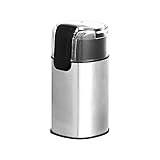
- Electric coffee bean grinder appliance for home use
- Can grind 30 grams/1 ounce of beans for drip coffee brewing in 10 seconds
- Grind coffee beans, herbs, spices, grains, nuts, and more
- Clear safety lid allows you to easily see the results in progress
- Heavy-duty stainless steel grind blade
Pros, cons, and when it matters
- Pro: Finer Grind = More Flavor Intensity: You can get a more concentrated taste experience. This is what many people mean by “stronger.”
- Con: Finer Grind = Risk of Bitterness: If you extract too much, especially with a fine grind, it’ll taste harsh and bitter.
- Pro: Finer Grind = Faster Brew (Sometimes): For methods like espresso, a fine grind is essential for the short brew time.
- Con: Finer Grind = Clogging: Too fine a grind can clog filters, especially in drip machines, leading to overflows or under-extraction.
- When it matters: For pour-over or drip, you want a grind that balances flavor extraction with brew time.
- When it matters: For French press, a coarser grind is needed because the coffee steeps for longer.
- When it matters: For espresso, a very fine grind is critical for the high pressure and short brew time.
- When it matters: If you want a bold, full-bodied cup, you might lean towards a slightly finer grind, but carefully.
- When it matters: If your coffee tastes weak and sour, your grind might be too coarse, or you’re not brewing long enough.
- When it matters: If your coffee tastes bitter and burnt, your grind might be too fine, or you’re brewing too long/hot.
- Pro: Consistent Grind = Predictable Results: Using a good grinder helps you dial in your brew.
- Con: Inconsistent Grind = Frustration: Blade grinders produce dust and boulders, making consistent brewing a challenge.
Common misconceptions
- Myth: Fine grind equals more caffeine. Not directly. Caffeine extraction is complex, but grind size primarily affects flavor compounds. More flavor doesn’t always mean more caffeine.
- Myth: “Stronger” always means more caffeine. Most people associate “stronger” with richer flavor and fuller body, not necessarily a higher stimulant kick.
- Myth: You can fix bad coffee with a finer grind. Nope. The bean quality and roast are paramount. Grind is just one variable.
- Myth: All coffee makers need the same grind. Absolutely not. Drip, French press, espresso – each has its sweet spot.
- Myth: Blade grinders are fine for most people. They create an uneven particle size, making consistent extraction nearly impossible. Burr grinders are a game-changer.
- Myth: The finer the grind, the better the flavor. Too fine leads to bitter, muddy coffee. There’s a balance.
- Myth: You should always use the finest grind possible. This will likely lead to over-extraction and a bad cup.
- Myth: Grinding coffee beans finer will make them dissolve faster. It’s not about dissolving the bean itself, but extracting the soluble compounds from the ground bean.
- Myth: If coffee is weak, just grind it finer next time. It might be that, or it could be too little coffee, too cool water, or too short a brew time.
- Myth: You can tell the right grind size just by looking at it. You have to brew it and taste it. Grind size is a tool, not a magic bullet.
For consistent particle size and to avoid the pitfalls of blade grinders, an electric coffee grinder with burrs is a game-changer for any coffee enthusiast.

- 【Adjustable Grinding Precision】There are seconds marks above the timing knob, from coarse to fine. You can choose the precision of powder according to your needs.
- 【Removable Grinding Cup】The cup is removable and it can grinds 2.5oz coffee beans, up to 10 cups of coffee.
- 【Quiet Coffee Grinder】The average noise is 63 dB, which is quieter than other coffee grinders. Getting up early and grinding coffee beans without disturbing your families sleep in the morning.
- 【Multi-functional Coffee Grinder】This electric coffee grinder can also be used for grinding other dry ingredients, such as pepper, cumin, Fenugreek, parsley, cinnamon, star anise, peppermint, soya, quinoa, sorghum, rice and crystal sugar.
- 【What You Get】You will get a coffee grinder, a 2-blade cup, a 2-in-1 coffee spoon with brush, a user manual, the 2-year warranty and our friendly customer service.
FAQ
- Q: Does a fine coffee grind make it stronger?
A: A finer grind leads to faster extraction, which can result in a more intense flavor. Many people perceive this intensity as “stronger.” However, it doesn’t necessarily mean more caffeine.
- Q: What grind size is best for a drip coffee maker?
A: For most standard drip coffee makers, a medium grind is ideal. It looks similar to coarse sand. This size balances extraction speed with brew time.
- Q: Can a fine grind make my coffee bitter?
A: Yes, absolutely. If the grind is too fine for the brew method and time, it can lead to over-extraction, pulling out bitter compounds.
- Q: How do I know if my grind is too fine or too coarse?
A: If your coffee tastes weak, sour, or thin, your grind might be too coarse or your brew time too short. If it tastes bitter, harsh, or burnt, your grind might be too fine or your brew time too long.
- Q: Does grinding coffee beans finer increase caffeine?
A: Not directly. While finer grinds extract more compounds faster, caffeine extraction is influenced by many factors. The perceived “strength” is usually about flavor intensity, not caffeine content.
- Q: Should I use a fine grind for my espresso machine?
A: Yes, espresso machines require a very fine grind. This is because they use high pressure to force water through the grounds quickly, and a fine grind is necessary for proper extraction in that short time.
- Q: What’s the difference between a fine grind and an extra-fine grind?
A: An extra-fine grind is powdery, like flour or powdered sugar. A fine grind is still small but has a bit more texture, like table salt. Espresso often uses fine to extra-fine, while Turkish coffee uses extra-fine.
What this page does NOT cover (and where to go next)
- Specific grind settings for every single coffee maker model. (Check your brewer’s manual.)
- Detailed explanations of the chemical compounds extracted from coffee. (Look for advanced coffee science resources.)
- Recommendations for specific coffee grinders or brands. (Research coffee equipment reviews.)
- The impact of water pressure on extraction beyond espresso. (Explore barista guides.)
- Advanced brewing techniques like blooming or specific pour-over methods. (Seek out specialty coffee brewing guides.)