
Does Coffee Maker Sterilize Water?
Quick answer
- No, most home coffee makers don’t sterilize water.
- They heat water, but not usually to boiling temperatures for long enough.
- Boiling water for at least one minute kills most bacteria and viruses.
- Coffee makers typically brew between 195-205°F (90-96°C).
- This temperature range extracts flavor, but it’s not a sterilization process.
- If sterile water is critical, you’ll need a dedicated boiling method.
If you need truly sterile water, a dedicated water sterilizer is a much more reliable option than a coffee maker.

- UV WATER PURIFIER FOR BACKPACKING AND EMERGENCY KITS: The SteriPen Adventurer Opti purifies clear drinking water in seconds, in a 6-inch pen-style handheld for camping, backpacking, travel, and emergency preparedness.
- FILL HANG AND FILTER ANYWHERE: Roll open the top, fill the 10L reservoir at the water source, hang from a tree branch or beam, and connect the quick-disconnect hose to fill bottles, bladders, or cookware. No setup tools required.
- TRUSTED SINCE 1928: Katadyn has been delivering clean water solutions for nearly a century. Used by hikers, travelers, and professionals worldwide, our products are built for reliable performance wherever you go.
Key terms and definitions
- Sterilization: A process that eliminates all forms of microbial life. Think of it as a complete reset for germs.
- Pasteurization: A less intense process that reduces the number of harmful microorganisms in a liquid. It’s good, but not total elimination.
- Boiling Point: The temperature at which a liquid turns into a vapor. For water at sea level, it’s 212°F (100°C).
- Brewing Temperature: The specific temperature range a coffee maker heats water to during the brewing cycle.
- Microorganisms: Tiny living things, like bacteria, viruses, and protozoa, many of which can be harmful.
- Pathogens: Microorganisms that can cause disease.
- Extraction: The process of dissolving soluble compounds from coffee grounds into hot water. This is how coffee flavor happens.
- Contaminants: Unwanted substances, including microorganisms, that can be present in water.
- Thermal Death Time: The time required to kill a specific number of microorganisms at a particular temperature.
How it works
- Coffee makers heat water using an internal heating element.
- This element is usually a metal coil or a block that transfers heat to the water.
- The heated water then travels through tubes or a showerhead.
- It’s dispersed over the coffee grounds in a filter basket.
- The goal is to reach an optimal temperature for extraction.
- This ideal range is generally between 195°F and 205°F (90°C to 96°C).
- Some high-end brewers might get closer to boiling, but it’s rare.
- The hot water dissolves coffee solubles, creating your brew.
- The used water and brewed coffee then drip into the carafe.
- The process is designed for flavor, not germ killing.
What affects the result
- Water Temperature: This is the big one. If it’s not hot enough, it won’t kill much. If it’s too hot, it can scorch the grounds.
- Brewing Time: Even if the water gets hot, how long it stays at that temperature matters for sterilization. Coffee makers brew fast.
- Water Source: Is your tap water already treated? Or are you using well water that might have more unknowns?
- Grind Size: Affects how quickly water flows through the grounds and how much surface area is exposed. Not directly related to sterilization, but crucial for taste.
- Coffee-to-Water Ratio: This is all about flavor balance, not killing germs.
- Brewer Design: Different machines have different heating elements and water flow paths.
- Mineral Content: Hard water can affect scale buildup, which might slightly impact heating efficiency over time.
- Freshness of Coffee: Stale beans don’t extract well. Again, flavor, not safety.
- Cleanliness of the Machine: A dirty machine can introduce its own contaminants. Regular descaling is key.
- Altitude: Water boils at a lower temperature at higher altitudes. This could mean your coffee maker never reaches the same temp as it would at sea level.
- The actual water you put in: If the water starts with a lot of nasty stuff, the brewer has a harder time.
Pros, cons, and when it matters
- Pro: Coffee makers heat water to a temperature that kills some common bacteria and viruses. It’s better than cold water.
- Con: They don’t typically reach or maintain a sustained boiling temperature for the necessary duration to guarantee sterilization.
- Pro: Convenient for daily use. You get hot coffee without extra steps.
- Con: If you need truly sterile water for medical reasons or specific applications, a coffee maker isn’t your go-to.
- Pro: The brewing temperatures are great for unlocking coffee’s best flavors.
- Con: Relying on a coffee maker for sterile water is a gamble.
- Pro: For most people with treated tap water, the water quality is already good enough.
- Con: If you’re camping off-grid or using questionable water sources, you need more than a drip machine.
- Pro: Simple operation. Pour water, add grounds, press button.
- Con: You can’t control the exact temperature or duration of heating. It’s set by the manufacturer.
- Pro: Fast brewing cycle. Get your caffeine fix quickly.
- Con: The short cycle time isn’t designed for thermal death times of pathogens.
Common misconceptions
- Myth: “If it’s hot, it’s sterile.” Nope. Hot is good, sterile is a whole other level.
- Myth: “Coffee makers boil water.” Most don’t reach a full, rolling boil. They get hot.
- Myth: “The steam coming off kills everything.” Steam is hot, but it’s not the same as sustained boiling.
- Myth: “My coffee tastes fine, so the water must be safe.” Taste is about flavor compounds, not germ presence.
- Myth: “All home brewers are the same.” They vary in heating elements and brewing temps.
- Myth: “Using filtered water means it’s sterile.” Filters remove sediment and some chemicals, not usually all microbes.
- Myth: “If I let it run longer, it will sterilize.” Most machines have fixed cycles.
- Myth: “The coffee grounds themselves sterilize the water.” The grounds are what we’re trying to extract flavor from, not what’s doing the killing.
- Myth: “Boiling water for coffee is unnecessary.” For flavor, yes, sometimes. For sterilization, it’s essential.
FAQ
Q: Does my drip coffee maker sterilize water?
A: Generally, no. While it heats water to a high temperature, it doesn’t typically reach sustained boiling point for long enough to kill all microorganisms.
Q: What temperature does a coffee maker heat water to?
A: Most drip coffee makers aim for a brewing temperature between 195°F and 205°F (90°C to 96°C). Some might get a bit hotter, but true boiling (212°F/100°C) is rare.
Q: Is the water from my coffee maker safe to drink?
A: For most people using treated tap water, the brewed coffee is safe. If you’re concerned about the water source itself, a coffee maker isn’t a sterilization solution.
Q: How can I sterilize water at home?
A: The most reliable methods are boiling water vigorously for at least one minute (or longer at high altitudes) or using a certified water purification system.
For guaranteed sterilization, vigorously boiling water in a dedicated water boiling pot for at least one minute is the most effective home method.
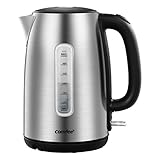
- Premium Stainless Steel - 304 food-grade stainless steel inner pot and brushed stainless steel housing. BPA-free food grade materials, removable nylon filter for easy cleaning, easy-to-view water window
- Fast Boil - This 1500W electric kettle has concealed heating elements and can boil up to 1.7 liters of water in 5 to 7 minutes, quicker and safer than a microwave. Start your day with a cup of instant coffee or tea.
- Precise & Safe - With the professional British Strix thermostat controlling system (world's leading thermostat), this kettle can automatically shut-off when the water is boiling. Additionally, it has boil-dry protection
- Friendly Design - Cool touch handle with a simple release button and pop up lid to protect you from accidental burns. 360° swivel base is connected with UL standard power cord for safe usage and convenient storage
- Easy Clean - Use white vinegar, baking soda, water, cleaning bottle brush and microfiber cloth to clean your kettle and keep it looking new.
Q: Will my espresso machine sterilize water?
A: Espresso machines use higher pressures and temperatures, often reaching near boiling. However, the contact time with water might still not be sufficient for guaranteed sterilization, depending on the machine and brew cycle. Check your manual.
Q: What if I use bottled water in my coffee maker?
A: Bottled water is usually safe to drink as-is. Using it in your coffee maker won’t sterilize it further, but it ensures you’re starting with a clean water source.
Q: Does the coffee brewing process kill any germs?
A: The hot water will kill many common bacteria and viruses, but it’s not a complete sterilization process. Some hardy microorganisms might survive.
What this page does NOT cover (and where to go next)
- Specific temperature ranges for every coffee maker model. (Check your appliance manual for details.)
- Detailed scientific studies on microbial inactivation in coffee brewers. (Look for academic or public health resources.)
- Recommendations for specific water filters or purification systems. (Consult consumer guides or health organizations.)
- Advanced brewing techniques for flavor optimization. (Explore specialty coffee brewing guides.)
- The impact of water mineral content on coffee extraction. (Research coffee science and water chemistry.)
