
Does Coffee Actually Make Time Seem To Pass Faster?
Quick Answer
- Caffeine, the primary stimulant in coffee, can increase alertness and focus.
- This heightened state might lead to a subjective perception of time passing more quickly.
- The effect is psychological, not a literal alteration of time.
- Individual responses to caffeine vary significantly.
- Factors like dosage, personal tolerance, and environment play a role.
- While coffee can make you feel more engaged, it doesn’t truly speed up the clock.
Key Terms and Definitions
- Caffeine: A natural stimulant found in coffee beans, tea leaves, and cacao pods, known for its effect on the central nervous system.
- Stimulant: A substance that raises levels of physiological or nervous activity in the body, leading to increased alertness and energy.
- Subjective Perception: How an individual experiences or interprets something, which can differ from objective reality.
- Alertness: A state of being aware of and responsive to one’s surroundings.
- Focus: The ability to concentrate one’s attention or energy on a particular subject or activity.
- Placebo Effect: A beneficial effect produced by a placebo drug or treatment, which cannot be attributed to the properties of the placebo itself, and must therefore be assumed to be the result of the patient’s belief in that treatment.
- Dopamine: A neurotransmitter that plays a role in pleasure, motivation, and reward pathways in the brain.
- Central Nervous System (CNS): The complex of nerve tissues that controls the activities of the body. It comprises the brain and spinal cord.
- Metabolism: The chemical processes that occur within a living organism in order to maintain life. Caffeine can slightly increase metabolic rate.
- Chronobiology: The scientific study of biological rhythms, such as sleep-wake cycles and seasonal variations in mood and behavior.
How Coffee Affects Your Perception of Time
- Caffeine Blocks Adenosine: Adenosine is a neurotransmitter that promotes relaxation and sleepiness. Caffeine molecules have a similar shape and can temporarily block adenosine receptors in the brain, preventing it from signaling fatigue.
- Increased Neurotransmitter Activity: By blocking adenosine, caffeine indirectly increases the activity of other neurotransmitters like dopamine and norepinephrine. These chemicals are associated with alertness, mood elevation, and improved cognitive function.
- Heightened Sensory Input: With increased alertness, your brain may process sensory information more rapidly. This can make events seem to happen in quicker succession.
- Enhanced Engagement: When you feel more awake and focused, you are likely to be more engaged in whatever you are doing. This deeper involvement can make time feel less noticeable, as you are less likely to be consciously tracking its passage.
- Accelerated Internal Clock (Psychological): The sensation of time passing faster is primarily a psychological phenomenon. Your internal “clock” isn’t actually speeding up, but your perception of its ticks is altered by your mental state.
- Focus on the Present: When your mind is stimulated and occupied with tasks, you tend to be more present-oriented. This can diminish the feeling of time dragging or the awareness of how much time has elapsed.
- Physiological Arousal: Caffeine can increase heart rate and other physiological responses associated with arousal. This state of heightened physical and mental activity can contribute to a feeling of rapid progression.
- Reduced Boredom: By combating fatigue and increasing mental engagement, coffee can make monotonous or less stimulating tasks feel less tedious. This reduction in boredom can lead to the perception that time is moving more swiftly.
To best enjoy that feeling of time flying, consider a quality coffee mug to hold your brew. This one is highly rated for its durability and comfortable grip.
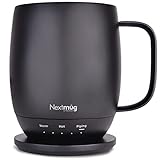
- ALWAYS THE PERFECT TEMPERATURE – The Nextmug will keep your hot coffee, tea or preferred beverage at the perfect temperature wherever you are. Simply select Warm (130° F), Hot (140° F), or Piping (150° F) and enjoy for hours.
- SMART MUG TECHNOLOGY – Long-lasting battery maintains your ideal temperature. LED lights display battery life & real-time temperature. Includes Spill-Resistant Lid & Charging Coaster.
- SUPER SIMPLE – On-board Control Button easily turns mug On/Off & sets the temperature. Takes only seconds to set the mug to your perfect temperature. No app required - no passwords, re-booting or security concerns.
- THE PERFECT GIFT - Give the gift for him and the gift for her that is certain to delight. Perfect for everyone on your list…moms, dads, grandmas, grandpas, teachers, birthdays, graduations and more!
- NEXTMUG CARES - Nextmug cares about our communities and our customers. We care by donating Nextmugs to teachers and first responders . We’re also committed to sustainable packaging by using 100% recyclable materials with all our products. Our dedicated customer service agents are based in the USA and always ready to help.
What Affects How Coffee Makes Time Feel Faster
- Caffeine Dosage: The amount of caffeine consumed directly impacts its stimulant effects. Higher doses are more likely to produce noticeable changes in alertness and perception.
- Individual Tolerance: Regular coffee drinkers develop a tolerance to caffeine. They may require more to feel the same effects, and the impact on time perception might be less pronounced than in someone who rarely consumes it.
- Genetics: People have genetic variations that affect how quickly their bodies metabolize caffeine. Some individuals are “fast metabolizers” and feel the effects for a shorter duration, while others are “slow metabolizers” and experience them longer.
- Type of Coffee: Different coffee beans and brewing methods can yield varying caffeine levels. Espresso, for instance, is concentrated but served in smaller volumes, while drip coffee might have more caffeine per serving depending on the brew.
- Time of Day: Consuming coffee when you are already feeling tired or sluggish will likely have a more significant impact on your alertness and, consequently, your perception of time.
- Task Engagement: The nature of the activity you’re engaged in while drinking coffee is crucial. If you’re doing something enjoyable and absorbing, the coffee’s effects might amplify that feeling of time flying. If you’re bored, it might just make you more aware of your boredom.
- Hydration Levels: Dehydration can impact cognitive function and energy levels. Proper hydration can support the positive effects of caffeine and a clearer perception of time.
- Sleep Quality: If you’re severely sleep-deprived, coffee might bring you back to a baseline level of functioning rather than significantly boosting your perception. The effect on time perception might be less dramatic.
- Other Stimulants or Depressants: Consuming other substances alongside coffee can alter its effects, including how it influences your sense of time.
- Expectation (Placebo): If you expect coffee to make time feel faster, this belief itself can contribute to that perception, even if the physiological effects are minimal.
Pros, Cons, and When It Matters
- Pro: Increased Productivity: For tasks requiring sustained attention, feeling like time is passing faster can make work feel less arduous, potentially boosting output.
- Con: Potential for Anxiety: Too much caffeine can lead to jitters, anxiety, and a racing heart, which can be distracting and unpleasant, negating any positive effect on time perception.
- Pro: Enhanced Focus on Enjoyable Activities: During hobbies or social gatherings, coffee can make the experience feel more vibrant and the time spent more enjoyable, as it passes quickly.
- Con: Disrupted Sleep Patterns: Consuming coffee, especially later in the day, can interfere with your natural sleep-wake cycle, making it harder to wind down and potentially leading to a feeling of time being out of sync.
- Pro: Combating Midday Slumps: A cup of coffee can provide a much-needed boost to overcome afternoon fatigue, making the remainder of the workday feel more manageable.
- Con: Overestimation of Time: In some cases, feeling like time is flying can lead to underestimating how long tasks actually take, potentially causing missed deadlines or rushed work if not managed carefully.
- Pro: Social Connection: Coffee breaks are often social rituals. The shared experience and conversation, amplified by caffeine’s alertness, can make time feel well-spent.
- Con: Dependency: Relying on coffee to feel alert and manage time perception can lead to a dependence on caffeine, with withdrawal symptoms if consumption is stopped.
- Pro: Improved Mood: For some, the mild euphoria and increased energy from caffeine can lead to a more positive outlook, where time feels less like a burden.
- Con: Overstimulation: In high-pressure situations, feeling like time is accelerating too quickly, combined with caffeine’s stimulant effects, could lead to panic or poor decision-making.
- Matters For: Students studying for exams, professionals on tight deadlines, individuals looking to enhance enjoyment of leisure activities, or anyone experiencing fatigue.
- Doesn’t Matter For: Individuals sensitive to caffeine, those with sleep disorders, or people who prefer a slower, more deliberate pace in their daily lives.
Common Misconceptions
- Myth: Coffee literally speeds up time. Coffee does not alter the physical passage of time. It only affects your subjective experience of it.
- Myth: Everyone experiences time faster after drinking coffee. Individual responses to caffeine vary widely due to genetics, tolerance, and other factors.
- Myth: Decaf coffee has no effect on time perception. While decaf has significantly less caffeine, trace amounts can still have a mild stimulant effect for some highly sensitive individuals, though it’s unlikely to dramatically alter time perception.
- Myth: Coffee makes you more efficient by making time pass faster. While it can increase alertness and focus, leading to more efficient work, the perception of time passing faster is separate from actual efficiency gains.
- Myth: The effect is solely due to the hot liquid. The primary driver of the perception shift is caffeine, not the temperature of the beverage.
- Myth: Coffee’s effect on time is a scientific certainty. The link is primarily psychological and anecdotal, influenced by many variables rather than a guaranteed outcome.
- Myth: More coffee always means time feels faster. Excessive caffeine can lead to anxiety and overstimulation, which can be counterproductive and make time feel chaotic rather than fast.
- Myth: Only the first cup of coffee has this effect. The effects of caffeine can linger, and subsequent cups can reinforce or extend the feeling of increased alertness and altered time perception, up to a point.
FAQ
- Q: Does coffee make time pass faster for everyone?
No, individual responses to caffeine vary significantly. Factors like genetics, tolerance, and even your current mood can influence whether you perceive time as passing more quickly after drinking coffee.
- Q: Is this effect related to how alert I feel?
Yes, the increased alertness and focus that caffeine provides are key to this perception. When your brain is more engaged and processing information more rapidly, your subjective sense of time can accelerate.
- Q: Can drinking too much coffee make time feel slower?
While typically associated with time feeling faster, excessive caffeine can lead to anxiety and overstimulation. This state can make time feel chaotic or even drag, as you become overly aware of every moment and sensation.
- Q: Does the type of coffee matter for this effect?
The caffeine content does matter. Beverages with higher caffeine concentrations, like espresso (in a typical serving), might provide a quicker boost. However, the overall amount of caffeine consumed is more critical than the brewing method itself.
- Q: Will drinking coffee before a boring task make it go by faster?
It can help. By increasing your alertness and engagement, coffee might make a tedious task feel less monotonous. This reduced boredom can contribute to the perception that time is passing more quickly.
- Q: How long does this effect on time perception typically last?
The duration varies based on individual caffeine metabolism, but the peak effects on alertness and time perception usually occur within 30-60 minutes after consumption and can last for several hours.
- Q: Is there any scientific proof that coffee speeds up time?
There’s no scientific proof that coffee alters the actual passage of time. The effect is a psychological phenomenon related to how our brains perceive and process information when stimulated by caffeine.
What This Page Does Not Cover (and Where to Go Next)
- Specific Health Impacts of Caffeine: This article focuses on time perception. For detailed information on caffeine’s effects on heart rate, blood pressure, or other physiological systems, consult health resources.
- Brewing Techniques for Optimal Flavor: While caffeine content can vary by brew, this guide does not delve into the nuances of coffee brewing for taste. Explore resources dedicated to coffee brewing methods and bean selection.
- Caffeine Tolerance and Withdrawal: This page touches on tolerance but doesn’t provide in-depth information on managing caffeine dependence or withdrawal symptoms. Seek advice from healthcare professionals or specialized wellness sites.
- The Neuroscience of Time Perception: While we discuss how caffeine influences perception, a deep dive into the complex neurological mechanisms of how the brain constructs our sense of time is beyond this scope. Explore academic journals or neuroscience literature for more.
- Legal and Ethical Considerations of Stimulant Use: This article is for informational purposes regarding a common beverage. Discussions on the regulation or ethical implications of stimulant use in various contexts are not covered.