
Does a High-Quality Coffee Maker Improve Coffee Taste?
Quick answer
- Yes, a high-quality coffee maker can significantly improve coffee taste by providing better control over brewing variables.
- Key factors include water temperature consistency, even water distribution over the grounds, and material quality that doesn’t impart off-flavors.
- While a premium brewer offers advantages, proper technique with a simpler machine can still yield delicious coffee.
- The quality of your coffee beans and the freshness of your grind are equally, if not more, important than the coffee maker itself.
- Investing in a good grinder is often a more impactful first step for improving your daily cup.
- Ultimately, “better coffee” is subjective, but quality brewers facilitate brewing to a higher standard.
Key terms and definitions
- Brewing Method: The specific process used to extract flavor from coffee grounds, such as drip, pour-over, French press, or espresso.
- Extraction: The process of dissolving soluble compounds from coffee grounds into water, which creates the coffee beverage.
- Water Temperature: The temperature of the water used for brewing, ideally between 195°F and 205°F for optimal extraction.
- Grind Size: The coarseness or fineness of coffee grounds, which must be matched to the brewing method for proper extraction.
- Coffee-to-Water Ratio: The proportion of coffee grounds to water used in brewing, often expressed as grams of coffee per milliliters of water.
- Bloom: The initial release of CO2 gas from fresh coffee grounds when they first come into contact with hot water.
- SCA Certified: Certification from the Specialty Coffee Association, indicating a coffee maker meets rigorous standards for brewing quality.
- Off-Flavors: Undesirable tastes or aromas in coffee, which can be caused by poor quality beans, stale grounds, or improper brewing equipment.
- Carafe: The vessel that holds brewed coffee, often made of glass or thermal material.
- Water Distribution: How evenly water is spread over the coffee grounds during the brewing process.
How it works
- Coffee makers function by passing hot water through ground coffee beans to extract soluble flavor compounds.
- Drip coffee makers heat water and then allow it to drip through a basket containing coffee grounds.
- The water temperature is a critical variable, with ideal ranges typically between 195°F and 205°F.
- Many quality brewers maintain a consistent temperature throughout the brewing cycle.
- Some machines are designed to mimic manual pour-over techniques, ensuring even saturation of the coffee bed.
- The design of the showerhead or water dispenser plays a role in how uniformly water contacts the grounds.
- The brewing time, or contact time between water and coffee, also influences the extraction and final taste.
- After extraction, the brewed coffee is collected in a carafe.
- The material of the carafe can affect how long the coffee stays hot and its overall flavor profile.
- The goal is to extract the desirable flavor compounds without over-extracting bitter notes or under-extracting weak ones.
Drip coffee makers heat water and then allow it to drip through a basket containing coffee grounds. If you’re looking for a reliable drip coffee maker that consistently brews at the optimal temperature, consider models like the [product name].
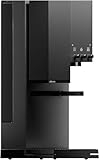
- 1. Three Levels of Automation for Any Skill Level: Choose from Autopilot, Copilot, or Free Solo mode. Autopilot handles the entire brewing process automatically. Copilot provides step-by-step guidance. Free Solo gives you full manual control. This coffee machine works for beginners and professional baristas alike.
- 2. Intuitive User Interface with Tactile Knobs and LED Matrix: The Studio features physical control knobs and a clear LED Matrix display. You can adjust grind size, water temperature, and flow rate in real time without navigating complicated touchscreen menus.
- 3. Full Customization via the xBloom App: Use the xBloom app to create, adjust, save, and share your favorite coffee recipes. Every brewing parameter can be fine-tuned and synced to the machine instantly. Your perfect cup is saved and repeatable.
- 4. Compostable xPod System for Minimal Waste and Maximum Flavor: Each xPod contains carefully selected whole beans and a built-in filter. Tap the recipe card, pour the beans into the grinder, place the pod into the dock, and press start. No capsules, no extra paper filters, no unnecessary waste.
- 5. What Is Included in the Box: The package includes the xBloom Studio, Omni Dripper 2 with Hyperflow Bottom, 10 paper filters, xPod Dock, Magnetic Dosing Cup, default recipe card, quick start guide, cleaning brush, universal power cord, and a 2-Year xbloom brand warranty. Everything you need is included—along with long-term peace of mind.
What affects the result
- Water Quality: Filtered or spring water is preferable to tap water, which can contain minerals or chlorine that alter taste.
- Bean Freshness: Whole beans roasted recently (within a few weeks) will produce a far more flavorful cup than stale beans.
- Grind Freshness: Grinding beans just before brewing preserves volatile aromatics and flavors that dissipate quickly after grinding.
- Grind Size Consistency: Uniformly sized grounds ensure even extraction; inconsistent grinds lead to both over- and under-extraction in the same brew.
- Coffee-to-Water Ratio: The precise amount of coffee grounds relative to water directly impacts the coffee’s strength and flavor balance. A common starting point is around 1:15 to 1:18 (e.g., 1 gram of coffee to 15-18 grams of water).
- Water Temperature: Water that is too cool results in under-extraction and sour coffee, while water that is too hot can scorch the grounds and lead to bitterness. The ideal range is typically 195°F to 205°F.
- Brewing Time: The duration the water is in contact with the coffee grounds affects how much is extracted. Too short a time leads to weak coffee, too long can result in bitterness.
- Water Distribution: How evenly hot water is dispersed over the coffee grounds is crucial for uniform extraction. A good showerhead design is important.
- Brewer Material: Some plastics can impart an unwanted taste. Stainless steel, glass, or high-quality BPA-free plastics are generally preferred.
- Cleanliness of Equipment: Coffee oils can build up and turn rancid, affecting the taste of future brews. Regular cleaning is essential.
- Altitude: Water boils at a lower temperature at higher altitudes, which can affect brewing temperature if not accounted for.
- Brewing Method: Different methods (drip, pour-over, French press) inherently produce different flavor profiles due to variations in filtration, contact time, and water flow.
Pros, cons, and when it matters
- Pros of High-Quality Coffee Makers:
- Consistent Temperature: Maintains the optimal brewing temperature for better extraction, avoiding sour or bitter notes.
- Even Water Distribution: Features showerheads designed to saturate grounds uniformly, leading to a more balanced cup.
- Precise Control: Some models offer adjustable brew strength, temperature, or bloom time for fine-tuning.
- Durable Materials: Often constructed from higher-grade materials that don’t affect taste and last longer.
- SCA Certification: Ensures the machine meets specific standards for brewing excellence, a good indicator of quality.
- Better Flavor Extraction: Facilitates the extraction of the full spectrum of desirable flavors from the coffee beans.
- Convenience for Specific Methods: Automates complex manual brewing processes like pour-over.
- Reduced Waste: Can be more efficient, potentially using less coffee for a comparable flavor.
- Cons of High-Quality Coffee Makers:
- Higher Cost: Significantly more expensive than basic models.
- Complexity: Some advanced features can be confusing for novice users.
- Maintenance: May require more specialized cleaning or descaling.
- Larger Footprint: Can take up more counter space.
- Overkill for Some: If you use pre-ground coffee or don’t prioritize nuanced flavors, the benefits may be minimal.
- When it Matters:
- When you buy high-quality, fresh coffee beans: A good brewer will allow you to taste the difference.
- When you’re experimenting with different brewing parameters: For those who enjoy tweaking variables to achieve a specific taste.
- When you’re serving coffee to guests and want to impress: A superior brew is a noticeable improvement.
- When you’re tired of inconsistent or bland coffee from your current machine: It’s a clear signal that your equipment might be the bottleneck.
- When you want to replicate the taste of coffee from a good cafe at home: High-quality machines often mimic professional brewing standards.
- When you are investing in a good grinder and fresh beans: To ensure all your investments are working together for optimal flavor.
- When you have a sensitive palate: You’ll be more likely to detect and appreciate the subtle differences a good brewer can make.
Common misconceptions
- “Any coffee maker will make coffee taste the same.” This is false. Differences in water temperature, distribution, and brewing time significantly impact extraction and therefore taste.
- “Expensive coffee makers are always better.” While quality often correlates with price, a well-designed, simpler machine can outperform a feature-laden, poorly engineered expensive one. Look for certifications and proven performance.
- “You need a fancy machine to make good coffee.” Technique and high-quality ingredients (fresh beans, good water, correct grind) are paramount. You can make excellent coffee with manual methods like pour-over or French press, regardless of machine cost.
- “Coffee makers don’t need cleaning if they still brew coffee.” Coffee oils build up and can go rancid, imparting stale or bitter flavors to subsequent brews. Regular cleaning is crucial for taste.
- “All drip coffee is the same.” The quality of the coffee maker, the beans, the grind, and the water all contribute to the final taste, making drip coffee highly variable.
- “Pre-ground coffee is fine for any coffee maker.” Pre-ground coffee loses its volatile aromatics much faster than whole beans. For optimal taste, always grind fresh.
- “Water temperature doesn’t matter that much.” Water temperature is one of the most critical factors in extraction. Too cool leads to sourness; too hot can lead to bitterness.
- “The carafe material doesn’t affect taste.” Some materials, especially certain plastics, can leach flavors into the coffee. Glass or thermal carafes are generally preferred for taste purity.
- “A coffee maker is the most important part of good coffee.” While important, the quality of your beans and the freshness of your grind are often considered even more critical factors.
FAQ
Q: Does a good coffee maker make better coffee than a cheap one?
A: Generally, yes. High-quality coffee makers offer better control over brewing variables like water temperature and distribution, leading to more consistent and optimal extraction of flavor.
Q: What makes a coffee maker “high-quality”?
A: Key features include consistent and accurate water temperature (195-205°F), even water dispersion over the grounds, durable and taste-neutral materials, and often certifications like SCA approval.
Q: Is it worth upgrading my coffee maker if I already buy good beans?
A: If you’re investing in good beans and grinding them fresh, a better coffee maker can unlock their full potential by ensuring proper extraction, which your current machine might be hindering.
Q: How important is the coffee-to-water ratio?
A: The ratio is very important for flavor balance and strength. A quality coffee maker can help you consistently achieve your desired ratio, but the brewer itself doesn’t determine the ratio – you do.
Q: Can a simple pour-over setup beat a high-end automatic coffee maker?
A: Absolutely. A well-executed manual pour-over with fresh beans and proper technique can often produce a superior cup to many automatic brewers, as it offers complete control.
Q: Does the material of the coffee maker or carafe affect taste?
A: Yes, some materials, particularly certain plastics, can impart off-flavors. Glass, stainless steel, and high-quality BPA-free plastics are generally preferred for preserving the coffee’s true taste.
Q: If I have a good coffee maker, do I still need to grind my beans fresh?
A: Yes. Freshly ground coffee has significantly more volatile aromatics and flavor compounds. Grinding just before brewing is crucial for taste, regardless of your coffee maker’s quality.
Q: How often should I clean my coffee maker to ensure good taste?
A: It’s recommended to clean your coffee maker regularly, ideally after every use for the brew basket and carafe, and to perform a more thorough descaling and cleaning cycle every 1-3 months depending on usage and water hardness.
What this page does NOT cover (and where to go next)
- Specific Brand Recommendations: This page focuses on principles, not specific product endorsements. To find specific models, research reviews for SCA-certified brewers or machines that match your desired brewing method.
- Detailed Brewing Guides for Every Method: While principles are discussed, detailed step-by-step instructions for methods like pour-over, AeroPress, or espresso are beyond this scope. Explore dedicated guides for those techniques.
- Bean Sourcing and Roasting Profiles: This article assumes you have quality beans. For more on selecting beans, understanding roast levels, and finding roasters, look for resources on coffee bean selection and tasting notes.
- Advanced Grinding Techniques and Grinder Comparisons: While grind is mentioned as critical, a deep dive into grinder types (burr vs. blade), specific grind settings for different brewers, and grinder comparisons is a separate topic.
- Water Chemistry and Filtration Systems: This page touches on water quality. For in-depth information on water mineral content, ideal brewing water composition, and various filtration methods, seek out resources on water for coffee brewing.