
Do Expensive Coffee Machines Make Better Coffee?
Quick Answer
- The quality of your coffee depends on more than just the price tag of your coffee machine.
- Expensive machines often offer more precise control over brewing variables, which can lead to better coffee.
- Key features like temperature stability, grind consistency (if integrated), and water dispersion are crucial, regardless of cost.
- A high-end machine won’t fix issues with stale beans or poor technique.
- For many, a mid-range machine with good features provides excellent value and excellent coffee.
- Ultimately, “better coffee” is subjective and depends on your personal taste preferences.
Buying Priorities for Your Coffee Machine
- Brew Method Preference: Decide if you prefer drip, espresso, pour-over, French press, or a combination. This is the most significant factor influencing machine choice.
- Budget: Set a realistic price range. While expensive doesn’t always mean better, a very cheap machine might compromise on essential features.
- Ease of Use: Consider how much time and effort you want to invest in brewing. Some machines are fully automated, while others require manual input.
- Capacity: How much coffee do you typically brew at once? Single-serve, small batches, or large pots will dictate the size and type of machine you need.
- Temperature Control: Consistent and optimal brewing temperature (around 195-205°F) is vital for flavor extraction. Look for machines that maintain this.
- Grind Quality (if applicable): If the machine has a built-in grinder, its burr type and consistency are critical. Blade grinders are generally less desirable for even extraction.
- Durability and Build Quality: Higher-priced machines often use more robust materials, leading to longer lifespans.
- Cleaning and Maintenance: Consider how easy the machine is to clean. Removable parts and descaling indicators can simplify this process.
- Counter Space: Measure your available counter space. Coffee machines come in various sizes, from compact single-serve units to larger espresso machines.
- Specific Features: Do you need programmability, a built-in frother, water filtration, or specialized brew settings?
Feature Comparison for Coffee Machines
- Brew Method: Varies from automatic drip, espresso, single-serve pods, to manual pour-over assist.
- Capacity: Ranges from single cups (4-8 oz) to full carafes (10-12 cups or more).
- Temperature Control: Some machines offer precise digital temperature settings (e.g., 195-205°F), while others have less control.
- Filter Type: Can include paper filters, permanent metal filters, or portafilters for espresso.
- Grinder Integration: Some high-end machines include built-in burr grinders for fresh grounds; others rely on separate grinders.
- Water Dispersion: The showerhead design impacts how evenly water saturates coffee grounds, affecting extraction.
- Brew Strength Options: Many machines offer settings for light, medium, or bold brews.
- Programmability: Features like auto-start timers allow you to wake up to fresh coffee.
- Milk Frothing/Steaming: Integrated steam wands or automatic frothers are common on espresso machines.
- Cleaning Features: Some have automatic descaling cycles or dishwasher-safe components.
- Material Quality: Higher-end models often use stainless steel, glass, and BPA-free plastics for durability.
- Footprint: Varies significantly, from compact countertop units to larger, multi-functional appliances.
How to Choose Your Coffee Machine Step-by-Step
1. Define Your Daily Coffee Habit:
- What to do: Think about how many cups you drink daily, whether you prefer a single strong cup or a full pot, and if you usually add milk or sugar.
- What “good” looks like: You have a clear picture of your typical coffee consumption and preferences.
- Common mistake: Not considering your actual needs and buying a machine that’s too large or too small. Avoid this by honestly assessing your daily routine.
2. Identify Your Preferred Brew Style:
- What to do: Research different brewing methods like drip, pour-over, French press, AeroPress, or espresso.
- What “good” looks like: You understand the taste profiles and effort involved in each method and have a preference.
- Common mistake: Assuming all coffee is brewed the same way. Avoid this by trying different methods at cafes or with friends before committing.
If you enjoy a hands-on brewing experience and nuanced flavors, a pour over coffee maker is an excellent choice. This method allows for precise control over water flow and temperature, leading to a clean and aromatic cup.

- Pour Over Coffee: Manual Pour Over Coffee Maker allows you to brew an excellent cup of Coffee in minutes
- Stainless steel: Includes a new and improved permanent, stainless steel mesh filter that helps extract your coffee's aromatic oils and subtle flavors instead of being absorbed by a paper filter
- Coffee Carafe: Made of durable, heat-resistant borosilicate glass with Cork Band detailing that is both functional and elegant; single wall
- Quick and Easy: Simply add coarse ground Coffee to filter, pour a small amount of water in a circular motion over ground Coffee until soaked then add the remaining water and let drip
- Servings: Pour Over Coffee Maker makes 8 cups of Coffee, 4 oz each; dishwasher safe
3. Set Your Budget:
- What to do: Determine how much you’re willing to spend. Consider the upfront cost and potential ongoing costs (filters, cleaning supplies).
- What “good” looks like: You have a price range that balances your desire for quality with your financial reality.
- Common mistake: Overspending on features you won’t use or underspending and ending up with a machine that doesn’t meet your needs. Avoid this by researching price points for machines with your desired features.
4. Prioritize Key Brewing Features:
- What to do: Focus on features that directly impact coffee quality, such as temperature stability, water dispersion, and filter type.
- What “good” looks like: You know what to look for in a machine to ensure good extraction (e.g., a brewing temperature between 195-205°F).
- Common mistake: Being swayed by aesthetics or brand name alone, ignoring critical functional components. Avoid this by reading reviews that focus on brewing performance.
5. Consider Convenience and Ease of Use:
- What to do: Evaluate how much time and effort you want to put into making coffee each day.
- What “good” looks like: The machine’s operation fits seamlessly into your morning routine without feeling like a chore.
- Common mistake: Buying a complex machine that requires a steep learning curve when you prefer a quick, simple cup. Avoid this by reading user manuals or watching demo videos online.
6. Assess Capacity and Size:
- What to do: Measure the space where the coffee maker will live and consider how much coffee you need to brew at once.
- What “good” looks like: The machine fits comfortably on your counter and brews the right amount of coffee for your household.
- Common mistake: Purchasing a machine that’s too large for your kitchen or too small for your needs. Avoid this by measuring your counter space and considering your typical batch size.
7. Research Durability and Maintenance:
- What to do: Look for machines made with quality materials and check reviews for common maintenance issues.
- What “good” looks like: The machine feels solid, and cleaning instructions are straightforward.
- Common mistake: Neglecting cleaning, leading to poor taste and machine damage. Avoid this by choosing a machine that’s easy to clean regularly.
8. Read Reviews and Compare Models:
- What to do: Gather information from reputable coffee blogs, consumer review sites, and user testimonials.
- What “good” looks like: You’ve compared several models that meet your criteria and have a clear frontrunner.
- Common mistake: Relying on a single review or only looking at positive feedback. Avoid this by seeking out balanced reviews that discuss both pros and cons.
Common Mistakes (and What Happens If You Ignore Them)
| Mistake | What it Causes | Fix |
|---|---|---|
| Using stale coffee beans | Bitter, flat, or weak coffee; lack of aroma and nuanced flavors. | Buy whole beans and grind them just before brewing; store beans in an airtight container away from light and heat. |
| Using pre-ground coffee | Significant loss of volatile aromatics and flavor compounds, resulting in a duller taste. | Invest in a good burr grinder and grind your beans fresh for each brew. |
| Incorrect coffee-to-water ratio | Under-extracted (sour, weak) or over-extracted (bitter, harsh) coffee. | Use a scale to measure coffee grounds and water, aiming for a ratio between 1:15 and 1:18 (e.g., 1 gram coffee to 15-18 grams water). |
| Inconsistent water temperature | Poor extraction; too cool leads to sourness, too hot can scorch grounds and create bitterness. | Choose a machine with good temperature stability (aim for 195-205°F) or use a thermometer with manual brewing methods. |
| Not cleaning the machine regularly | Buildup of coffee oils and mineral deposits, leading to off-flavors and reduced machine performance. | Follow the manufacturer’s cleaning schedule; rinse parts after each use and descale periodically. |
| Using tap water with high mineral content | Scale buildup in the machine, affecting heating elements and flow; can also impart off-flavors. | Use filtered water or distilled water for brewing to protect your machine and improve taste. |
| Grinding coffee too fine or too coarse | Too fine can clog filters and over-extract (bitter); too coarse can lead to under-extraction (weak, sour). | Match your grind size to your brew method (e.g., fine for espresso, medium for drip, coarse for French press). |
| Overfilling the brew basket | Water can overflow, leading to weak coffee and a messy cleanup; grounds might not saturate evenly. | Use the recommended amount of coffee for your machine’s capacity and brew basket size. |
| Ignoring the “bloom” phase (pour-over) | Uneven saturation and degassing, leading to a less flavorful and potentially bitter cup. | Pour a small amount of hot water over the grounds and let them sit for 30-45 seconds to allow CO2 to escape. |
Decision Rules (Simple If/Then)
- If you primarily drink espresso-based drinks, then look for a dedicated espresso machine because these are designed for the high pressure and fine grind required.
- If you want the simplest possible coffee experience, then consider a single-serve pod machine because they offer extreme convenience with minimal effort.
- If you are a coffee enthusiast who enjoys experimenting, then a manual pour-over setup or a high-end drip machine with precise controls is a good choice because they offer maximum control over brewing variables.
- If you drink a full pot of coffee daily for multiple people, then a standard 10-12 cup automatic drip coffee maker with a thermal carafe is ideal because it’s efficient for batch brewing and keeps coffee warm.
- If you have limited counter space, then a compact single-serve machine or a small pour-over setup is recommended because they take up minimal room.
- If you are on a tight budget but want good quality drip coffee, then a well-reviewed mid-range automatic drip machine from a reputable brand is your best bet because you can find machines with good temperature control without the premium price.
- If you want the freshest possible coffee with minimal fuss, then a machine with a high-quality integrated burr grinder is a good option because it grinds beans on demand.
- If you find coffee grounds in your cup, then check your filter type and grind size; you may need a finer filter or a coarser grind for your method because this indicates poor filtration or channeling.
- If your coffee tastes consistently bitter, then consider a coarser grind, lower water temperature (if adjustable), or shorter brew time because these factors can cause over-extraction.
- If your coffee tastes consistently sour, then consider a finer grind, higher water temperature (if adjustable), or longer brew time because these factors can cause under-extraction.
- If you frequently forget to make coffee in the morning, then a programmable drip coffee maker is a good investment because it can brew automatically at a set time.
For those who need to brew a full pot of coffee daily for multiple people, a standard 10-12 cup automatic drip coffee maker is ideal. They are efficient for batch brewing and many come with thermal carafes to keep your coffee warm.
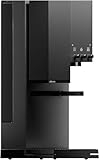
- 1. Three Levels of Automation for Any Skill Level: Choose from Autopilot, Copilot, or Free Solo mode. Autopilot handles the entire brewing process automatically. Copilot provides step-by-step guidance. Free Solo gives you full manual control. This coffee machine works for beginners and professional baristas alike.
- 2. Intuitive User Interface with Tactile Knobs and LED Matrix: The Studio features physical control knobs and a clear LED Matrix display. You can adjust grind size, water temperature, and flow rate in real time without navigating complicated touchscreen menus.
- 3. Full Customization via the xBloom App: Use the xBloom app to create, adjust, save, and share your favorite coffee recipes. Every brewing parameter can be fine-tuned and synced to the machine instantly. Your perfect cup is saved and repeatable.
- 4. Compostable xPod System for Minimal Waste and Maximum Flavor: Each xPod contains carefully selected whole beans and a built-in filter. Tap the recipe card, pour the beans into the grinder, place the pod into the dock, and press start. No capsules, no extra paper filters, no unnecessary waste.
- 5. What Is Included in the Box: The package includes the xBloom Studio, Omni Dripper 2 with Hyperflow Bottom, 10 paper filters, xPod Dock, Magnetic Dosing Cup, default recipe card, quick start guide, cleaning brush, universal power cord, and a 2-Year xbloom brand warranty. Everything you need is included—along with long-term peace of mind.
FAQ
Q: Do expensive coffee machines really use better quality components?
A: Often, yes. Higher-priced machines may use more durable materials like stainless steel, have more precise heating elements, and employ better pump systems for espresso, contributing to longevity and performance.
Q: Can a cheap coffee maker make good coffee?
A: Yes, it’s possible, especially for simple brew methods like drip or French press. However, cheap machines often lack consistent temperature control and good water dispersion, which are key to optimal flavor extraction.
Q: What is the most important feature for a good coffee maker?
A: Consistent and accurate water temperature (around 195-205°F) is arguably the most critical feature for extracting the best flavor from coffee grounds, regardless of machine price.
Q: Is a built-in grinder worth the extra cost?
A: For convenience, yes. A good burr grinder integrated into the machine ensures you’re using fresh grounds. However, a separate, high-quality burr grinder might offer superior grind consistency.
Q: How often should I clean my coffee maker?
A: It’s best to rinse removable parts after each use. Descaling, which removes mineral buildup, should be done according to the manufacturer’s instructions, typically every 1-3 months depending on water hardness and usage.
Q: Does the brand of coffee maker matter as much as the features?
A: While some brands have a reputation for quality and reliability, the specific features and how well they perform are more important than the brand name alone. Always research the model’s capabilities.
Q: What’s the difference between a coffee maker and an espresso machine?
A: Espresso machines force hot water through finely-ground coffee at high pressure (around 9 bars) to create a concentrated shot. Most coffee makers use gravity to drip water through coarser grounds, producing a larger, less concentrated beverage.
Q: Can I use my coffee maker if it’s a bit old?
A: An older coffee maker can still function, but its performance might degrade. Heating elements can become less efficient, and seals can wear out, potentially affecting brew temperature and coffee quality. Regular cleaning is crucial for older machines.
What This Page Does Not Cover (and Where to Go Next)
- Specific Brand Reviews: This page provides general buying advice. For detailed comparisons of specific brands and models, consult dedicated consumer review sites and coffee expert blogs.
- Advanced Brewing Techniques: While we touch on brew variables, in-depth guides on techniques like competitive pour-over or latte art are beyond this scope. Explore specialty coffee resources for these topics.
- Coffee Bean Sourcing and Roasting: The quality of your beans is paramount. For information on bean origins, roast profiles, and finding local roasters, look for guides on coffee bean selection.
- Water Chemistry for Coffee: The mineral content and pH of your water can significantly impact taste. Advanced brewing guides often delve into water filtration and mineral adjustments.
- Maintenance and Repair of Specific Models: This guide offers general cleaning advice. For troubleshooting or repairing a particular coffee machine, refer to its user manual or manufacturer support.