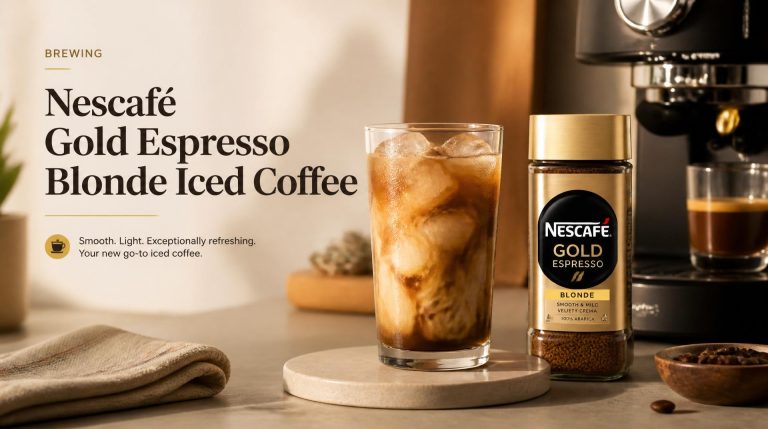
Decaffeinated Iced Coffee At Home
Quick answer
- Use decaf coffee beans. That’s the main trick.
- Brew it stronger than hot coffee. You’ll need that flavor boost.
- Chill it fast. Nobody likes lukewarm coffee.
- Use filtered water. Good water makes good coffee, decaf or not.
- Grind fresh. Even decaf benefits from a fresh grind.
- Don’t over-extract. Bitterness is the enemy here.
- Experiment with ratios. Find your sweet spot.
Who this is for
- Anyone who loves iced coffee but wants to skip the jitters.
- People who want to enjoy a refreshing drink in the afternoon or evening.
- Home brewers looking to expand their repertoire beyond hot coffee.
What to check first
Brewer type and filter type
Your brewer dictates the process. Drip machine? French press? Pour-over? Each has its own quirks. And the filter matters. Paper filters catch more oils, leading to a cleaner cup. Metal filters let more through, giving you a richer mouthfeel. For iced coffee, a cleaner cup is often preferred. So, if you have a choice, lean towards paper.
Water quality and temperature
This is huge. Tap water can have off-flavors that mess with your decaf. Use filtered water if you can. For brewing, aim for temps between 195-205°F. Too cool, and you won’t extract enough flavor. Too hot, and you risk burning the grounds, which tastes bad.
Grind size and coffee freshness
Freshly roasted decaf beans are best. Pre-ground stuff loses its zing fast. Grind right before you brew. For most methods, a medium grind works well. Too fine, and it can clog filters or lead to over-extraction. Too coarse, and the water runs through too quickly, under-extracting flavor.
Coffee-to-water ratio
This is where you dial in the strength. For iced coffee, you want it concentrated. A good starting point is a 1:15 ratio (coffee to water by weight). So, if you use 30 grams of coffee, use 450 grams (about 15 oz) of water. You’ll dilute it later with ice.
Cleanliness/descale status
Seriously, clean your gear. Old coffee oils turn rancid and ruin even the best decaf beans. A quick rinse after each use is good. A deep clean or descaling every month or so is even better. Your taste buds will thank you.
Step-by-step (brew workflow)
For a dedicated iced coffee experience, consider an iced coffee maker. These are designed to brew coffee directly over ice for optimal flavor and chill.

- BREW BY THE CUP OR CARAFE: Brews both K-Cup pods and coffee grounds.
- MULTISTREAM TECHNOLOGY: Saturates the grounds evenly to extract full flavor and aroma in every cup, hot or cold.
- BREW OVER ICE: Adjusts temperature for maximum flavor and less ice melt for single-cup iced coffees and teas.
- STRONG BREW & EXTRA HOT FUNCTIONALITY: Brews a stronger, more intense-flavored cup and the extra hot feature brews a hotter single cup.
- MULTIPLE BREW SIZES: Brew 6, 8, 10, or 12oz single cups or 6, 8, 10, or 12-cup carafes. 12-cup glass carafe specially designed to limit dripping.
1. Gather your decaf beans. Pick a decaf you like. Some decafs taste better than others.
- What “good” looks like: Beans that smell fresh, not stale or papery.
- Common mistake: Using old, stale decaf beans. Avoid this by checking roast dates.
2. Measure your beans. Use a scale for accuracy. Aim for a concentrated ratio.
- What “good” looks like: Precise measurements mean consistent results.
- Common mistake: Guessing the amount. This leads to weak or bitter coffee.
3. Grind your beans. Grind just before brewing for maximum freshness.
- What “good” looks like: A consistent grind size, suited to your brewer.
- Common mistake: Using pre-ground decaf. It’s already lost its best flavors.
4. Heat your water. Bring filtered water to the right temperature.
- What “good” looks like: Water between 195-205°F.
- Common mistake: Using boiling water. This can scorch the coffee.
5. Prepare your brewer and filter. Rinse your paper filter with hot water. This removes paper taste and preheats the brewer.
- What “good” looks like: A clean brewer and a rinsed filter.
- Common mistake: Not rinsing the paper filter. You’ll taste paper.
6. Add grounds to the brewer. Distribute them evenly.
- What “good” looks like: A level bed of coffee grounds.
- Common mistake: Tamping down the grounds too much. This hinders water flow.
7. Bloom the coffee. Pour just enough hot water to saturate the grounds. Wait 30 seconds.
- What “good” looks like: The grounds puff up and release CO2.
- Common mistake: Skipping the bloom. This can lead to uneven extraction.
8. Continue pouring. Pour the remaining water slowly and steadily. Use a circular motion.
- What “good” looks like: A controlled pour that keeps the grounds saturated.
- Common mistake: Pouring too fast or all at once. This leads to under-extraction.
9. Let it brew. Allow all the water to drip through.
- What “good” looks like: A full brew cycle, no water left standing.
- Common mistake: Rushing the process. Let gravity do its job.
10. Chill the coffee quickly. Pour the hot, concentrated coffee over ice.
- What “good” looks like: The coffee cools down rapidly, locking in flavor.
- Common mistake: Letting hot coffee sit around. It can develop off-flavors.
11. Dilute and serve. Add more ice and maybe a splash of water or milk to taste.
- What “good” looks like: Your perfect iced coffee strength and flavor.
- Common mistake: Not diluting enough. It might still be too strong.
Measuring your coffee accurately is key for a consistent brew. A reliable coffee scale ensures you get the perfect ratio every time.

- Barista-Level Precision: A 0.1g high-precision sensor with a rapid refresh rate responds instantly to changes in weight, helping you achieve consistent results across espresso, pour over, drip coffee, Chemex, V60, and filter coffee brewing.
- Integrated Brew Timer: A built-in count-up and count-down timer tracks bloom, extraction, and espresso shots. Ideal for dialing in espresso, timing Chemex and V60 pour over recipes, or steeping tea. Auto-shutoff helps preserve battery life between brews.
- Durable Waterproof Silicone Cover: The heat-resistant, dishwasher-safe silicone cover helps protect the coffee scale's spacious 5.25" x 5.25" weighing surface from splashes, spills, and hot equipment. The grooved surface provides added stability and makes cleanup quick and easy.
- Versatile Measurement Options: Quick-tare and 6 unit options make it easy to weigh coffee beans, espresso shots, matcha portions, and more. Choose from g, ml, lb, lb:oz, oz, and fl oz for added flexibility in the kitchen and coffee bar.
- Intuitive Design: A bright dual-color LCD display clearly separates weight and timer readings, while simple controls make daily brewing easy. Includes 3 AAA batteries and is backed by 5 years of coverage, with support from our St. Louis-based team whenever you need a hand.
Common mistakes (and what happens if you ignore them)
| Mistake | What it causes | Fix |
|---|---|---|
| Using stale decaf beans | Weak, papery, or bitter coffee | Buy fresh, whole decaf beans and grind them just before brewing. |
| Incorrect water temperature | Under-extraction (sour) or over-extraction (bitter) | Use a thermometer or kettle with temp control; aim for 195-205°F. |
| Wrong grind size | Sour (too coarse) or bitter/clogged (too fine) | Adjust your grinder. Medium is a good starting point for most methods. |
| Not blooming the coffee | Uneven extraction, less flavor | Pour a small amount of water to saturate grounds and wait 30 seconds. |
| Pouring water too quickly | Under-extraction, weak flavor | Pour slowly and steadily in a circular motion. |
| Not chilling fast enough | Stale flavor development | Pour hot coffee directly over ice immediately after brewing. |
| Using poor quality water | Off-flavors in the final drink | Use filtered or bottled water. |
| Dirty brewing equipment | Rancid, unpleasant taste | Clean your brewer thoroughly after each use. |
| Incorrect coffee-to-water ratio | Too weak or too strong | Use a scale to measure coffee and water for consistent results. |
| Over-extracting the coffee | Bitter, astringent taste | Shorten brew time, use a coarser grind, or pour water faster. |
Decision rules (simple if/then)
- If your iced decaf tastes sour, then try a finer grind because a finer grind increases extraction.
- If your iced decaf tastes bitter, then try a coarser grind because a coarser grind decreases extraction.
- If your iced decaf is too weak, then increase the coffee dose or decrease the water volume during brewing because you need more coffee solids.
- If your iced decaf is too strong, then dilute it with more water or ice after brewing because you can always water it down.
- If you’re using a French press and it’s muddy, then try a coarser grind because fines can pass through the metal filter.
- If your pour-over is taking too long to drip, then check your grind size and ensure it’s not too fine because a fine grind can clog the filter.
- If you notice an unpleasant papery taste, then make sure you’re rinsing your paper filters with hot water before brewing because this removes residual paper taste.
- If your decaf coffee doesn’t taste like much, then check the freshness of your beans and consider a more robust brewing method because some decafs are naturally less flavorful.
- If you want a richer iced coffee, then consider using a metal filter or a different brewing method like a French press because paper filters remove more oils.
- If you’re brewing a large batch, then consider brewing it double-strength and diluting with water and ice later because this prevents flavor degradation from prolonged brewing.
FAQ
What’s the best decaf coffee for iced coffee?
There’s no single “best,” but look for decaf beans roasted specifically for espresso or drip. Often, medium to dark roasts offer a bolder flavor profile that holds up well when chilled and diluted.
Can I just brew hot decaf coffee and pour it over ice?
You can, but it might taste weak. Brewing it stronger initially, then chilling, gives you that concentrated flavor without watering it down too much.
How much ice should I use?
Start with a good amount, enough to fill your serving glass about halfway. You can always add more. The goal is to chill the coffee quickly without diluting it too much upfront.
Does the brewing method matter for decaf iced coffee?
Yes, it does. Drip, pour-over, and French press all yield different results. Experiment to see which method best extracts the flavor from your chosen decaf beans.
How long does brewed decaf iced coffee last?
It’s best consumed within 24-48 hours. After that, the flavors can start to degrade, and it might taste stale. Keep it refrigerated.
Can I use cold brew for decaf iced coffee?
Absolutely. Decaf cold brew is fantastic. It’s naturally less acidic and very smooth, making it a great base for iced coffee. Just use decaf beans in your usual cold brew ratio.
What if my decaf iced coffee tastes watery?
You probably didn’t brew it strong enough, or you diluted it too much. Try using more decaf grounds next time, or add less water/ice when serving.
What this page does NOT cover (and where to go next)
- Specific decaffeination processes (e.g., Swiss Water, CO2, Methylene Chloride) and their taste impact.
- Next step: Research different decaf bean processing methods.
- Detailed comparisons of specific decaf coffee brands or roasters.
- Next step: Explore coffee blogs and forums for reviews of decaf options.
- Advanced latte art or complex espresso-based decaf drinks.
- Next step: Look into resources for milk steaming and espresso preparation.
- The science behind why some decafs taste better than others.
- Next step: Dive into coffee chemistry and sensory analysis.