
Cuisinart Coffee Maker Filters: Are They Interchangeable?
Quick answer
- Cuisinart coffee maker water filters are not all interchangeable, despite a common misconception.
- The type of filter needed depends on the specific Cuisinart coffee maker model.
- Older models may use different filter types than newer ones.
- Some Cuisinart models use charcoal water filters, while others might use permanent mesh filters or require no filter at all.
- Always check your coffee maker’s manual or the product specifications to determine the correct filter.
- Using the wrong filter can lead to poor coffee taste, damage to the machine, or ineffective filtration.
If your Cuisinart model uses a permanent mesh filter for coffee grounds, ensuring you have a good quality one can make a difference in your brew. The Cuisinart coffee maker mesh filter is a popular choice for many models.
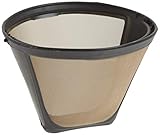
- Genuine Cuisinart Item
- Permanent gold-tone filter
- Helps provide full-flavored coffee
- Cortado con láser
Buying Priorities for Cuisinart Coffee Maker Filters
When looking for replacement filters for your Cuisinart coffee maker, consider these important factors to ensure you get the right fit and optimal performance.
- Model Compatibility: This is paramount. Not all Cuisinart coffee makers use the same filter. Verify your exact model number to find compatible filters.
- Filter Type: Cuisinart uses different filtration technologies. Common types include charcoal water filters (often for the reservoir) and permanent mesh filters (for grounds). Understand which your machine uses.
- Material Quality: For charcoal filters, look for activated charcoal that effectively reduces chlorine and other impurities. For mesh filters, ensure the material is durable and won’t easily tear or degrade.
- Filter Size and Shape: Even within the same filter type, subtle differences in size or shape can prevent a proper fit, affecting both filtration and the machine’s operation.
- Brand Reputation: While generic filters might be tempting, sticking with Cuisinart-branded filters or those from reputable third-party manufacturers known for quality can provide peace of mind.
- Ease of Replacement: Consider how simple the filter is to install and remove. Some are clip-in, others screw in, and some might require a specific orientation.
- Filter Lifespan: Charcoal filters have a recommended replacement schedule (often every 2 months or after a certain number of brews). Factor this into your purchasing decisions.
- Cost-Effectiveness: While initial cost is a factor, consider the long-term value. Filters that last longer or perform better might be a better investment.
- Water Quality: If your tap water has a strong taste or odor, a high-quality filter designed for effective impurity removal will be more important.
- Machine Performance: The right filter ensures your coffee maker functions as intended, preventing clogs and ensuring proper water flow for optimal brewing temperature and extraction.
Feature Comparison: Cuisinart Coffee Maker Filters
Understanding the various types of filters Cuisinart employs helps in identifying the correct replacement and appreciating their function.
- Brew Method: Filters are primarily associated with the brewing process, either filtering water before it enters the brew chamber or filtering coffee grounds at the point of extraction.
- Capacity: Water filters are typically designed for the reservoir’s capacity, aiming to purify all water used for a certain period or number of brews. Mesh filters handle the capacity of grounds for a single brew cycle.
- Temperature Control: While filters don’t directly control brewing temperature, a clogged filter can impede water flow, potentially affecting the machine’s ability to reach and maintain the optimal brewing temperature.
- Filter Type (Water): Most commonly, Cuisinart uses activated charcoal water filters to remove chlorine and other impurities from the water before brewing.
- Filter Type (Grounds): Many Cuisinart models feature a permanent gold-tone mesh filter to hold coffee grounds, eliminating the need for paper filters. Some models may also be compatible with paper filters.
- Cleaning: Permanent mesh filters are typically washable by hand. Charcoal water filters are disposable and meant to be replaced.
- Footprint: Water filters are usually compact and fit within the water reservoir. Mesh filters are designed to fit within the brew basket assembly.
- Material: Charcoal filters are made of activated charcoal enclosed in a plastic casing. Mesh filters are typically made of a fine metal mesh, often gold-plated for durability and to prevent rust.
- Indicator Lights: Some Cuisinart models have indicator lights to remind you when it’s time to replace the water filter.
- Flow Rate: The design of the filter affects water flow. A clogged or improperly seated filter can restrict flow, impacting brew time and quality.
- Disposal: Charcoal water filters are disposable. Mesh filters are reusable and should be cleaned after each use.
- Special Features: Some advanced models might offer multi-stage filtration in their water filters for enhanced purity.
How to Choose Step-by-Step: Cuisinart Coffee Maker Water Filters
Navigating the options for Cuisinart coffee maker water filters can seem complex, but following these steps will help you find the correct replacement.
1. Identify Your Cuisinart Coffee Maker Model:
- What to do: Look for the model number on your coffee maker. It’s usually found on a sticker on the bottom, back, or side of the unit.
- What “good” looks like: You have a clear, legible model number (e.g., DCC-3200, SS-15, CHW-12).
- Common mistake: Not knowing your exact model number. This leads to buying incompatible filters.
- How to avoid it: Take a moment to locate and write down the model number before you start shopping for filters.
2. Consult Your Cuisinart Coffee Maker Manual:
- What to do: Open your coffee maker’s instruction manual. Look for a section on maintenance, cleaning, or replacement parts.
- What “good” looks like: The manual explicitly states the type of water filter required for your model, often with a part number.
- Common mistake: Assuming all filters are the same or relying on generic advice.
- How to avoid it: Always prioritize the information provided by the manufacturer in your specific product manual.
3. Check the Cuisinart Website or Packaging:
- What to do: If you don’t have the manual, visit the official Cuisinart website. Navigate to the support or product section for your model. You can also check the packaging of your coffee maker if you still have it.
- What “good” looks like: The website or packaging clearly lists the compatible filter type or part number.
- Common mistake: Guessing based on the appearance of the old filter.
- How to avoid it: Use official brand resources to confirm the correct filter specifications.
4. Determine the Filter Type (Charcoal vs. Other):
- What to do: Observe the filter currently in your coffee maker’s water reservoir. Is it a small, often white or clear casing containing charcoal-like material? Or is it a different design?
- What “good” looks like: You’ve confirmed whether your machine uses a disposable charcoal water filter or a different system (like a permanent filter for grounds, or no filter at all for water).
- Common mistake: Confusing water filters with permanent mesh filters for coffee grounds.
- How to avoid it: Water filters typically reside in the water reservoir; mesh filters are in the brew basket.
5. Note the Filter’s Size and Shape:
- What to do: If possible, measure your current water filter or note its distinctive shape (e.g., round, rectangular, with specific notches or tabs).
- What “good” looks like: You have a clear mental picture or measurement of the filter’s dimensions and any unique features.
- Common mistake: Buying a filter that looks similar but doesn’t fit snugly or seal properly.
- How to avoid it: Pay attention to the specific dimensions and any unique molding of the filter casing.
6. Search for Compatible Replacement Filters:
- What to do: Use your model number and the identified filter type to search for replacement filters. Look for official Cuisinart filters or reputable third-party brands that explicitly state compatibility.
- What “good” looks like: You find listings that clearly match your model number and filter specifications.
- Common mistake: Purchasing a filter based solely on a generic description like “fits most Cuisinart coffee makers.”
- How to avoid it: Always double-check the compatibility list provided by the filter seller against your coffee maker’s model number.
7. Consider the Filter’s Material and Lifespan:
- What to do: Read product descriptions for information on the filter material (e.g., activated charcoal) and its recommended replacement interval (e.g., every 2 months or X brews).
- What “good” looks like: You understand what the filter is made of and how long it’s expected to last, allowing you to budget for replacements.
- Common mistake: Not knowing the filter’s lifespan and using it past its effective date.
- How to avoid it: Mark your calendar or set a reminder for when the filter needs replacing based on the manufacturer’s recommendation.
Common Mistakes (and what happens if you ignore them)
| Mistake | What it causes | Fix