
Creating Sweet Foam for Hot Coffee
Quick answer
- Sweet foam is all about milk, sugar, and air.
- Use whole milk for the best texture. Skim can get too bubbly.
- A touch of sugar or syrup is key for sweetness and stability.
- Heat the milk gently before frothing. Don’t boil it.
- Use a frothing wand, French press, or even a whisk for manual methods.
- Aim for a microfoam texture, like wet paint.
Who this is for
- You’re tired of plain hot coffee and want to add a little something extra.
- You’ve seen those fancy coffee shop drinks and want to recreate them at home.
- You’re looking for a simple upgrade to your morning routine without buying a whole new machine.
What to check first
Brewer type and filter type
Most hot coffee brewing methods are fine. Drip, pour-over, French press – they all work. The foam is a separate step. Your filter choice for the coffee itself doesn’t impact the foam.
Water quality and temperature
For the coffee, use good water. Filtered is usually best. For the foam, the milk temperature is way more important than the water. Too hot, and it’ll scald. Too cold, and it won’t froth right. Aim for around 140-150°F.
Grind size and coffee freshness
This is for the coffee part, not the foam. A medium grind is standard for most drip machines. Freshly roasted beans, ground right before brewing, make a huge difference in your coffee’s flavor. Don’t let stale grounds ruin a good foam.
Coffee-to-water ratio
Again, this is coffee basics. A common starting point is 1:15 to 1:18 (coffee to water by weight). For example, 20 grams of coffee to 300 grams of water. Get your coffee base right before you even think about foam.
Cleanliness/descale status
Make sure your coffee maker is clean. Old coffee oils can make your brew taste bitter. For foam, ensure your frothing wand or French press is clean. Any residue can mess with the texture or flavor.
Step-by-step (brew workflow)
1. Brew your hot coffee.
- What to do: Make your favorite cup of hot coffee using your preferred method.
- What “good” looks like: A hot, flavorful cup of coffee that’s ready to go.
- Common mistake: Using old beans or water that’s too cool. Avoid this by using fresh, quality ingredients.
2. Gather your ingredients.
- What to do: Get your milk (whole is best, but others work), your sweetener (sugar, syrup, honey), and your frothing tool.
- What “good” looks like: Everything is within easy reach. No scrambling mid-froth.
- Common mistake: Forgetting the sweetener or using the wrong kind of milk. Whole milk gives the richest foam.
3. Sweeten the milk.
- What to do: Add your sweetener to the milk in a separate pitcher or cup. Start with about 1-2 teaspoons of sugar or syrup per 6 oz of milk. You can always add more later.
- What “good” looks like: The sweetener is mixed in. If using sugar, give it a quick stir.
- Common mistake: Adding too much sweetener upfront. It’s easier to add more than to fix an overly sweet drink.
4. Heat the milk.
- What to do: Gently heat the sweetened milk. You can do this on the stovetop (low heat, stirring constantly) or in the microwave (short bursts, checking frequently). Aim for 140-150°F.
- What “good” looks like: The milk is warm to the touch, but not boiling or steaming aggressively.
- Common mistake: Overheating the milk. This can scald it, giving it a burnt taste and ruining its frothing ability.
5. Froth the milk.
- What to do: This is where the magic happens.
- Frothing wand: Submerge the wand just below the surface and turn it on. Move it up and down slightly to incorporate air. Once you have some foam, push it deeper to heat the rest of the milk.
- French press: Pour the warm milk into the press. Pump the plunger vigorously up and down for about 30-60 seconds until you have foam.
- Whisk: Whisk vigorously by hand until foamy. This takes the most effort.
- What “good” looks like: You have a nice layer of creamy, velvety foam. It should be glossy and smooth, not dry and bubbly.
- Common mistake: Not incorporating enough air initially or frothing too long. You want a stable foam, not a mountain of bubbles.
If you don’t have a French press or whisk, a handheld milk frother is a fantastic and easy-to-use tool for creating perfect foam.
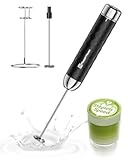
- 【Stepless Speed Control Design】Unlike traditional button-operated milk frother, this LunaFro 2.0 electric milk frother allows you to seamlessly adjust the frothing speed with unparalleled precision, ranging from 4500RPM to 10000RPM, simply by toggling the rotary switch. Experience the ultimate control as you craft the perfect froth for different beverages. Say goodbye to splashes and lackluster froth
- 【One Charging, 1440 Hours Ready】With a built-in 1200mAh lithium battery, this portable USB-C rechargeable milk frother provides up to 2 months of usage on a single charge(note: if use once per day). Fully charge the battery operated milk foam maker in just 2 hours with the included USB-C cable, eliminating the need for constant battery replacement
- 【Create Rich Creamy Foam in Seconds】Transform your morning coffee routine with our high-speed milk frother. Achieve smooth, creamy foam in just 10-15 seconds, perfect for busy mornings. Elevate your coffee experience with velvety milk foam every time
- 【Versatile for Various Beverages】 Beyond coffee, our LunaFro 2.0 milk frother excels at blending powdered supplements like protein into beverages and preparing mixed drinks. Its versatility makes it an essential tool for all your beverage-making needs, including Latte, Cappuccino, Matcha and cocoa powder
- 【Easy Cleaning and Storage】This Stepless Speed Control milk frother comes with two frothing whisks for easy replacement. Cleaning is straightforward—simply detach the whisk and wash it in water. The included compact stainless steel stand provides convenient storage and organization
6. Tap and swirl.
- What to do: Gently tap the pitcher or cup on the counter to break any large bubbles. Swirl the milk to integrate the foam and liquid.
- What “good” looks like: The foam looks smooth and has a texture like wet paint.
- Common mistake: Skipping this step. Big bubbles are the enemy of smooth foam.
7. Pour the foam.
- What to do: Hold back the foam with a spoon initially while you pour the hot milk into your coffee. Then, spoon the foam on top.
- What “good” looks like: A beautiful layer of sweet foam crowns your coffee.
- Common mistake: Pouring all the foam at once. This can create a messy, uneven topping.
8. Taste and adjust.
- What to do: Take a sip. Does it need more sweetness? More foam? Add a little more sweetener or a tiny bit more milk if needed.
- What “good” looks like: A perfectly balanced, delicious coffee drink.
- Common mistake: Settling for “okay.” Your coffee should be exactly how you like it.
Common mistakes (and what happens if you ignore them)
| Mistake | What it causes | Fix |
|---|---|---|
| Using skim or non-fat milk | Thin, airy foam that dissipates quickly | Use whole milk for the best texture and stability. |
| Overheating the milk | Scalded taste, prevents frothing | Heat gently to 140-150°F. Use a thermometer if unsure. |
| Not enough sweetener | Foam might not be stable, lacks sweetness | Start with 1-2 tsp per 6oz, adjust to taste. |
| Frothing too much air | Dry, bubbly foam that collapses fast | Incorporate air briefly, then submerge to heat the rest of the milk. |
| Not cleaning frothing tools | Off-flavors, poor foam texture | Rinse and dry your frothing wand or French press after each use. |
| Using old, stale coffee | Weak coffee base, distracts from foam flavor | Use fresh beans, grind just before brewing. |
| Forgetting to tap and swirl | Large, unappealing bubbles on top | Tap the pitcher on the counter and swirl gently. |
| Skipping the pre-sweetening | Trying to sweeten foamed milk is messy and uneven | Sweeten the milk <em>before</em> you heat and froth it. |
| Using flavored syrups that don’t mix well | Inconsistent sweetness, texture issues | Opt for syrups designed for coffee or simple syrups. |
| Pouring all the milk and foam at once | Uneven topping, messy presentation | Pour milk first, then spoon or pour foam on top. |
Decision rules (simple if/then)
- If your foam is too thin and bubbly, then you likely used milk with too little fat or incorporated too much air too quickly.
- If your milk tastes burnt, then you overheated it. Next time, use lower heat and stir more.
- If your foam collapses immediately, then the milk might be too cold, or you didn’t heat it enough to create the right texture.
- If your coffee tastes weak, then your coffee-to-water ratio is off, or your coffee grounds are too coarse for your brew method.
- If you want sweeter foam, then add more sweetener to the milk before heating and frothing.
- If your foam is hard to pour smoothly, then tap and swirl the milk pitcher to integrate the foam.
- If you’re trying to make foam with a non-dairy milk, then experiment with different brands and types, as they froth differently.
- If your frothing wand is sputtering, then the milk level is too low, or there’s an air clog. Adjust its position.
- If your French press foam is weak, then pump the plunger faster and longer.
- If your coffee and foam don’t mix well, then ensure your coffee is hot enough when you add the foam.
FAQ
What’s the best milk for sweet foam?
Whole milk is generally the best. Its fat content helps create a rich, stable, and velvety foam. Skim milk can produce foam, but it’s often lighter and dissipates faster.
Can I use sugar substitutes?
Yes, you can. However, some sugar substitutes don’t behave the same way as sugar or syrup when heated and frothed. You might need to experiment to find one that works well for you.
How do I know if the milk is hot enough?
The ideal temperature for frothing milk is between 140°F and 150°F. If you don’t have a thermometer, the pitcher should be warm to the touch, but not so hot that you can’t comfortably hold it for a few seconds. Avoid boiling.
My foam is too bubbly, not smooth. What did I do wrong?
You likely incorporated too much air too quickly, or you didn’t heat the milk enough. For a smoother foam, submerge the frothing wand slightly and move it around to heat the milk, only briefly incorporating air at the start. Tapping and swirling the pitcher also helps break large bubbles.
Can I make sweet foam ahead of time?
It’s best to make it fresh right before you use it. Foam is an emulsion of air and liquid, and it starts to break down fairly quickly. Freshly frothed foam will give you the best texture and taste.
What if I don’t have a fancy frother?
No worries! A French press works surprisingly well. Just heat your milk, pour it in, and pump the plunger vigorously. A simple whisk can also work if you’re willing to put in some arm effort.
How much sweetener should I use?
This is really up to your personal taste. A good starting point is 1 to 2 teaspoons of sugar or syrup per 6 ounces of milk. Taste your coffee and foam mixture, and adjust as needed.
Can I make this dairy-free?
Yes, but it can be trickier. Oat milk and some barista-blend plant milks tend to froth better than others. You might need to experiment to find the best option and adjust your technique.
What this page does NOT cover (and where to go next)
- Specific recommendations for coffee beans or roast levels. (Next: Explore coffee bean guides.)
- Detailed latte art techniques. (Next: Look for latte art tutorials.)
- Advanced espresso machine frothing methods. (Next: Consult your espresso machine manual or advanced brewing resources.)
- Recipes for specific flavored coffee drinks beyond basic sweet foam. (Next: Search for popular coffee drink recipes.)
- The science behind milk proteins and fat in frothing. (Next: Read articles on the chemistry of milk frothing.)