
Creating Iced Coffee From Cold Brew Concentrate
Quick answer
- Use a 1:1 or 1:2 ratio of cold brew concentrate to water or milk.
- Chill your concentrate thoroughly before brewing.
- Use filtered water for the cleanest taste.
- Adjust the ratio based on your preferred strength.
- Consider adding a splash of cream or sweetener.
- Serve over plenty of ice.
Who this is for
- Anyone who wants a quick, strong coffee base for iced drinks.
- People who dislike the acidity of hot-brewed coffee over ice.
- Those who want to prep coffee ahead of time for busy mornings.
What to check first
Brewer type and filter type
You’re likely using a cold brew maker or a French press for concentrate. This means you probably have a mesh or cloth filter. That’s good. It keeps out the sediment that can make iced coffee muddy. If you’re using a paper filter for a hot brew method and letting it cool, make sure it’s a good quality one.
Water quality and temperature
For cold brew, water temperature isn’t a big deal during the brew itself. But for dilution, it matters. Use filtered water. Tap water can have flavors that mess with your coffee. And make sure your concentrate is cold. Really cold. Like, straight from the fridge cold.
Grind size and coffee freshness
For cold brew concentrate, you want a coarse grind. Think sea salt. Too fine, and you’ll get sludge. Freshness is key. Use beans roasted within the last month if you can. Older beans taste flat, and that’s true for cold brew too.
Coffee-to-water ratio
This is where you fine-tune. For concentrate, we’re talking strong. Think 1:4 or 1:8 coffee to water for the brewing part. When you dilute it later, that’s a whole other game. We’ll get to that.
Cleanliness/descale status
Make sure your brewer and any containers are spotless. Old coffee oils turn rancid fast. If you have a drip machine you’re using to make a strong base, descale it regularly. Mineral buildup affects taste and performance.
Step-by-step (brew workflow)
1. Prepare your cold brew concentrate: If you haven’t already, brew your cold brew concentrate. Use a coarse grind and a ratio of about 1:4 to 1:8 coffee to water. Let it steep for 12-24 hours in the fridge.
- What “good” looks like: A rich, dark liquid that’s significantly stronger than your regular coffee.
- Common mistake: Using too fine a grind. This leads to bitter, over-extracted coffee and a cloudy mess. Stick to coarse.
2. Filter the concentrate: Strain your concentrate thoroughly. Use a fine-mesh sieve, cheesecloth, or coffee filter to catch any remaining grounds.
- What “good” looks like: A clear, sediment-free liquid.
- Common mistake: Not filtering enough. Tiny particles can make your final drink gritty. Double-filter if you have to.
3. Chill the concentrate: Refrigerate the filtered concentrate until it’s ice cold. This can take a few hours.
- What “good” looks like: The concentrate is chilled down to at least 40°F (4°C).
- Common mistake: Trying to dilute warm concentrate. It won’t chill the final drink properly and can lead to a watery taste.
4. Gather your dilution liquid: Decide what you’ll mix with your concentrate. Filtered water is classic. Milk (dairy or non-dairy) adds creaminess. You can also use a combination.
- What “good” looks like: A clean, neutral-tasting liquid ready to go.
- Common mistake: Using tap water with strong flavors. It can clash with the coffee notes.
5. Prepare your serving glass: Fill a tall glass with plenty of ice. The more ice, the better it keeps your drink cold without diluting too fast.
- What “good” looks like: A glass packed with ice, leaving room for your coffee mixture.
- Common mistake: Not using enough ice. Your drink will warm up and get watery before you’re done.
To best enjoy your homemade iced coffee, make sure you have some good quality iced coffee glasses on hand. Packing your glass generously with ice is key to keeping your drink cold without it getting watery too quickly.
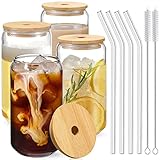
- PRODUCT CONFIGURATION: Drinking glass set includes 4 glass cups [ Diameter - 3 inches, Height - 5.6 inches ],4 nature bamboo lids, 4 reusable glass straws and 2 cleaning brushes, Classic design tumbler
- DURABLE and SAFE: The glasses are made of high-quality durable clear glass, Lead-free and BPA-free. It can be used safely for a long time. This thick clear glass can withstand the sudden changes in the temperature difference between -68°F to 212°F, making them dishwasher safe. If you want to decorate this glass, you can do DIY easily without breakage
- MULTI-PURPOSE: The glassware Great for any Occasion, any hot and cold drinks, home essentials. It is widely loved by families, kitchen, breweries, cafes, bars and restaurants. You can use it to make perfect tea, bubble Pearl Milk Tea, soda, water, iced coffee, smoothie, fruit juice or any other interesting holiday drinks
- AMAZING GIFT: This jar is very fashionable, aesthetic and characteristic. Excellent workmanship. Perfect Gifts for Women, House warming gifts, Tea mug Sets, Highball Glasses, Home Bar Accessories, Birthdays, Graduation, Weddings and Christmas Gifts
- SATISFIED SERVICE: This glass set is packaged in the heavy bubble holder and thick carton box to prevent damage while in transport. If the glass set you received was damaged or imperfect or you are not satisfied, we will offer a satisfactory solution
6. Add concentrate to the glass: Pour your chilled cold brew concentrate over the ice. Start with a smaller amount, maybe 4 oz.
- What “good” looks like: A dark layer of coffee concentrate sitting on top of the ice.
- Common mistake: Pouring too much concentrate initially. You can always add more, but you can’t take it out.
7. Add dilution liquid: Pour in your chosen dilution liquid (water, milk, etc.). A 1:1 or 1:2 ratio of concentrate to dilution liquid is a good starting point. For example, if you used 4 oz of concentrate, try 4 oz or 8 oz of water/milk.
- What “good” looks like: The liquid mixes with the concentrate, creating your desired coffee strength.
- Common mistake: Adding too much dilution liquid. You’ll end up with weak coffee. Start conservative.
8. Stir well: Gently stir the mixture to combine the concentrate and dilution liquid.
- What “good” looks like: An evenly mixed beverage with no distinct layers of concentrate or dilution liquid.
- Common mistake: Not stirring enough. You’ll get concentrated sips followed by watery ones.
9. Taste and adjust: Take a sip. Too strong? Add more water or milk. Too weak? Add a splash more concentrate (if you have any left).
- What “good” looks like: A perfectly balanced iced coffee that suits your taste.
- Common mistake: Settling for a taste you don’t love. This is your chance to dial it in.
10. Add sweeteners or cream (optional): If desired, stir in your favorite sweetener or a splash of cream.
- What “good” looks like: Your coffee is perfectly sweetened and creamy to your liking.
- Common mistake: Adding these before tasting. You might add too much to an already perfectly balanced drink.
Common mistakes (and what happens if you ignore them)
| Mistake | What it causes | Fix |
|---|---|---|
| Using hot water for dilution | Dilutes concentrate too quickly, melts ice, results in watery coffee. | Always use cold or chilled water/milk for dilution. |
| Not chilling the concentrate | Ice melts too fast, leading to a weak and watery final drink. | Ensure concentrate is thoroughly chilled in the refrigerator before diluting. |
| Using too fine a grind for brewing | Over-extraction, bitterness, and cloudy, sludgy concentrate. | Use a coarse grind, like sea salt, for cold brew concentrate. |
| Insufficient filtering of concentrate | Gritty, muddy texture in your final iced coffee. | Strain concentrate through a fine-mesh sieve, cheesecloth, or coffee filter. |
| Using tap water with off-flavors | Unpleasant taste that interferes with the coffee’s natural notes. | Use filtered water for both brewing and dilution for a cleaner flavor profile. |
| Not using enough ice | Drink warms up too quickly, leading to dilution and a less refreshing taste. | Pack your serving glass generously with ice before adding coffee and dilution liquid. |
| Incorrect initial dilution ratio | Coffee is either too strong (bitter) or too weak (watery). | Start with a 1:1 or 1:2 concentrate-to-dilution ratio and adjust to taste. |
| Not stirring thoroughly | Uneven flavor distribution; sips can be too strong or too weak. | Stir the diluted mixture well to ensure consistent taste throughout the drink. |
| Adding sweeteners/cream before tasting | Over-sweetening or over-creaming a perfectly balanced drink. | Taste your diluted coffee first, then add sweeteners or cream to your preference. |
| Using stale coffee beans | Flat, dull, or stale flavor in both the concentrate and the final drink. | Use freshly roasted coffee beans (within 1-4 weeks of roast date) for best results. |
Decision rules (simple if/then)
- If your cold brew concentrate tastes bitter, then you likely used too fine a grind or over-extracted. Try a coarser grind next time.
- If your iced coffee is too weak, then add more cold brew concentrate to your glass because you need a stronger coffee base.
- If your iced coffee tastes watery, then you might not have used enough ice or your concentrate wasn’t cold enough. Add more ice or chill your concentrate longer.
- If your final drink has sediment, then your concentrate wasn’t filtered properly. Filter it again through a finer material.
- If you prefer a creamier iced coffee, then use milk (dairy or non-dairy) as your dilution liquid instead of water.
- If you want to reduce acidity, then cold brew concentrate is the way to go because the brewing process extracts fewer acids than hot water.
- If your coffee tastes “off” or stale, then your coffee beans might be too old. Use fresher beans for a brighter flavor.
- If you’re in a hurry, then having pre-made cold brew concentrate in the fridge is a lifesaver because it’s ready to dilute instantly.
- If you want to control sweetness precisely, then add sweetener last after tasting your diluted coffee because you can then adjust to your exact preference.
- If your concentrate is too concentrated, meaning it’s hard to dilute to a palatable strength, then use a higher water-to-coffee ratio during the initial brewing phase.
FAQ
How long does cold brew concentrate last?
Stored in an airtight container in the refrigerator, cold brew concentrate typically lasts for about 1-2 weeks. Make sure it’s well-sealed to prevent oxidation.
Can I use hot brewed coffee to make iced coffee?
Yes, you can, but it’s not ideal for a true “cold brew” experience. Brewing hot coffee and then chilling it can result in a more acidic taste when served over ice. Cold brew concentrate is specifically designed for a smoother, less acidic profile.
What’s the best ratio for diluting cold brew concentrate?
A good starting point is a 1:1 ratio of concentrate to water or milk. Many people prefer 1:2 for a slightly less intense coffee flavor. Experiment to find what works for you.
Why is my cold brew concentrate cloudy?
Cloudiness usually comes from using too fine a coffee grind or not filtering the concentrate thoroughly. A fine grind can pass through filters, and sediment can make the liquid murky.
Can I add flavorings to my cold brew concentrate?
It’s generally better to add flavorings like syrups or extracts to the final diluted drink, not the concentrate itself. This allows for better control over the flavor intensity and ensures even distribution.
What kind of coffee beans are best for cold brew?
Medium to dark roasts are often favored for cold brew as they tend to produce a smoother, richer flavor profile. However, you can experiment with lighter roasts if you prefer a brighter taste.
How do I make my iced coffee stronger without making it bitter?
Use a higher ratio of coffee grounds to water when brewing your concentrate (e.g., 1:4 instead of 1:8). Also, ensure your concentrate is well-chilled and use less dilution liquid.
What this page does NOT cover (and where to go next)
- Specific brewing equipment reviews and comparisons.
- Detailed guides on different cold brew maker systems.
- Advanced latte art techniques for iced beverages.
- Recipes for complex coffee cocktails.
- The science behind coffee extraction and acidity.