
Crafting a Macchiato At Home
Quick Answer
- You’ll need an espresso machine and a milk frother.
- Freshly roasted, finely ground espresso beans are key.
- Aim for a 1:1 ratio of espresso to frothed milk.
- Steam milk until it’s velvety, not bubbly.
- Pour the milk gently into the espresso.
- Taste and adjust milk or espresso as needed.
Who This Is For
- Coffee lovers who enjoy a strong, balanced espresso drink.
- Home baristas looking to elevate their morning routine.
- Anyone curious about making authentic Italian-style coffee at home.
What to Check First
Brewer Type and Filter Type
You’re going to need an espresso machine for this. A true macchiato starts with espresso. If you’re using a Moka pot or Aeropress, you’re making a different drink. Check your machine’s manual for specific filter basket recommendations.
Water Quality and Temperature
Good coffee starts with good water. Tap water can have off-flavors that mess with your espresso. Filtered water is usually the way to go. For espresso, you want your water hot, but not boiling. Most machines handle this automatically.
Grind Size and Coffee Freshness
This is huge. For espresso, you need a fine grind, like granulated sugar. Too coarse and your shot will be weak and watery. Too fine, and it’ll choke your machine. Always use freshly roasted beans. Old beans lose their flavor fast. Grind them right before you brew.
For the best flavor, always use freshly roasted espresso beans. You can find excellent options like these espresso beans that are perfect for a rich macchiato.
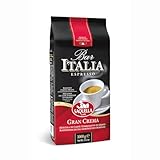
- AUTHENTIC ITALIAN ESPRESSO EXPERIENCE: From Saquella Caffè, family coffee roasters in Italy since 1856 — blending heritage, passion, and quality in every bean.
- FULL-BODIED & CREAMY FLAVOR: A signature Arabica and Robusta blend that delivers a bold espresso with a thick, velvety crema and lingering chocolate notes.
- MEDIUM-DARK ROAST: Carefully roasted for a rich aroma and balanced taste — smooth yet intense, ideal for espresso, cappuccino, or macchiato.
- CONSISTENT QUALITY: Beans are slow-roasted and expertly blended to ensure uniform extraction and a true Italian café-style experience at home.
- MADE IN ITALY: Imported directly from Italy — Saquella Bar Italia Gran Crema is the choice of professional baristas and espresso lovers worldwide.
Coffee-to-Water Ratio
For a standard macchiato, you’re looking at a double shot of espresso. That’s usually around 18-20 grams of coffee to 36-40 grams of liquid espresso. The milk is usually just a couple of ounces. It’s all about that espresso base.
Cleanliness/Descale Status
Nobody likes a dirty coffee maker. Old coffee oils can make your macchiato taste bitter or stale. Regularly clean your espresso machine’s portafilter, group head, and steam wand. Descale it according to the manufacturer’s instructions to keep it running smoothly and your coffee tasting clean.
Step-by-Step: How to Make Macchiato Coffee at Home
1. Prepare Your Espresso Machine: Turn it on and let it heat up fully. This is crucial for proper extraction.
- What “good” looks like: The machine’s indicator light shows it’s ready, and the portafilter feels warm.
- Common mistake: Rushing the warm-up. This leads to under-extracted, sour espresso. Give it at least 15-20 minutes.
2. Grind Your Beans: Weigh out your espresso beans (around 18-20g for a double shot) and grind them to a fine consistency.
- What “good” looks like: The grounds look like fine sand or granulated sugar.
- Common mistake: Using pre-ground coffee or the wrong grind size. This is a fast track to a bad shot.
3. Dose and Tamp the Portafilter: Put the grounds into your portafilter. Distribute them evenly, then tamp firmly and level.
- What “good” looks like: A smooth, even puck of coffee with no gaps. A firm, consistent tamp.
- Common mistake: Tamping too hard or too soft, or unevenly. This causes channeling, where water finds easy paths, leading to uneven extraction.
4. Lock In and Brew: Insert the portafilter into the group head and immediately start the espresso extraction.
- What “good” looks like: A steady stream of rich, dark espresso flowing into your cup, forming a nice crema on top. Aim for about 25-30 seconds for a double shot.
- Common mistake: Letting the portafilter sit in the hot group head too long before brewing. This “bakes” the coffee grounds.
5. Steam Your Milk: While the espresso brews, pour cold milk into your frothing pitcher. Steam it until it reaches about 140-150°F (60-65°C).
- What “good” looks like: Silky, microfoam with a glossy sheen. No big, airy bubbles.
- Common mistake: Overheating the milk, which burns it and ruins the sweetness. Or, creating too much foam, which makes it too airy.
6. Tap and Swirl the Milk: Gently tap the pitcher on the counter to break any large bubbles and swirl the milk to integrate the foam.
- What “good” looks like: The milk looks smooth and creamy, like wet paint.
- Common mistake: Skipping this step. Big bubbles will ruin the texture and make your macchiato taste watery.
7. Pour the Milk: Hold the pitcher close to the espresso. Pour the steamed milk into the center of the espresso in a slow, controlled stream.
- What “good” looks like: A small dollop of foam sits on top of the espresso. It should look like a “stain” or “spot” on the coffee.
- Common mistake: Pouring too fast or from too high up. This will mix the milk and espresso too much, losing the distinct layers.
8. Serve Immediately: A macchiato is best enjoyed right away.
- What “good” looks like: A beautiful contrast between the dark espresso and the white foam.
- Common mistake: Letting it sit. The espresso will cool, and the foam will dissipate, changing the flavor and texture.
Common Mistakes (and What Happens If You Ignore Them)
| Mistake | What It Causes | Fix |
|---|---|---|
| Using stale coffee beans | Flat, lifeless, or bitter flavor | Buy beans roasted within the last few weeks and grind them fresh for each shot. |
| Incorrect grind size (too coarse) | Weak, sour, watery espresso (under-extracted) | Adjust your grinder to a finer setting. Aim for a flow rate of about 25-30 seconds for a double shot. |
| Incorrect grind size (too fine) | Choked machine, bitter, burnt espresso (over-extracted) | Adjust your grinder to a coarser setting. Ensure water can flow through the puck. |
| Uneven tamping | Channeling, uneven extraction, sour and weak coffee | Tamp with consistent, firm pressure, ensuring the coffee bed is level. |
| Not preheating the machine/portafilter | Under-extracted, lukewarm espresso | Allow your espresso machine to fully heat up (15-20 mins minimum). |
| Overheating milk | Burnt, bitter milk flavor | Steam milk to around 140-150°F (60-65°C). Use a thermometer if needed. |
| Creating too much foam | Airy, bubbly texture, less intense flavor | Focus on stretching the milk for only a short time, then swirl to integrate it into a glossy foam. |
| Pouring milk too quickly/from too high | Blended drink, not a distinct macchiato | Pour gently and close to the surface of the espresso to create a small “stain” of foam. |
| Using old or dirty equipment | Off-flavors, bitter taste, poor crema | Clean your espresso machine and frothing pitcher regularly. Descale as recommended. |
Decision Rules
- If your espresso shot runs too fast (under 20 seconds), then your grind is likely too coarse because the water is flowing through too easily.
- If your espresso shot runs too slow or drips (over 35 seconds), then your grind is likely too fine because the water is struggling to get through.
- If your espresso tastes sour, then it’s probably under-extracted; check your grind size and brew time.
- If your espresso tastes bitter, then it’s probably over-extracted; check your grind size and brew time.
- If your steamed milk has large, persistent bubbles, then you’ve introduced too much air; try tapping and swirling more to break them up.
- If your macchiato tastes weak, then either your coffee dose was too low or your extraction was too fast.
- If your macchiato tastes too strong, then consider a slightly larger milk-to-espresso ratio or a slightly longer milk pour.
- If your coffee has an oily sheen on top and tastes stale, then your beans are too old.
- If your machine is struggling to push water through, check that your grind isn’t too fine and your portafilter isn’t over-tamped.
- If your milk doesn’t hold its texture, ensure you’re using cold milk and steaming it to the correct temperature.
FAQ
What’s the difference between a macchiato and a latte?
A macchiato is espresso “stained” with a small amount of frothed milk. A latte has a much larger proportion of steamed milk and a thin layer of foam.
Can I make a macchiato without an espresso machine?
Technically, you can use strong brewed coffee from a Moka pot or Aeropress. However, it won’t have the same intensity or crema as true espresso.
How much milk should I use for a macchiato?
Traditionally, it’s just a tablespoon or two of frothed milk, enough to “stain” the espresso. The goal is to complement, not overpower, the coffee.
What kind of milk is best for frothing?
Whole milk generally froths best, creating a rich, stable foam. Other milks can work, but might require a different technique.
How do I get that perfect microfoam?
Focus on stretching the milk just enough to create a little volume, then submerge the steam wand to create a vortex that integrates the air into a smooth, glossy texture.
Is a caramel macchiato the same as an espresso macchiato?
No. A caramel macchiato is a Starbucks invention, essentially a vanilla latte with caramel drizzle. An espresso macchiato is the traditional Italian drink.
Why does my macchiato taste watery?
This usually means either too much milk was used, or the milk wasn’t frothed correctly, resulting in thin foam.
How can I make my macchiato taste sweeter?
The sweetness comes from the steamed milk. Ensure your milk is steamed properly to its natural sweetness. You can also add a tiny bit of sugar or syrup if desired.
What This Page Does Not Cover (and Where to Go Next)
- Detailed explanations of different espresso machine types.
- Advanced milk steaming techniques for latte art.
- Specific coffee bean origins and their flavor profiles.
- Troubleshooting complex espresso machine issues.
- Recipes for flavored syrups or caramel drizzles.