
Crafting A Delicious Coffee Milk Tea At Home
Quick answer
- Brew strong coffee. A concentrated shot is key.
- Use good quality tea leaves. Black tea is the classic choice.
- Sweeten to your taste. Sugar, condensed milk, or syrup work.
- Add milk or creamer. Evaporated milk is traditional.
- Chill everything thoroughly. Cold ingredients make the best drink.
- Combine and stir well. Get all those flavors mingling.
- Adjust to your preference. More coffee? Less sweet? You’re the boss.
Who this is for
- Anyone craving that boba shop taste without leaving the house.
- Coffee lovers who want to branch out into something new.
- Home baristas looking for a fun, tasty project.
What to check first
Brewer type and filter type
What are you using to brew your coffee? Drip machine, pour-over, French press? The method matters for strength. A paper filter will give a cleaner cup than a metal one. For milk tea, we want a robust coffee flavor, so consider a method that gives you control.
Water quality and temperature
Good water makes good coffee. If your tap water tastes off, your coffee will too. Filtered water is usually best. For brewing coffee, aim for water between 195-205°F. Too hot burns it, too cool under-extracts.
Grind size and coffee freshness
Freshly ground beans are a game-changer. Pre-ground coffee loses its zing fast. Grind size depends on your brewer. Coarse for French press, medium for drip, fine for espresso. Use beans roasted within the last few weeks for peak flavor.
Coffee-to-water ratio
This is crucial for strength. For coffee milk tea, you’ll want a higher coffee-to-water ratio than your usual cup. Think more coffee, less water. A good starting point might be a 1:10 ratio for a concentrate, but experiment.
Cleanliness/descale status
Is your coffee maker clean? Old coffee oils can turn a delicious drink bitter. If you haven’t descaled your machine in a while, now’s the time. A clean brewer means clean flavors.
Step-by-step (brew workflow)
1. Brew strong coffee.
- What to do: Use your preferred brewing method, but increase the coffee grounds or decrease the water. Aim for a concentrated brew. For example, if you normally use 2 tablespoons of coffee for 6 oz of water, try 3 or 4 tablespoons for the same amount of water.
- What “good” looks like: A rich, intense coffee liquid that smells amazing. It should be much stronger than your everyday coffee.
- Common mistake and how to avoid it: Brewing a standard cup of coffee. This won’t have enough coffee flavor to stand up to the tea and milk. Use more grounds or less water.
2. Brew strong black tea.
- What to do: Steep good quality black tea leaves in hot water. Use a ratio of about 1-2 teaspoons of loose leaf tea per 6 oz of water, or 1-2 tea bags. Let it steep for 3-5 minutes.
- What “good” looks like: A deeply colored, aromatic tea. It should have a robust flavor that you can still taste after adding other ingredients.
- Common mistake and how to avoid it: Over-steeping the tea, which makes it bitter. Stick to the recommended time.
To ensure you get the best flavor from your tea leaves, consider using a quality tea infuser. This allows the leaves to expand fully, releasing their full aroma and taste into the water.
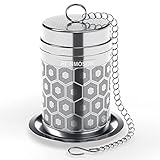
- Upgraded Micron Mesh: loose leaf tea steeper is Ideal to hold tea leaves, particles, or ground coffee. Compared to traditional tea strainer, our tea ball features 50% more ultra fine, half-sized holes for optimal tea flavor and minimal sediment leak. Ideal for rooibos, herbs, green tea, Chai, ground coffee, small tea leaves and etc.
- High-Quality Materials: Made of 304 food-grade stainless steel, tea ball infuser for loose tea is easier to be cleaned. Besides, loose tea steeper ensures no metallic taste on your tea or coffee and never rust for years of use. Money-saving and eco-friendly alternative to disposable tea bags and paper filters.
- Easy to Open and Close: With the design of thread top, the lids screw easily and are much more secure than the traditional twist lid, so the tea leaves will be held tightly and the lid never escapes during the process of brewing.
- Wide Application: tea steeper is not only for loose tea leaves but also a spice filter, infusing spices, herbs, and seasonings in soups, sauce, broths, and stews. Extended 4.3” chain with S-handle makes tea infusers can catch securely on any rim of mugs, cups, teapots, kettles, bottles, and pitchers.
- Package: Comes with 1.5” diameter and 2.2” high tea balls for loose tea and 1 saucer. The saucer is helpful for avoiding making a mess when you take out the loose leaf tea infusers after brewing.
3. Sweeten the tea.
- What to do: While the tea is hot, stir in your sweetener of choice. Sugar, simple syrup, or condensed milk work well. Start with a tablespoon or two and taste as you go.
- What “good” looks like: A pleasant sweetness that complements the tea without being cloying.
- Common mistake and how to avoid it: Adding too much sweetener at once. It’s easier to add more than to take it away.
4. Combine coffee and tea.
- What to do: Pour your strong brewed coffee into the sweetened tea.
- What “good” looks like: A beautiful amber-brown liquid. The aromas should start to meld.
- Common mistake and how to avoid it: Using weak coffee. The coffee flavor will get lost.
5. Add milk or creamer.
- What to do: Stir in your chosen milk or creamer. Evaporated milk is traditional for a richer taste, but half-and-half or even whole milk works. Start with about 1/4 to 1/2 cup per serving and adjust.
- What “good” looks like: A creamy, opaque beverage. The color should be a pleasing milky brown.
- Common mistake and how to avoid it: Using skim milk. It won’t provide the necessary richness and body.
6. Chill everything.
- What to do: Refrigerate the coffee-tea-milk mixture until it’s thoroughly cold. This can take a couple of hours.
- What “good” looks like: A cold, refreshing drink. Serving it warm just isn’t the same.
- Common mistake and how to avoid it: Skipping this step. A warm coffee milk tea is a sad coffee milk tea.
7. Prepare your serving glass.
- What to do: Fill a tall glass with ice.
- What “good” looks like: A glass packed with ice, ready to keep your drink frosty.
- Common mistake and how to avoid it: Not using enough ice. The drink will melt the ice too quickly and become watered down.
8. Pour and serve.
- What to do: Pour the chilled coffee milk tea over the ice.
- What “good” looks like: A visually appealing, cold beverage.
- Common mistake and how to avoid it: Pouring a hot mixture over ice. This melts the ice too fast.
9. Taste and adjust.
- What to do: Take a sip. Need more sweetness? More coffee flavor? Add a splash more of whatever you think it needs.
- What “good” looks like: A perfectly balanced drink that hits all the right notes for you.
- Common mistake and how to avoid it: Settling for a “just okay” drink. This is your chance to make it perfect.
Common mistakes (and what happens if you ignore them)
| Mistake | What it causes | Fix |
|---|---|---|
| Using stale coffee beans | Flat, dull coffee flavor; lacks aroma | Use freshly roasted beans, grind just before brewing. |
| Brewing coffee too weak | Coffee flavor gets lost; tastes like sweet tea | Increase coffee grounds or decrease water for a concentrated brew. |
| Over-steeping tea | Bitter, astringent taste | Steep black tea for 3-5 minutes max. |
| Using low-quality tea | Weak tea flavor; unpleasant aftertaste | Opt for good quality loose leaf black tea. |
| Not sweetening enough | Drink tastes bland or too bitter | Start with sweetener and gradually add until desired sweetness is reached. |
| Using skim milk or water | Lacks creaminess and body; watery | Use evaporated milk, half-and-half, or whole milk for richness. |
| Serving it warm | Not refreshing; doesn’t taste authentic | Chill all components thoroughly before combining and serving over ice. |
| Not cleaning the coffee maker regularly | Burnt, oily, bitter coffee taste | Descale and clean your brewer regularly as per manufacturer instructions. |
| Using tap water with off-flavors | Off-flavors in the final drink | Use filtered water for a cleaner, purer taste. |
| Incorrect grind size for brewer | Under-extracted (sour) or over-extracted (bitter) | Match grind size to your brewing method (coarse for French press, etc.). |
Decision rules (simple if/then)
- If your coffee tastes weak, then add more coffee grounds or use less water next time, because a strong coffee base is essential.
- If your tea tastes bitter, then shorten the steeping time next time, because over-extraction ruins the flavor.
- If the drink isn’t sweet enough, then add more sweetener gradually, because you can always add more.
- If the drink lacks creaminess, then use evaporated milk or half-and-half next time, because these provide richness.
- If the drink tastes watery, then chill your ingredients more thoroughly before mixing, because a cold base prevents ice melt.
- If you want a stronger coffee flavor, then brew your coffee at a finer grind size (if your brewer allows), because a finer grind can yield more extraction.
- If you detect off-flavors, then check your water quality and clean your equipment, because impurities can significantly impact taste.
- If the drink is too sweet, then add a bit more unsweetened brewed tea or coffee, because this will dilute the sweetness.
- If you want a bolder tea flavor, then use a higher quality loose-leaf tea, because premium teas have more robust profiles.
- If you’re short on time, then brew extra coffee and tea concentrate earlier in the day, because it will be ready to go when you are.
FAQ
How do I make the coffee concentrate?
You can make a concentrate by using more coffee grounds than usual for the amount of water, or by using less water. For example, brew your coffee using a 1:10 coffee-to-water ratio instead of the typical 1:15 or 1:17.
What kind of tea is best for coffee milk tea?
Black tea is the classic choice. Varieties like Assam, Ceylon, or a good quality English Breakfast blend work well because they have a robust flavor that can hold its own against the coffee.
Can I use instant coffee?
You can, but it might not give you the best flavor. Instant coffee can sometimes have a more artificial taste. If you must use it, dissolve it in a small amount of hot water to create a concentrated shot.
What’s the deal with evaporated milk?
Evaporated milk is a common ingredient in many traditional milk teas. It’s milk that’s had about 60% of its water removed, giving it a richer, creamier texture and a slightly caramelized flavor when heated.
How much sugar should I add?
This is totally up to your preference. Start with a tablespoon of sugar or simple syrup per serving and taste. You can always add more. Some people prefer condensed milk for sweetness, which also adds creaminess.
Can I make this ahead of time?
Yes, you can brew your coffee and tea, sweeten them, and combine them. However, it’s best to add the milk and ice just before serving to prevent separation or a watered-down taste. Store the coffee-tea base in the fridge.
What if I don’t have a fancy coffee maker?
No problem! A simple drip coffee maker, a French press, or even a Moka pot can work. Just focus on getting that strong, concentrated coffee flavor. Even a good quality instant coffee, dissolved well, can be a starting point.
How can I make it less sweet?
Reduce the amount of sugar or condensed milk you add. You can also increase the amount of unsweetened brewed tea or coffee to dilute the sweetness.
What this page does NOT cover (and where to go next)
- Specific coffee bean recommendations for milk tea. (Next: Explore different coffee origins and roast profiles for brewing.)
- Detailed instructions for every single type of coffee brewer. (Next: Consult your brewer’s manual for optimal settings.)
- Recipes for homemade simple syrups or condensed milk. (Next: Search for dedicated recipes for these components.)
- Advanced techniques like cold brewing for coffee concentrate. (Next: Investigate cold brew methods for a smoother, less acidic base.)
- The history of coffee milk tea or its cultural significance. (Next: Explore food and drink history resources.)