
Combining Matcha and Coffee With Milk
Quick answer
- For a balanced matcha coffee with milk, start with a 1:1 ratio of espresso to matcha concentrate.
- Use good quality, fresh matcha powder and espresso beans.
- Froth your milk separately to achieve a creamy texture.
- Gently layer the ingredients rather than stirring vigorously to maintain distinct flavors and colors.
- Adjust the sweetness to your preference with simple syrup or honey.
- Experiment with different milk types like oat or almond for varied flavor profiles.
Who this is for
- Coffee enthusiasts looking to explore unique beverage combinations.
- Matcha lovers curious about incorporating their favorite green tea into coffee drinks.
- Home baristas seeking new recipes to impress friends and family.
What to check first
Brewer type and filter type
The type of coffee brewer you use will impact the strength and flavor of your coffee base. Espresso machines are ideal for a concentrated coffee shot, which pairs well with matcha. If you don’t have an espresso machine, a Moka pot or a very strong Aeropress brew can serve as a substitute. The filter type, whether paper or metal, can also subtly affect the coffee’s taste. For this drink, a clean filter is paramount to avoid any off-flavors.
Water quality and temperature
The water used for both your matcha and your coffee is a critical, often overlooked, component. Filtered water is highly recommended to remove impurities that can interfere with the delicate flavors of both matcha and coffee. For matcha, water that is too hot can “cook” the powder, resulting in a bitter taste. Aim for water around 175°F (79°C). For coffee, follow your brewer’s recommended temperature, typically between 195°F and 205°F (90°C – 96°C).
Grind size and coffee freshness
The freshness of your coffee beans is essential for a vibrant flavor. Ideally, use beans roasted within the last few weeks. The grind size should be appropriate for your brewing method. For espresso, a fine grind is necessary. If using a Moka pot, a slightly coarser grind than espresso but finer than drip coffee is usually best. Freshly ground coffee will always yield a superior result compared to pre-ground beans.
For the best flavor and a vibrant coffee base, always start with freshly roasted espresso beans. Using beans roasted within the last few weeks will make a noticeable difference in your final drink.

- AUTHENTIC ITALIAN ESPRESSO EXPERIENCE: From Saquella Caffè, family coffee roasters in Italy since 1856 — blending heritage, passion, and quality in every bean.
- FULL-BODIED & CREAMY FLAVOR: A signature Arabica and Robusta blend that delivers a bold espresso with a thick, velvety crema and lingering chocolate notes.
- MEDIUM-DARK ROAST: Carefully roasted for a rich aroma and balanced taste — smooth yet intense, ideal for espresso, cappuccino, or macchiato.
- CONSISTENT QUALITY: Beans are slow-roasted and expertly blended to ensure uniform extraction and a true Italian café-style experience at home.
- MADE IN ITALY: Imported directly from Italy — Saquella Bar Italia Gran Crema is the choice of professional baristas and espresso lovers worldwide.
Coffee-to-water ratio
The ratio of coffee grounds to water directly influences the strength of your coffee base. For a drink like matcha coffee, you want a concentrated coffee flavor that can stand up to the matcha. For espresso, this is typically around a 1:2 ratio of coffee grounds to liquid espresso yield. If using an alternative brewing method, adjust the coffee grounds to water to achieve a robust brew, similar to a strong drip coffee.
Cleanliness/descale status
A clean brewing system is non-negotiable for great-tasting beverages. Coffee oils and mineral buildup from water can impart stale or bitter flavors that will ruin your matcha coffee. Regularly clean your espresso machine, Moka pot, or other coffee brewer according to the manufacturer’s instructions. Descaling your machine periodically, especially if you have hard water, is also vital for optimal performance and taste. For matcha preparation, ensure your whisk (chasen) and bowl are thoroughly cleaned.
Step-by-step (brew workflow)
1. Prepare Matcha Concentrate:
- What to do: Sift 1-2 teaspoons of high-quality matcha powder into a matcha bowl (chawan). Add 2 oz (60ml) of hot water (around 175°F / 79°C).
- What “good” looks like: The matcha powder should dissolve easily, creating a smooth, lump-free, vibrant green liquid with a slight froth on top.
- Common mistake and how to avoid it: Using water that’s too hot. This can make the matcha taste bitter. Let your hot water cool slightly before pouring.
2. Whisk Matcha:
- What to do: Use a bamboo matcha whisk (chasen) to vigorously whisk the matcha and water in a “W” or “M” motion until frothy.
- What “good” looks like: A smooth, creamy consistency with a fine foam covering the surface. No clumps should be visible.
- Common mistake and how to avoid it: Not whisking enough, leaving clumps. Ensure you whisk with enough speed and cover the entire surface of the liquid.
To achieve that perfect, creamy froth on your matcha, a good bamboo matcha whisk is essential. It helps break down the powder and create a smooth, lump-free consistency.
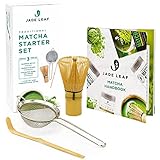
- Everything You Need to Begin – Includes traditional bamboo chasen (whisk), chashaku (scoop), stainless-steel sifter, and an easy-to-follow full-color preparation guide—ideal for both newcomers and matcha aficionados.
- Complete Beginner-Friendly Kit – Inspired by best-selling matcha sets on Amazon, this starter set mirrors the completeness of top kits—providing all core tools for a seamless preparation experience.
- Perfect Gift for Matcha Tea Lovers – With elegant packaging and thoughtful inclusions, this starter set makes a meaningful, stylish gift—combining tradition, beauty, and utility.
- Expert-Guided, No Guesswork – With our step-by-step handbook, creating smooth, whisked matcha becomes easy and enjoyable—even if it’s your first time.hose discovering matcha
- JADE LEAF MATCHA: Jade Leaf is proudly the #1 Matcha brand in the US*. We source our matcha directly from family owned partner farms across the Uji and Kagoshima regions. Our tea masters fuse traditional and modern techniques to cultivate leaves brimming with flavor and nutrients, creating well rounded flavor blends, not found anywhere else.
3. Brew Espresso (or strong coffee):
- What to do: Brew a double shot (approximately 2 oz / 60ml) of fresh espresso using your machine.
- What “good” looks like: A rich, aromatic shot of espresso with a reddish-brown crema on top.
- Common mistake and how to avoid it: Using stale beans or a grind that’s not suitable for espresso. Always use freshly roasted beans and the correct grind setting for your machine.
4. Sweeten (Optional):
- What to do: If you prefer a sweeter drink, add 1-2 teaspoons of simple syrup, honey, or your preferred sweetener to the espresso or matcha concentrate.
- What “good” looks like: The sweetener is fully dissolved, and the liquid is evenly mixed.
- Common mistake and how to avoid it: Adding sweetener after all components are layered. It’s harder to dissolve and distribute evenly.
5. Prepare Milk:
- What to do: Heat and froth your milk of choice (dairy or non-dairy) to your desired temperature and texture.
- What “good” looks like: Smooth, creamy milk with microfoam, not large bubbles. Aim for a temperature that’s hot but not scalding (around 140°F – 150°F / 60°C – 65°C).
- Common mistake and how to avoid it: Overheating the milk, which can burn it and create an unpleasant flavor. Use a thermometer if unsure.
6. Add Espresso to Glass:
- What to do: Pour the brewed espresso into your serving glass.
- What “good” looks like: The espresso sits at the bottom of the glass, ready for the next layer.
- Common mistake and how to avoid it: Adding other liquids first, making it harder to see the espresso layer.
7. Add Matcha Concentrate:
- What to do: Gently pour the prepared matcha concentrate over the espresso. You can pour it over the back of a spoon to help create a distinct layer.
- What “good” looks like: A clear separation between the dark espresso and the vibrant green matcha layer.
- Common mistake and how to avoid it: Pouring too quickly, causing the layers to mix prematurely. Use a slow, steady pour.
8. Add Sweetener (if not added earlier):
- What to do: If you haven’t already, add your sweetener now and give it a very gentle stir to incorporate into the espresso and matcha layers.
- What “good” looks like: The sweetener is mostly dissolved and distributed.
- Common mistake and how to avoid it: Vigorous stirring, which will blend all the layers.
9. Pour Frothed Milk:
- What to do: Slowly pour the frothed milk over the matcha layer. You can create latte art if desired.
- What “good” looks like: A beautiful layered effect with distinct colors (dark brown, green, white) or a nicely integrated creamy texture.
- Common mistake and how to avoid it: Pouring too fast, which will cause all layers to mix into a muddy brown color.
10. Serve:
- What to do: Serve immediately.
- What “good” looks like: A visually appealing drink that is ready to be enjoyed.
- Common mistake and how to avoid it: Letting it sit for too long before drinking, as the layers will continue to mix and the foam may dissipate.
Common mistakes (and what happens if you ignore them)
| Mistake | What it causes | Fix |
|---|---|---|
| Using low-quality or old matcha powder | Bitter, dull flavor, poor color, and lack of froth. | Invest in ceremonial or premium grade matcha from a reputable source. Store it properly in an airtight container in the fridge. |
| Using water that’s too hot for matcha | Scalds the matcha, resulting in a bitter, grassy, and unpleasant taste. | Use water around 175°F (79°C). Let boiling water sit for a few minutes before pouring. |
| Not whisking matcha properly | Clumps of matcha powder, gritty texture, and uneven flavor distribution. | Whisk vigorously in a “W” or “M” motion until a fine foam forms. Ensure no clumps remain. |
| Using stale coffee beans or incorrect grind | Weak, bitter, or sour coffee flavor that overpowers or clashes with the matcha. | Use freshly roasted beans and grind them just before brewing. Ensure your grind size is appropriate for your chosen brewing method. |
| Overheating milk | Burnt milk flavor, loss of sweetness, and poor foam texture. | Heat milk gently, ideally to 140°F – 150°F (60°C – 65°C). Use a thermometer to ensure accuracy. |
| Stirring too vigorously after layering | Blends all the distinct layers into a uniform, less visually appealing color. | Layer ingredients gently. If mixing is desired, do so subtly at the end. |
| Incorrect coffee-to-water ratio | Coffee that is too weak or too strong, disrupting the flavor balance. | Aim for a concentrated coffee shot, similar to a double espresso. Adjust your coffee grounds and water for a robust brew. |
| Using un-filtered water | Off-flavors from chlorine or minerals that detract from the matcha and coffee. | Use filtered or bottled water for both matcha and coffee preparation. |
| Not cleaning brewing equipment | Lingering coffee oils and residue that impart stale or bitter flavors. | Clean your coffee maker and matcha tools regularly after each use. Descale your coffee machine as recommended. |
Decision rules (simple if/then)
- If your matcha tastes bitter, then you likely used water that was too hot because hot water can scald delicate matcha powder.
- If your matcha has clumps, then you didn’t whisk it enough or the powder quality is poor because proper whisking breaks down the powder.
- If your coffee tastes weak, then you may have used too little coffee grounds or the grind is too coarse because insufficient coffee or a coarse grind leads to under-extraction.
- If your drink is too sweet, then you added too much sweetener because the amount of sweetener directly impacts the overall sweetness.
- If your milk is bubbly instead of creamy, then you may have over-aerated the milk or heated it too quickly because excessive air or high heat creates large bubbles.
- If the layers mix too quickly, then you poured too fast or didn’t use a gentle pouring technique because the density differences are key to layering.
- If the coffee flavor is overpowering, then you need a stronger matcha concentrate or less coffee because the matcha needs to be potent enough to balance the coffee.
- If the matcha flavor is overpowering, then you need less matcha or a stronger coffee base because the coffee needs to provide a solid foundation.
- If you want a richer mouthfeel, then use whole milk or a creamy non-dairy milk like oat milk because these options have higher fat content.
- If you prefer a lighter drink, then use skim milk or a lighter non-dairy milk like almond milk because these have less fat and a thinner consistency.
- If you want a more complex flavor, then consider adding a very small pinch of cinnamon or cardamom to your coffee grounds before brewing because spices can complement both coffee and matcha.
FAQ
What is the best type of matcha to use for matcha coffee?
For the best flavor and color, use ceremonial grade or premium grade matcha. These are higher quality, finely ground, and have a vibrant green color and less bitterness.
Can I use instant coffee instead of espresso?
While you can, it’s not ideal. Instant coffee often has a less nuanced flavor and can be more bitter. If you must use it, dissolve it thoroughly in a small amount of hot water to create a concentrated “shot.”
What kind of milk works best?
Oat milk and almond milk are popular choices as they complement both coffee and matcha well and often froth nicely. Whole milk also creates a rich, creamy texture. Experiment to find your favorite.
How do I get the layers to stay separate?
Pour each liquid gently and slowly. Pouring over the back of a spoon can help create distinct layers, especially when adding the matcha to the espresso, and the milk to the matcha.
Can I make this drink ahead of time?
It’s best enjoyed fresh. The foam will dissipate, and the layers will eventually blend if left to sit for too long.
Is there a specific order for adding ingredients?
Generally, espresso at the bottom, then matcha concentrate, and finally the frothed milk on top creates a classic layered look. However, feel free to adjust based on your preference.
How can I make it less bitter?
Ensure your matcha is of good quality and prepared with water that isn’t too hot. Also, use freshly roasted coffee beans and avoid over-extracting your espresso. Adjusting sweetness can also help.
What’s the typical ratio of coffee to matcha?
A good starting point is a 1:1 ratio of espresso to matcha concentrate (e.g., 2 oz espresso to 2 oz matcha). You can adjust this based on your preference for coffee or matcha intensity.
What this page does NOT cover (and where to go next)
- Specific brand recommendations for matcha powder or coffee beans.
- Detailed instructions for operating specific espresso machine models.
- Advanced latte art techniques for this layered drink.
- Nutritional information or calorie counts for various milk or sweetener options.
- History of matcha or coffee.