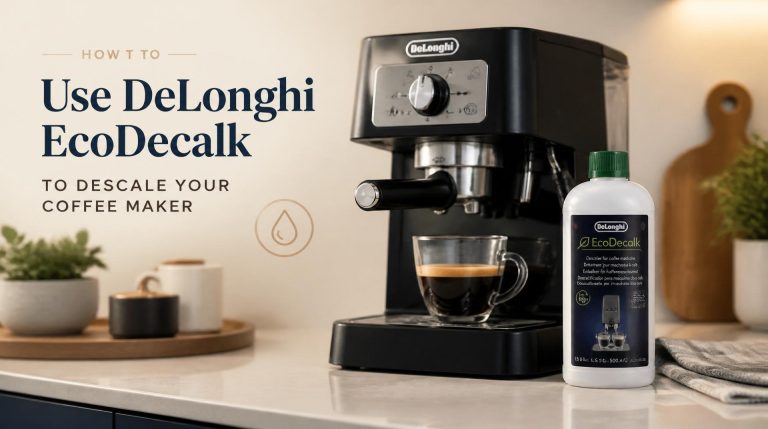
Cleaning Your De’Longhi Magnifica Coffee Maker
Quick answer
- Regular cleaning of your De’Longhi Magnifica prevents clogs and ensures optimal coffee taste.
- Descale every 2-3 months, or when prompted, using a proper descaling solution.
- Clean the brew group weekly to remove coffee grounds and oils.
- Wash the water tank and drip tray daily to prevent mold and bacteria growth.
- Use a soft, damp cloth for exterior surfaces and avoid abrasive cleaners.
- Always refer to your specific Magnifica model’s manual for detailed instructions.
- A clean machine brews better coffee and lasts longer.
Who this is for
- Owners of De’Longhi Magnifica automatic espresso machines looking to maintain their investment.
- Home baristas who want to ensure the best possible flavor from their coffee.
- Anyone experiencing issues like slow brewing, weak coffee, or unusual noises from their Magnifica.
What to check first
Brewer type and filter type
Your De’Longhi Magnifica is an automatic espresso machine, meaning it grinds beans, tamps them, and brews coffee all in one unit. It uses an internal brew group that requires regular cleaning. Some models may have a water filter in the tank; check its condition and replace it as recommended by De’Longhi. A clogged or expired filter can affect water flow and taste.
Water quality and temperature
Using filtered water is crucial for both taste and machine longevity. Hard water, rich in minerals, leads to faster scale buildup. While your Magnifica heats water to the correct brewing temperature automatically, poor water quality can hinder this process and impact coffee extraction. Always use fresh, filtered water.
Grind size and coffee freshness
While not directly a cleaning item, an incorrect grind size can contribute to clogs. Too fine a grind can lead to excessive pressure and coffee residue buildup in the brew group. Stale coffee beans can also leave more oily residue. Use fresh, quality beans and adjust your Magnifica’s grinder setting according to De’Longhi’s recommendations for optimal brewing.
Coffee-to-water ratio
An incorrect coffee-to-water ratio won’t directly cause cleaning issues but can indicate problems. If your machine is struggling to brew at the set ratio, it might be due to scale buildup restricting water flow or a dirty brew group. Consistent ratios help ensure consistent operation.
Cleanliness/descale status
Your Magnifica will typically alert you when descaling is needed via an indicator light. Ignoring this warning leads to significant mineral buildup, which can damage heating elements, restrict water flow, and drastically reduce coffee quality. Regular cleaning of the brew group, drip tray, and water tank is also essential for hygiene and performance.
Step-by-step to clean your De’Longhi Magnifica coffee maker
Here’s a general workflow for keeping your Magnifica spotless:
1. Empty and Clean Drip Tray & Grounds Container:
- What to do: Slide out the drip tray and the used coffee grounds container. Discard the grounds.
- What “good” looks like: Both components are free of coffee residue, water, and mold.
- Common mistake & how to avoid: Leaving grounds or water can lead to mold and odors. Empty daily or when prompted by the machine.
2. Rinse Water Tank:
- What to do: Remove the water tank, empty any remaining water, and rinse it thoroughly under running water.
- What “good” looks like: The tank is clear of any film or residue.
- Common mistake & how to avoid: Not rinsing can allow algae or mineral deposits to form. Rinse daily.
3. Clean the Brew Group (Weekly):
- What to do: Turn off the machine, unplug it, and open the service door. Press the “PUSH” buttons and remove the brew group. Rinse it under lukewarm running water until all coffee residue is gone. Do not use detergent.
- What “good” looks like: The brew group’s mesh filters are clear, and no visible coffee oils or grounds remain.
- Common mistake & how to avoid: Not cleaning the brew group allows coffee oils to build up, impacting flavor and potentially causing clogs. Clean weekly.
To keep your brew group functioning optimally and prevent clogs, a weekly rinse is essential. Consider using a dedicated brew group cleaner for a deeper clean.
No products found.
4. Wipe Brew Group Cavity:
- What to do: Use a soft, damp cloth to wipe inside the machine where the brew group sits, removing any loose coffee grounds.
- What “good” looks like: The interior is free of loose grounds.
- Common mistake & how to avoid: Ignoring this can leave old grounds that get into your next brew.
5. Clean Milk Frother/Steam Wand (If applicable, daily):
- What to do: After each use, wipe the steam wand with a damp cloth. For cappuccinatore models, disassemble and rinse components. Use the steam function to purge any remaining milk.
- What “good” looks like: No dried milk residue on or inside the frother.
- Common mistake & how to avoid: Dried milk is difficult to remove and can block the frother. Clean immediately after each use.
6. Wipe Exterior Surfaces:
- What to do: Use a soft, damp cloth to wipe down the exterior of the machine.
- What “good” looks like: The machine is free of smudges, dust, and coffee splatters.
- Common mistake & how to avoid: Using abrasive cleaners or scouring pads can damage the finish. Use only soft cloths.
7. Descale Your De’Longhi Magnifica (Every 2-3 months or when prompted):
- What to do: Follow your machine’s manual precisely. Typically involves adding De’Longhi descaling solution to the water tank, filling with water, and running a descaling cycle.
- What “good” looks like: The descaling light turns off, and water flows freely through the machine.
- Common mistake & how to avoid: Using vinegar or other non-approved descalers can damage internal components. Always use De’Longhi’s recommended solution.
For effective descaling, always use the De’Longhi Magnifica descaler, ensuring your machine remains in top condition.
No products found.
8. Rinse After Descaling:
- What to do: After the descaling cycle, rinse the water tank, refill it with fresh water, and run several rinse cycles as per the manual.
- What “good” looks like: No descaling solution residue remains, and the water tastes clean.
- Common mistake & how to avoid: Not rinsing thoroughly can leave a chemical taste in your coffee.
Common mistakes (and what happens if you ignore them)
| Mistake | What it causes | Fix |
|---|---|---|
| Not descaling regularly | Mineral buildup (scale) clogs internal pipes, reduces water flow, damages heating element, makes coffee taste bitter/cold. | Descale every 2-3 months or when prompted, using De’Longhi descaler. |
| Neglecting brew group cleaning | Old coffee grounds and oils accumulate, leading to mold, stale coffee flavor, restricted water flow, and potential machine malfunction. | Remove and rinse brew group weekly under lukewarm water; no soap. |
| Not emptying drip tray/grounds container | Overflows, creates unpleasant odors, attracts pests, promotes mold growth. | Empty daily or when the machine indicates it’s full. |
| Using vinegar for descaling | Can damage internal rubber seals and plastic components, leading to leaks or machine failure. | Only use De’Longhi’s recommended descaling solution. |
| Not cleaning milk frother/steam wand immediately | Milk dries and hardens, blocking the nozzle, preventing proper frothing, and promoting bacterial growth. | Wipe immediately after use; disassemble and rinse components for cappuccinatore models. |
| Ignoring water filter replacement | Filter becomes ineffective, allowing minerals and impurities into the machine and coffee, potentially increasing scale. | Replace water filter every 2 months or as indicated by the machine. |
| Using abrasive cleaners on exterior | Scratches and damages the machine’s finish. | Use a soft, damp cloth for exterior cleaning. |
| Not rinsing after descaling | Leaves residual descaling solution, imparting an unpleasant chemical taste to coffee. | Run multiple rinse cycles with fresh water after descaling. |
| Forgetting to unplug during deep cleaning | Risk of electric shock or accidental machine activation. | Always unplug the machine before removing internal components like the brew group. |
Decision rules (simple if/then)
- If your coffee tastes weak or watery then check if the brew group is clogged with old grounds or if descaling is needed because restricted water flow prevents proper extraction.
- If the descaling light is on then run a descaling cycle immediately because mineral buildup can severely damage your machine and affect coffee quality.
- If you notice a slow drip or no coffee coming out then check the brew group for blockages and consider descaling because these are signs of restricted water flow.
- If there’s an unusual or sour taste to your coffee then clean the brew group and empty the grounds container because old coffee oils and mold can contaminate the brew.
- If milk frothing is weak or inconsistent then immediately clean the steam wand/milk frother because dried milk residue is likely blocking the nozzle.
- If you haven’t cleaned the brew group in over a week then remove and rinse it thoroughly because coffee oils and grounds accumulate quickly.
- If your water tank has a slimy film then rinse it thoroughly and consider replacing your water filter because algae or mineral deposits are forming.
- If your machine is making strange noises during brewing then check for obstructions in the brew group and consider descaling because blocked pathways can strain the pump.
- If you see water pooling under the machine then check the drip tray for overflow and ensure the brew group is correctly seated because improper assembly or a full tray can cause leaks.
- If the machine prompts you to “Empty Grounds Container” but it’s not full then clean the internal sensor because coffee residue might be covering it.
FAQ
How often should I descale my De’Longhi Magnifica?
You should descale your Magnifica every 2-3 months, or whenever the descaling indicator light illuminates. This frequency can vary based on your water hardness and how often you use the machine. Ignoring the descaling prompt can lead to significant mineral buildup and potential damage.
Can I use vinegar to descale my De’Longhi Magnifica?
No, it is strongly advised not to use vinegar for descaling your De’Longhi Magnifica. Vinegar can be too aggressive and may damage the internal components, particularly rubber seals and plastic parts, leading to leaks or machine failure. Always use De’Longhi’s recommended descaling solution.
How do I clean the brew group in my Magnifica?
To clean the brew group, turn off and unplug the machine. Open the service door, press the “PUSH” buttons, and remove the brew group. Rinse it thoroughly under lukewarm running water until all coffee residue is gone. Do not use detergents or soap. Let it air dry before reinserting.
What happens if I don’t clean the milk frother after use?
If you don’t clean the milk frother immediately after use, milk residue will dry and harden inside the nozzle and components. This can block the steam passage, prevent proper frothing, and create a breeding ground for bacteria, leading to unhygienic and poor-tasting milk.
My coffee tastes bitter. Could cleaning help?
Yes, a bitter taste in your coffee can often be a sign that your machine needs cleaning. Old coffee oils and grounds can accumulate in the brew group, leading to a stale or rancid flavor. Descaling can also improve taste by ensuring proper water flow and temperature.
How do I know if my water filter needs changing?
Your De’Longhi Magnifica typically has an indicator light or setting that reminds you to change the water filter, usually every two months. If you notice a change in water taste or increased descaling frequency, it might also be time to replace the filter.
What this page does NOT cover (and where to go next)
- Specific troubleshooting for error codes (check your machine’s manual).
- In-depth grinder calibration and adjustment techniques.
- Advanced latte art techniques using the steam wand.
- Detailed comparisons of different De’Longhi Magnifica models.
- Repairing internal components or electrical issues.
- Choosing the best coffee beans for your Magnifica.