
Brewing Two Cups of Coffee with a Pour-Over Method
Quick Answer
- Yes, most pour-over brewers can comfortably make two cups of coffee, typically yielding 16-24 oz.
- Adjust your coffee-to-water ratio to accommodate the larger volume.
- Ensure your grinder can produce a consistent grind for the increased batch size.
- A larger filter and brewer might be necessary if your current setup feels cramped.
- Maintain consistent water temperature and pouring technique for even extraction.
- Cleanliness is crucial; a dirty brewer will negatively impact taste, especially with larger batches.
Who This Is For
- Couples or roommates who enjoy their morning coffee together and want to brew more at once.
- Home baristas looking to scale up their pour-over technique for guests or larger personal consumption.
- Anyone curious if their existing pour-over setup can handle brewing more than a single serving.
What to Check First
Brewer Type and Filter Type
Before brewing two cups, confirm your pour-over device is designed for it. Smaller brewers, like some single-cup ceramic or plastic drippers, might overflow or not allow enough space for proper water flow when brewing larger quantities. Check the manufacturer’s recommendations for maximum brew volume. The filter type (paper, metal, cloth) also plays a role; paper filters are common for pour-over and generally work well, but ensure your chosen filter fits your brewer securely and is large enough for the intended volume.
Before brewing two cups, confirm your pour-over device is designed for it. If you’re looking for a reliable option that can handle larger volumes, consider a dedicated pour-over coffee maker.

- Pour Over Coffee: Manual Pour Over Coffee Maker allows you to brew an excellent cup of Coffee in minutes
- Stainless steel: Includes a new and improved permanent, stainless steel mesh filter that helps extract your coffee's aromatic oils and subtle flavors instead of being absorbed by a paper filter
- Coffee Carafe: Made of durable, heat-resistant borosilicate glass with Cork Band detailing that is both functional and elegant; single wall
- Quick and Easy: Simply add coarse ground Coffee to filter, pour a small amount of water in a circular motion over ground Coffee until soaked then add the remaining water and let drip
- Servings: Pour Over Coffee Maker makes 8 cups of Coffee, 4 oz each; dishwasher safe
Water Quality and Temperature
The quality and temperature of your water are paramount for any coffee brew, and this becomes even more critical when brewing larger batches. Use filtered water to avoid off-flavors from tap water impurities. For optimal extraction, aim for water that is between 195°F and 205°F (90°C and 96°C). Using water that is too cool will lead to under-extraction and a weak, sour cup, while water that is too hot can scald the grounds and result in a bitter taste. Ensure your kettle can heat enough water for the desired two cups, plus a little extra for rinsing the filter and preheating.
Grind Size and Coffee Freshness
The grind size needs to be appropriate for your pour-over method and the volume you’re brewing. For most pour-over setups, a medium grind, similar to coarse sand, is ideal. When brewing two cups, you might need to make minor adjustments. If your coffee tastes bitter, the grind might be too fine; if it’s weak and sour, it might be too coarse. Freshly roasted and ground coffee is essential for the best flavor. Aim to grind your beans just before brewing. Stale coffee, even with perfect technique, will result in a flat, uninspired cup.
Coffee-to-Water Ratio
The standard starting point for coffee-to-water ratio is often around 1:15 to 1:17 (grams of coffee to grams of water). To brew two cups, you’ll need to scale this up. For example, if one cup is considered 8 oz (approximately 237g of water), then two cups would be around 16 oz (approximately 474g of water). Using a 1:16 ratio, this would require roughly 30g of coffee (474g / 16 ≈ 29.6g). It’s always best to weigh both your coffee and your water for consistency. Adjust this ratio based on your personal preference for strength.
Cleanliness/Descale Status
A clean brewer is non-negotiable for good coffee. Coffee oils and mineral buildup from water can accumulate in your pour-over device, filter holder, and carafe, imparting stale or bitter flavors. Before brewing two cups, ensure your brewer is thoroughly cleaned. If you have a machine that uses heating elements, like an electric kettle or a drip machine that accompanies a pour-over, check its descaling status. Mineral deposits can affect heating efficiency and water taste. Regularly descaling your equipment, following the manufacturer’s instructions, is vital for optimal performance and flavor.
Step-by-Step: Brewing Two Cups of Coffee with a Pour-Over
1. Heat Your Water:
- What to do: Heat fresh, filtered water to 195°F-205°F (90°C-96°C). You’ll need enough for your brew plus extra for rinsing.
- What “good” looks like: Water is at the correct temperature, ready to be used.
- Common mistake: Using water that’s too hot or too cold. Avoid this by using a thermometer or paying attention to your kettle’s indicators.
2. Prepare Your Brewer and Filter:
- What to do: Place your pour-over dripper on your carafe or mug. Insert the appropriate-sized filter.
- What “good” looks like: The filter is seated correctly and covers the brewer’s opening.
- Common mistake: Using the wrong size filter or not seating it properly. This can lead to grounds bypassing the filter.
Place your pour-over dripper on your carafe or mug. A good quality coffee dripper ensures proper water flow and extraction, especially when brewing larger batches.
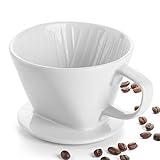
- Portable Handmade Brew - DOWAN ceramic pour-over coffee dripper lets you have a traditional, hands-on brewing experience. You can have a cup or two of coffee whenever and wherever you want, without the help of a machine.
- Three holes Dripping Design - The unique three-hole drip design makes the coffee flow more concentrated, and ensures the proper brewing time to fully extract the coffee flavor.
- Thoughtful Design - The V-shaped conical design can make the coffee powder pile higher, thereby prolonging the contact time with water and making it easy to fully infuse the coffee.
- Inner Wall Vertical Rib - The inner wall of this coffee pour over adopts a vertical groove design, and the distance between the filter paper and the wall of the filter cup is reserved to fully extract the coffee essence. (filter paper is NOT included)
- High Quality Material: The pour-over coffee maker is made of high-fired ceramic, with good heat preservation and durability. This coffee dripper can greatly prevents heat loss than wire mesh filter during brewing, fit for most mugs and thermoses.
3. Rinse the Filter:
- What to do: Pour hot water through the filter to rinse it and preheat the brewer and carafe. Discard the rinse water.
- What “good” looks like: The filter is wet, and the brewer/carafe is warm. This removes paper taste and prevents temperature loss.
- Common mistake: Skipping the rinse. This can leave a papery taste in your coffee.
4. Weigh and Grind Your Coffee:
- What to do: Weigh your whole beans (e.g., 30-35g for 16-20 oz of coffee). Grind them to a medium consistency, like coarse sand.
- What “good” looks like: Coffee grounds have a uniform size and texture.
- Common mistake: Grinding too fine or too coarse. This directly impacts extraction and flavor.
5. Add Coffee Grounds:
- What to do: Pour the ground coffee into the rinsed filter. Gently shake the brewer to level the coffee bed.
- What “good” looks like: The coffee bed is flat and even, without large clumps or voids.
- Common mistake: Leaving the coffee bed uneven. This can lead to uneven water saturation and extraction.
6. Bloom the Coffee:
- What to do: Start a timer. Pour just enough hot water (about twice the weight of the coffee) to saturate all the grounds. Wait 30-45 seconds.
- What “good” looks like: The coffee grounds expand and release CO2, creating a bubbly, frothy layer (the bloom).
- Common mistake: Not blooming or pouring too much water. Insufficient bloom means trapped CO2 can interfere with even extraction.
7. Begin the Main Pour (First Half):
- What to do: Slowly pour the remaining water in a circular motion, starting from the center and moving outwards, avoiding pouring directly onto the filter walls. Aim for a steady, controlled flow.
- What “good” looks like: The water level is consistently managed, and the coffee bed is evenly saturated.
- Common mistake: Pouring too fast or too aggressively. This can cause channeling and uneven extraction.
8. Continue Pouring (Second Half):
- What to do: Continue pouring in stages or a continuous slow pour, maintaining a consistent water level in the brewer. Aim to finish pouring within your target brew time (typically 2.5-4 minutes total brew time, depending on brewer and volume).
- What “good” looks like: The coffee bed remains submerged and evenly extracted. The flow rate is consistent.
- Common mistake: Pouring erratically or letting the water level drop too low. This disrupts extraction.
9. Allow to Drip:
- What to do: Once all the water has been poured, let the remaining water drip through the coffee bed.
- What “good” looks like: The coffee bed has a somewhat flat appearance, and the dripping slows to an occasional drop.
- Common mistake: Removing the brewer too early. This means you haven’t extracted all the desired flavor compounds.
10. Remove Brewer and Serve:
- What to do: Once dripping has ceased or slowed significantly, remove the brewer. Swirl the carafe gently to integrate the coffee.
- What “good” looks like: A full carafe of brewed coffee, ready to be enjoyed.
- Common mistake: Letting the brewer drip for too long after the coffee bed is mostly dry. This can extract bitter compounds.
Common Mistakes (and What Happens If You Ignore Them)
| Mistake | What It Causes | Fix |
|---|---|---|
| Using stale coffee beans | Flat, dull, or woody flavor; lack of aroma | Use freshly roasted beans (within 2-3 weeks of roast date) |
| Incorrect grind size (too fine) | Bitter, astringent coffee; slow drip rate | Coarsen the grind; check grinder calibration |
| Incorrect grind size (too coarse) | Weak, sour, watery coffee; fast drip rate | Fine the grind; ensure even particle size |
| Water temperature too low | Under-extracted, sour, weak coffee | Heat water to 195°F-205°F (90°C-96°C); use a thermometer |
| Water temperature too high | Over-extracted, bitter, burnt-tasting coffee | Let water cool slightly after boiling; check kettle settings |
| Uneven coffee bed | Channeling, uneven extraction, bitter/sour notes | Gently shake brewer to level grounds after adding; avoid digging holes |
| Inconsistent pouring technique | Channeling, under- or over-extraction | Pour slowly and steadily in controlled circles; use a gooseneck kettle |
| Not blooming the coffee | Trapped CO2, less efficient extraction | Bloom grounds for 30-45 seconds after initial wetting |
| Dirty equipment | Off-flavors, stale taste, reduced aroma | Clean brewer, carafe, and filter holder regularly |
| Incorrect coffee-to-water ratio | Coffee too weak or too strong | Weigh coffee and water; adjust ratio to taste (1:15-1:17 is a good start) |
Decision Rules
- If your coffee tastes bitter, then try grinding coarser because a finer grind can lead to over-extraction.
- If your coffee tastes sour, then try grinding finer because a coarser grind can lead to under-extraction.
- If your coffee tastes weak, then increase the coffee-to-water ratio (use more coffee for the same amount of water) because you might be under-extracting or using too little coffee.
- If your coffee tastes too strong, then decrease the coffee-to-water ratio (use less coffee for the same amount of water) because you might be over-extracting or using too much coffee.
- If your brew time is consistently too fast (under 2.5 minutes for a 16-20 oz brew), then grind finer because a coarser grind allows water to pass through too quickly.
- If your brew time is consistently too slow (over 4 minutes for a 16-20 oz brew), then grind coarser because a finer grind can clog the filter.
- If you notice water pooling in one area of the coffee bed, then adjust your pouring technique to ensure more even saturation because this indicates channeling.
- If your coffee has a papery or woody taste, then ensure you are thoroughly rinsing your paper filter before adding coffee because this removes residual paper pulp.
- If your brewer feels clogged or water is backing up, then check your grind size to ensure it’s not too fine, or clean your brewer of any coffee oils or mineral buildup.
- If your coffee tastes stale despite using fresh beans, then check the cleanliness of your grinder and brewer because residual oils can go rancid.
- If your brewed coffee has a muddy or silty texture, then ensure your filter is properly seated and that you’re not agitating the coffee bed too much during the pour.
FAQ
Can I use my existing single-cup pour-over dripper for two cups?
Many single-cup drippers can technically handle two standard cups (around 16 oz total), but it might be a tight fit. If the water level gets too high, it can lead to uneven extraction or overflow. Check your brewer’s specifications for its recommended maximum volume.
How much coffee do I need for two cups?
For two standard cups, which is roughly 16-20 oz of brewed coffee, you’ll typically need between 30-35 grams of whole beans. This is based on a common starting ratio of 1:15 to 1:17 (coffee to water). Always weigh your coffee for accuracy.
Will the brewing time change when making two cups?
Yes, the brewing time will likely be longer when making two cups compared to one. This is because you’re using more coffee and more water, and it takes longer for the water to pass through the larger bed of grounds. Aim for a total brew time of around 2.5 to 4 minutes.
What if my pour-over dripper overflows when brewing two cups?
An overflow usually means your grind is too fine, your pour rate is too fast, or your brewer is too small for the volume. Try grinding slightly coarser, slow down your pour, or consider a larger pour-over brewer designed for multiple cups.
How do I ensure even extraction for a larger batch?
Even extraction is key. Make sure your coffee bed is level, your pour is consistent and controlled, and you’re not pouring directly on the sides of the filter. A gooseneck kettle is highly recommended for precision pouring.
Is it better to brew two cups at once or two separate single cups?
Brewing two cups at once is generally more efficient and can yield a more consistent flavor profile if done correctly, as you’re managing a larger, more stable extraction. Brewing two separate cups might be preferred if you want to experiment with different beans or brewing parameters for each, but it takes more time and attention.
What kind of carafe should I use for two cups?
You can use a carafe that came with your pour-over set, a heat-resistant glass pitcher, or even a large mug if your brewer is designed to sit directly on it. Ensure the vessel is large enough to hold at least 20 oz of liquid.
What This Page Does NOT Cover (and Where to Go Next)
- Specific brew ratios for different coffee origins or roast levels: Experimentation is key. Once you’ve mastered the basic technique for two cups, delve into how bean origin and roast impact your ideal ratio.
- Advanced pour-over techniques: This guide covers fundamental workflow. For more nuanced techniques like pulse pouring variations or specific agitation methods, explore dedicated resources.
- Maintenance and descaling of electric kettles or automatic brewers: While general cleaning is mentioned, detailed instructions for specific appliance maintenance are best found in their respective manuals.
- Troubleshooting specific pour-over brewer models: Each brewer can have unique characteristics. If you encounter persistent issues, consult the manufacturer’s support or community forums for your specific model.