
Brewing Large Batches: A 30-Cup Coffee Pot Guide
Quick answer
- Use fresh, quality beans. Grind them right before brewing.
- Measure your coffee and water accurately. Don’t guess.
- Ensure your 30-cup pot is clean and descaled. Buildup ruins flavor.
- Use filtered water. Tap water can taste off.
- Aim for a water temperature around 195-205°F. Too hot or cold is bad.
- Don’t let brewed coffee sit on the hot plate too long. It gets bitter.
Who this is for
- Anyone hosting a crowd – parties, meetings, or family gatherings.
- Offices or break rooms that need a reliable coffee supply.
- Campers or event organizers who need a lot of coffee on the go.
For those hosting large gatherings or managing an office, a reliable 30-cup coffee pot is an essential tool. Consider this highly-rated 30-cup coffee pot for your next event.

- FAST BREWING — The coffee urn brews coffee fast so you can prepare 45 cups in just 28 minutes.
- MAKES 15-45 CUPS — Brew plenty of coffee for large crowds when you need it or brew less for smaller groups. Either way this large coffee maker keeps coffee hot and ready to pour after it's finished brewing.
- ONE-HAND DISPENSING — Push the easy-press lever with your coffee cup to conveniently pour coffee using just one hand. The coffee urn easily dispenses coffee into any kind of cup including disposable cups.
- DUAL HEATERS AND READY LIGHT: Coffee in the coffee dispenser stays hot until it's poured without overheating or burning, so every cup of coffee pours hot and tastes great. The ready light on the coffee dispenser illuminates when coffee is ready.
- EASY-VIEW WATER/COFFEE LEVEL WINDOW: Clear water level markings on the urn's water/coffee level window make it easy to see how much water you're adding or how much coffee is left in this large coffee maker.
What to check first
Brewer type and filter type
Most 30-cup pots are percolators or drip-style machines. Know what you’re working with. If it’s a drip machine, make sure you have the right size and type of filter. Paper filters are common, but some use reusable mesh filters. A mesh filter needs cleaning.
Water quality and temperature
This is huge. Bad water makes bad coffee, no matter how fancy your beans are. If your tap water tastes funky, use filtered water. For drip machines, the water should heat to about 195-205°F. Most automatic machines handle this. If you’re using a percolator, watch the heat.
Grind size and coffee freshness
Use whole beans and grind them just before brewing. Pre-ground coffee loses flavor fast. For most drip and percolator pots, a medium grind is your sweet spot. Too fine and it’ll clog or over-extract. Too coarse and you’ll get weak coffee.
Coffee-to-water ratio
This is where many go wrong. For a 30-cup pot, you’re looking at roughly 1.5 to 2 gallons of water. A good starting point is about 1/2 to 3/4 cup of whole beans per 6 cups of water. That’s about 2.5 to 3.5 cups of whole beans for the whole pot. Adjust to your taste.
Cleanliness/descale status
A dirty pot is a flavor killer. Coffee oils build up. Mineral deposits from water (scale) also affect taste and performance. Run a descaling cycle regularly. A simple vinegar and water mix often works for drip machines. Check your manual for specific instructions.
Step-by-step (brew workflow)
1. Gather your gear. Get your clean 30-cup coffee pot, fresh whole beans, grinder, filtered water, and measuring tools.
- Good looks like: Everything ready to go. No last-minute scrambling.
- Mistake to avoid: Running out of filters or realizing the pot is still dirty from last time.
When gathering your gear, ensure you have a robust large batch coffee maker capable of handling the volume. A commercial coffee urn can be a great option for consistent, high-volume brewing.
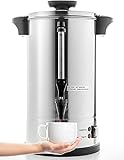
- ✪ COMMERCIAL USE--Brew 100 cups (16 Liter / 4.2 Gallon) in 60 minutes. Built for catering service, ideal for caterers, restaurants, churches, schools, health care facilities, offices, and shops.
- ✪ DURABLE--Food grade 304 S/S body resists dents and maintains lustre over time. High quality spigot dispenser is installed for heavy duty usage.
- ✪ Easy TO FILL-- Coffee level markings in the urn’s interior make measuring water A snap. And easy for you to know when it is time for another refill. ✪ NO PAPER FILTER NEEDED--304 stainless steel filter basket is durable and easy to clean, no paper filter needed.
- ✪ ETL CERTIFIED--All parts are ETL Intertek certified. Safety and quality certified. Use under 110-120 voltage. ✪ SAFE TO USE--Automatic shut-off and keep warm function. Includes an easy-to-read “heat and keep-warm” indicator light that illuminates whenever coffee is ready to serve.
- ✪ 2 YEARS NEW REPLACEMENT WARRANTY--Buy with confidence, as we offer 30-days refund/replacement and 2 years new replacement warranty.
2. Measure the water. Fill the coffee pot with the desired amount of cold, filtered water up to the fill line.
- Good looks like: Water level is accurate and within the pot’s markings.
- Mistake to avoid: Overfilling, which can lead to overflows or improper brewing.
3. Grind your beans. Weigh your beans (a good starting ratio is 1:15 to 1:17 coffee to water by weight, or roughly 1/2 to 3/4 cup whole beans per 6 cups water). Grind them to a medium consistency.
- Good looks like: Freshly ground coffee with a uniform, medium texture.
- Mistake to avoid: Using pre-ground coffee or a grind that’s too fine/coarse.
4. Add coffee to the filter. If using a drip machine, place the filter in the basket and add the ground coffee. For a percolator, add the grounds to the brew basket.
- Good looks like: Evenly distributed grounds in the filter or basket.
- Mistake to avoid: Tamping down the grounds, which restricts water flow.
5. Assemble the brewer. Place the brew basket correctly, put the lid on, and ensure everything is seated properly.
- Good looks like: All parts securely in place, ready for brewing.
- Mistake to avoid: Not closing the lid fully, which can cause steam to escape or grounds to spill.
6. Start the brew cycle. Plug in the coffee pot and turn it on.
- Good looks like: The machine powers on, and brewing begins.
- Mistake to avoid: Forgetting to plug it in or hitting the wrong button.
7. Monitor the brew. Watch for the coffee to start dripping or percolating. The process can take 10-20 minutes for a full pot.
- Good looks like: Steady dripping or gentle percolating.
- Mistake to avoid: Leaving it unattended for too long, especially if you have a model prone to boiling over.
8. Brewing complete. The machine will usually signal when it’s done, often by stopping or switching to a “warm” setting.
- Good looks like: The brewing cycle has finished.
- Mistake to avoid: Assuming it’s done before it actually is, leading to under-extracted coffee.
9. Serve immediately. Pour the coffee into cups or a separate thermal carafe if you won’t be drinking it right away.
- Good looks like: Fresh, hot coffee being served.
- Mistake to avoid: Leaving the entire pot on the warming plate for hours.
10. Turn off the heat. Once you’ve served, turn off the coffee pot or unplug it if it doesn’t have an auto-shutoff.
- Good looks like: The heating element is off to prevent scorching.
- Mistake to avoid: Leaving the pot on the hot plate indefinitely, which makes coffee bitter.
Common mistakes (and what happens if you ignore them)
| Mistake | What it causes | Fix |
|---|---|---|
| Using stale or poor-quality beans | Flat, bitter, or weak coffee | Buy fresh, whole beans and grind just before brewing. |
| Incorrect grind size | Over-extraction (bitter) or under-extraction (weak) | Use a medium grind for most 30-cup pots; check your manual. |
| Using tap water with off-flavors | Chemical or metallic taste in the coffee | Use filtered or bottled water. |
| Not cleaning the pot regularly | Bitter, oily residue; clogged parts | Descale and clean the pot after every few uses. |
| Incorrect coffee-to-water ratio | Coffee too strong or too weak | Start with 1/2 to 3/4 cup whole beans per 6 cups water; adjust. |
| Water too hot or too cold | Burnt taste (too hot) or sour/weak (too cold) | Aim for 195-205°F; most auto-drip machines handle this. |
| Leaving coffee on hot plate long | Burnt, bitter, “stewed” flavor | Transfer to a thermal carafe or turn off the heat promptly. |
| Using the wrong filter type | Grounds in the cup, poor flow, bad taste | Ensure filter matches your brewer type and size. |
| Not pre-heating the pot (some) | Coffee cools too quickly | For some methods, pre-warming the pot can help maintain temp. |
| Over-tamping grounds | Water can’t flow through, leading to weak coffee | Gently level grounds; never pack them down. |
Decision rules (simple if/then)
- If your coffee tastes bitter, then try a coarser grind because a finer grind can over-extract.
- If your coffee tastes weak, then try a finer grind because a coarser grind can under-extract.
- If your coffee has a burnt taste, then check the water temperature and how long it sat on the hot plate because too much heat scorches the grounds.
- If your coffee tastes sour, then check the water temperature and grind size because water that’s too cool or grounds that are too coarse can cause this.
- If you notice sediment in your cup, then check your filter or grind size because grounds might be too fine or the filter might be damaged.
- If the brew cycle seems slow, then check for clogs in the filter basket or showerhead and ensure the grind isn’t too fine.
- If you’re hosting a large event, then consider pre-heating your thermal carafe before brewing to keep coffee hot longer.
- If you don’t have a scale, then use volume measurements (cups) for coffee and water as a starting point, but know it’s less precise.
- If your tap water has a chlorine smell, then use filtered water because it will significantly improve the coffee’s flavor.
- If your coffee machine has a “clean” cycle indicator, then follow the manufacturer’s recommendation because regular descaling is key.
- If you’re unsure about your specific brewer’s needs, then consult the owner’s manual because each machine can have unique requirements.
FAQ
How much coffee do I need for a 30-cup pot?
A good starting point is about 1/2 to 3/4 cup of whole beans for every 6 cups of water. For a full 30-cup pot (which is about 1.5 to 2 gallons), this means roughly 2.5 to 3.5 cups of whole beans. Adjust based on your strength preference.
What’s the best water temperature for brewing in a large pot?
Ideally, the water should be between 195°F and 205°F. Most automatic drip coffee makers are designed to reach this temperature. If you’re using a manual method or a percolator, monitor your heat source.
Can I use pre-ground coffee in my 30-cup pot?
You can, but it’s not recommended for the best flavor. Pre-ground coffee loses its aromatics and oils quickly. For a large batch, the difference in freshness is even more noticeable. Grinding beans right before brewing is always best.
How often should I clean or descale my coffee pot?
It depends on your water hardness and how often you use it. A general rule is to descale every 1-3 months. Clean out coffee grounds and rinse the pot after each use. Buildup affects taste and can damage the machine.
My coffee tastes bitter. What did I do wrong?
Bitter coffee usually means over-extraction. This can happen with too fine a grind, water that’s too hot, or brewing for too long. Try a coarser grind or slightly cooler water, and ensure you’re not letting it sit on the hot plate too long.
My coffee tastes weak. How can I fix it?
Weak coffee is often under-extracted. This can be caused by a grind that’s too coarse, not enough coffee grounds, or water that’s too cool. Try a finer grind, increase the amount of coffee, or ensure your water is heating properly.
Is it okay to leave coffee on the warming plate all day?
No, it’s generally not a good idea. Leaving coffee on a hot plate for extended periods will “cook” it, leading to a burnt, bitter, and unpleasant taste. It’s best to transfer brewed coffee to a thermal carafe or turn off the heat once brewing is complete.
What’s the difference between a percolator and a drip coffee maker for large batches?
Percolators heat water and cycle it through the grounds repeatedly, which can sometimes lead to over-extraction and a stronger, sometimes more bitter, brew. Drip makers pass water through the grounds once, offering a cleaner, more nuanced flavor profile.
What this page does NOT cover (and where to go next)
- Specific brand comparisons or reviews of 30-cup coffee pots.
- Advanced brewing techniques like pour-over or Aeropress for large volumes.
- Detailed discussions on bean sourcing, roasting profiles, or origins.
- The science behind extraction or the chemical compounds in coffee.
- Troubleshooting specific error codes or mechanical failures of individual machines.