
Brewing Iced Coffee Using Your Coffee Machine
Quick answer
- Use a stronger coffee-to-water ratio to account for dilution.
- Brew hot coffee directly over ice.
- Chill brewed coffee completely before adding ice if you prefer.
- Grind your beans fresh for the best flavor.
- Use filtered water for a cleaner taste.
- Experiment with different coffee beans and roast levels.
Who this is for
- Coffee lovers who want to make iced coffee at home.
- People who already own a coffee machine and want to use it.
- Anyone looking for a simple, budget-friendly way to enjoy iced coffee.
What to check first
Brewer type and filter type
What kind of coffee maker are you working with? Drip, pour-over, French press? Each has its quirks. And what filter are you using? Paper, metal, cloth? This affects how much oil and sediment makes it into your cup. For iced coffee, you want a clean, bright flavor.
Water quality and temperature
Your coffee is mostly water, so good water matters. If your tap water tastes funky, your coffee will too. Filtered water is your friend here. For brewing hot coffee to chill, aim for that sweet spot of 195-205°F (90-96°C). Too cool, and you get weak, sour coffee. Too hot, and you can scorch it.
Grind size and coffee freshness
Freshly ground beans are key. Pre-ground stuff loses its zing fast. For most drip machines, a medium grind is the way to go. Think coarse sand. If it’s too fine, you get bitter, over-extracted coffee. Too coarse, and it’ll be weak and sour.
Coffee-to-water ratio
This is huge for iced coffee. Because ice melts and dilutes your brew, you need to start stronger. A good starting point is using about twice the amount of coffee grounds you normally would for the same amount of water. So if you usually use 2 tablespoons per 6 oz of water, try 4 tablespoons for iced.
Cleanliness/descale status
Got a clean machine? Old coffee oils can go rancid and make your iced coffee taste like old gym socks. Descale your machine regularly. A clean brewer means a clean taste, plain and simple.
Step-by-step (brew workflow)
Here’s how to nail that iced coffee with your machine.
1. Gather your gear. You’ll need your coffee maker, fresh coffee beans, a grinder, filtered water, and ice.
- What “good” looks like: Everything is clean and ready to go. No dusty old grounds lurking.
- Common mistake: Forgetting to get the ice ready. You don’t want lukewarm coffee melting sad ice cubes.
Don’t forget to have plenty of ice on hand! Consider using large, slow-melting ice cube trays to prevent your iced coffee from becoming watery too quickly.
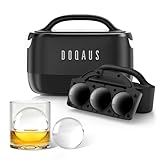
- ✅ Achieve Bar-Quality Clarity with Directional Freezing: Stop settling for cloudy, bubble-filled ice. Our clear ice cube maker utilizes advanced physics to push impurities away, creating 3 crystal-clear spheres and 4 cubes per cycle. It is the secret weapon for the home mixologist wanting presentation-ready drinks without expensive machinery.
- ✅ Preserve Complex Flavors with Slow Dilution: Designed for the purist, this whiskey ice cubes mold produces dense, 2.5-inch ice that melts 40% slower than standard ice. Enjoy your single malt or bourbon chilled but undiluted, ensuring the aromatic profile remains distinct from the first sip to the last.
- ✅ Effortless Release with Premium Hybrid Design: Unlike rigid plastic trays that crack, our flexible silicone ice ball maker mold ensures smooth removal. The non-stick material lets you pop out perfect shapes instantly, making drink preparation seamless for relaxing solo evenings or busy gatherings.
- ✅ Versatile 2-in-1 Capacity for Entertaining: Hosting a cocktail night? This round ice cube mold creates 7 pieces simultaneously, catering to different glass styles. Whether serving an Old Fashioned (sphere) or a Negroni (cube), you will have the right ice shape ready for every guest's preference.
- ✅ The Sophisticated Choice for Gifting: More than just a standard ice mold, this clear ice system is an essential upgrade for any wet bar. Packaged to impress, it creates a tangible experience, making it an ideal gift for fathers, partners, or enthusiasts who value the ritual of a perfectly poured drink.
2. Measure your coffee. For iced coffee, we’re going strong. Use about double the grounds you’d normally use for hot coffee. For example, if you use 4 tablespoons for 24 oz hot coffee, try 8 tablespoons for 24 oz of brewed coffee that will be iced.
- What “good” looks like: A heaping scoop of beans or grounds. This is where the flavor power comes from.
- Common mistake: Using your regular hot coffee ratio. You’ll end up with weak, watery disappointment.
3. Grind your beans. Grind them fresh, right before brewing. Aim for a medium grind, like coarse sand.
- What “good” looks like: A fragrant cloud of coffee dust. The aroma is your first clue you’re on the right track.
- Common mistake: Using pre-ground coffee. It’s stale and won’t give you that vibrant iced coffee flavor.
4. Prepare your brewer. Add your ground coffee to the filter basket. Make sure the filter is seated properly.
- What “good” looks like: A level bed of grounds. No gaps where water can channel.
- Common mistake: Not using a filter, or using the wrong type. This leads to sludge in your cup.
5. Measure your water. For brewing hot coffee to chill, measure the amount of water you want to end up with after the ice melts. Let’s say you want about 24 oz of iced coffee. You’ll brew with less water initially, knowing the ice will add volume. A good starting point is to brew with about half the final volume you want. So for 24 oz final, brew with 12 oz of water.
- What “good” looks like: Clear, filtered water going into the reservoir.
- Common mistake: Using too much water. This over-dilutes the coffee even before the ice hits.
6. Start the brew. Turn on your coffee maker. Let it run its cycle.
- What “good” looks like: A steady stream of hot coffee filling the carafe.
- Common mistake: Interrupting the brew cycle. You want the full extraction.
7. Brew directly over ice (Option 1). Get a pitcher or heat-safe container and fill it with ice. The amount of ice should roughly equal the volume of hot coffee you’re about to brew. Place the carafe or pitcher under the brewer.
- What “good” looks like: Hot coffee hitting the ice and cooling rapidly.
- Common mistake: Not using enough ice. Your coffee won’t get cold fast enough and will taste weak.
8. Chill the brewed coffee (Option 2). If you prefer not to brew directly over ice, let the hot coffee brew into its carafe. Then, transfer it to another container and refrigerate until completely cold. This can take a few hours.
- What “good” looks like: A cold carafe of coffee, ready for ice.
- Common mistake: Rushing the chilling process. Warm coffee melts ice too fast.
9. Assemble your drink. Once your coffee is brewed and chilled (either by brewing over ice or refrigerating), pour it into a glass filled with fresh ice.
- What “good” looks like: A glass packed with ice and topped with rich, cold coffee.
- Common mistake: Using old, partially melted ice. It won’t chill your drink effectively.
10. Add your extras. Stir in milk, cream, sweetener, or whatever you like.
- What “good” looks like: Your perfect iced coffee creation.
- Common mistake: Adding too much of everything and masking the coffee flavor.
Common mistakes (and what happens if you ignore them)
| Mistake | What it causes | Fix |
|---|---|---|
| Using stale, pre-ground coffee | Weak, flat, bitter, or “cardboardy” taste | Grind fresh beans right before brewing. |
| Incorrect grind size (too fine) | Bitter, over-extracted, muddy coffee | Use a medium grind for most drip machines. |
| Incorrect grind size (too coarse) | Weak, sour, under-extracted coffee | Use a medium grind for most drip machines. |
| Using regular hot coffee ratio | Watery, weak, flavorless iced coffee | Double your coffee grounds or use half the water for brewing hot coffee to be iced. |
| Brewing with tap water (if it tastes bad) | Off-flavors, metallic notes, muted coffee taste | Use filtered water. |
| Not cleaning the coffee maker regularly | Rancid oil buildup, stale, bitter, unpleasant aftertaste | Clean your brewer regularly and descale it according to the manufacturer’s instructions. |
| Not brewing strong enough | Diluted, weak, unsatisfying iced coffee | Increase coffee-to-water ratio or reduce water volume for brewing hot coffee. |
| Adding hot coffee directly to ice | Melts ice too quickly, results in weak, lukewarm coffee | Brew stronger coffee and chill it first, or brew directly over a large amount of fresh ice. |
| Using old, melted ice | Weak, watered-down drink | Always use fresh, solid ice. |
| Brewing at the wrong temperature | Sour (too cool) or burnt (too hot) coffee | Ensure your machine heats water to the optimal range (195-205°F or 90-96°C). Check your manual. |
Decision rules (simple if/then)
- If your iced coffee tastes weak, then increase your coffee-to-water ratio because dilution from ice needs compensation.
- If your iced coffee tastes bitter, then check your grind size and make it coarser, or ensure your machine isn’t too hot because fine grinds or excessive heat cause bitterness.
- If your iced coffee tastes sour, then check your grind size and make it finer, or ensure your water is hot enough because coarse grinds or under-extracted coffee lead to sourness.
- If your iced coffee has off-flavors, then check your water quality and your brewer’s cleanliness because impurities and old oils ruin the taste.
- If you’re brewing hot coffee to chill later, then use less water than you think you need because the ice will add volume.
- If you want the quickest iced coffee, then brew hot coffee directly over a full pitcher of ice because it chills as it brews.
- If you prefer a cleaner taste without any sediment, then use a paper filter with your brewer because it catches more oils and fines.
- If your coffee machine is older and hasn’t been descaled, then descale it before brewing iced coffee because mineral buildup affects taste and performance.
- If you’re using a French press for iced coffee, then brew it a bit stronger and let it steep, then strain it over ice because the immersion method can extract more.
- If your iced coffee is too strong after brewing, then you can always dilute it with a little cold water or milk.
- If you want to experiment with flavor, then try different single-origin beans or flavored syrups after brewing.
FAQ
How much coffee should I use for iced coffee?
You’ll want to use more coffee grounds than you typically would for hot coffee. A good starting point is to double the amount of coffee for the same amount of water, or use half the amount of water for the same amount of coffee. This compensates for the dilution from melting ice.
Can I just pour hot coffee over ice?
Yes, you can, but it’s best to brew it stronger first. Brewing a concentrated batch of hot coffee and then pouring it over a full glass of ice will give you a better result than brewing a normal-strength batch. Otherwise, it can become very watery.
How do I avoid watery iced coffee?
The key is brewing a more concentrated coffee. Use more coffee grounds or less water when brewing your hot coffee. Then, pour this concentrated brew over plenty of fresh ice. Chilling the coffee before adding ice also helps.
What kind of coffee beans are best for iced coffee?
Medium to dark roasts often work well for iced coffee because their bolder flavors can stand up to dilution. However, don’t be afraid to experiment! A bright, fruity light roast can also make a refreshing iced coffee if brewed correctly.
Is it better to brew hot coffee and chill it, or brew directly over ice?
It depends on your preference and how quickly you want it. Brewing directly over ice chills it faster but can sometimes lead to a slightly less nuanced flavor. Chilling brewed coffee in the fridge first allows for a more controlled cooling process and can preserve delicate flavors.
How do I make my iced coffee taste less bitter?
Bitterness often comes from over-extraction. Ensure your grind size isn’t too fine, and that your water temperature is within the optimal range (195-205°F or 90-96°C). Also, make sure your coffee maker is clean; old oils can add bitterness.
Can I use my cold brew maker for iced coffee?
Cold brew is a different method entirely. While it makes excellent iced coffee, this guide focuses on using your existing hot coffee machine to make iced coffee by brewing hot. Cold brew requires a much longer steeping time with cold water.
What this page does NOT cover (and where to go next)
- Detailed comparisons of specific coffee machine models.
- Recipes for specific iced coffee drinks (e.g., lattes, frappes).
- Advanced techniques like vacuum brewing or siphon coffee for iced beverages.
- The science behind coffee extraction and flavor profiles in extreme detail.
- Specific recommendations for milk alternatives or sweeteners.