
Brewing Coffee With A Bunn Coffee Maker
Quick answer
- Bunn coffee makers are workhorses. They’re built for speed and volume.
- Always use fresh, quality beans. It makes a huge difference.
- Filter type matters. Bunn usually uses large, flat-bottom filters.
- Water is key. Use filtered water, not tap if yours is hard.
- Get your grind right. Medium-coarse is usually the sweet spot for drip.
- Don’t overfill the water reservoir. Stick to the markings.
- Cleanliness is next to godliness. Descale regularly.
Who this is for
- Anyone who owns a Bunn coffee maker and wants to get the most out of it.
- People who need to brew a lot of coffee quickly, like for an office or a big family breakfast.
- Coffee drinkers who appreciate a solid, no-nonsense cup without a lot of fuss.
What to check first
Brewer type and filter type
Bunn makes a few different models, but most home units are the classic drip style. They typically use large, flat-bottom paper filters. Make sure you have the right size and shape. Using the wrong filter can lead to a messy overflow or weak coffee. It’s a common rookie mistake.
Bunn coffee makers typically use large, flat-bottom paper filters, so make sure you have the correct ones to avoid messy overflows or weak coffee. You can find the right flat bottom coffee filters here.
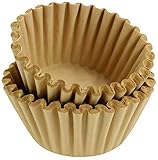
- High Quality - Sturdy sides won't collapse during brewing. This minimizes coffee grounds getting into your coffee.
- Superior Taste - Paper filters remove most oils and micro coffee particles which cause coffee to turn bitter. Metal and cloth filters can let these into your cup.
- Eco-friendly & Made In The USA - Biodegradable and made from paper, a renewable resource. All manufactured right here in the US.
- Easy Clean Up - Disposable filters mean that you can toss the grounds without needing to clean out a metal filter.
Bunn coffee makers typically use large, flat-bottom paper filters, so make sure you have the correct ones to avoid messy overflows or weak coffee. You can find the right Bunn coffee filters here.

- Precise Filtration: The 50766.0001 filter paper roll is engineered for professional coffee brewing, delivering consistent pore size for optimal filtration. Its durable construction maintains shape during extended use, while allowing quick and clean replacement. Designed as a high-quality replacement for bunn sure immersion series coffee machines, it integrates smoothly into commercial workflows, ensuring uniform filtration and reliable performance for busy coffee shops and institutional beverage programs.
- Easy Installation: The 50766.0001 filter paper roll installs quickly and effortlessly into bunn sure immersion series coffee machines. Weighing approximately 0.96 lbs, it fits standard immersion systems without modification. Its high-quality material removes sediment effectively and cleans easily, providing a dependable, low-maintenance solution for daily use in cafes, restaurants, and other commercial environments.
- Clear, Flavorful Coffee: The 50766.0001 filter paper is specially crafted to separate sediment and maintain beverage clarity, enhancing flavor consistency. As a compatible replacement for Bunn Sure Immersion series coffee machines, it supports precise extraction and professional-quality coffee every time. Perfect for medium- to high-volume coffee stations, cafes, and institutional setups where reliable beverage quality is essential.
- Durable & Reliable: The 50766.0001 filter paper is built for demanding coffee and tea operations, withstanding high-frequency use while preserving beverage clarity. Its precise fit and robust construction make it suitable for busy cafes, cafeterias, and restaurants. It ensures efficient, consistent service during high-volume brewing, reducing interruptions and maintenance needs.
- Premium Alternative: The 50766.0001 filter paper offers superior performance compared to generic options. Compatible with bunn sure immersion series coffee machines, it improves filtration efficiency, reduces waste, and minimizes downtime. Its compact design supports high-volume systems, delivering reliable long-term performance while lowering replacement frequency and operational costs.
Water quality and temperature
Your coffee is mostly water, so good water equals good coffee. If your tap water tastes off, your coffee will too. Use filtered water. Most Bunn brewers heat water to a good brewing temperature automatically, but check your manual if you’re unsure. The ideal range is usually 195-205°F.
Grind size and coffee freshness
Freshly roasted beans are your best friend. Buy whole beans and grind them right before you brew. For a Bunn, a medium-coarse grind is usually best. Think kosher salt. Too fine, and it’ll clog and over-extract. Too coarse, and you’ll get weak, watery coffee.
Coffee-to-water ratio
This is where you tune the flavor. A good starting point is about 1:15 to 1:17 coffee to water by weight. That means for every gram of coffee, use 15-17 grams of water. For ounces, a common ratio is around 2 tablespoons of grounds per 6 oz of water. Don’t be afraid to experiment.
Cleanliness/descale status
If your Bunn is older or hasn’t been cleaned in a while, it’s probably got mineral buildup. This affects taste and performance. Follow the manufacturer’s instructions for descaling. It’s usually a simple process with vinegar or a descaling solution. A clean machine makes clean coffee.
Step-by-step (brew workflow)
1. Fill the water reservoir.
- What to do: Pour fresh, filtered water into the reservoir. Use the markings on the reservoir for guidance.
- What “good” looks like: The water level is between the min and max lines.
- Common mistake: Overfilling the reservoir. This can cause overflow during brewing. Stick to the lines.
2. Place the filter.
- What to do: Insert the correct size and type of paper filter into the brew basket.
- What “good” looks like: The filter sits snugly in the basket, without any gaps or folds that would allow grounds to escape.
- Common mistake: Using the wrong filter or not seating it properly. This leads to grounds in your coffee.
3. Add coffee grounds.
- What to do: Measure your coffee grounds and add them to the filter.
- What “good” looks like: The grounds are evenly distributed in the filter.
- Common mistake: Uneven distribution of grounds. This can cause channeling, where water bypasses some grounds, leading to uneven extraction.
4. Close the brew basket lid.
- What to do: Ensure the brew basket lid is securely closed.
- What “good” looks like: The lid clicks or latches into place, indicating it’s sealed.
- Common mistake: Leaving the lid open. This can prevent the brew cycle from starting or cause steam to escape improperly.
5. Place the carafe.
- What to do: Position the carafe on the warming plate under the brew basket.
- What “good” looks like: The carafe is centered and makes proper contact with the drip-stop mechanism (if applicable).
- Common mistake: Not placing the carafe correctly. This can prevent coffee from dripping out or cause a mess.
6. Turn on the brewer.
- What to do: Flip the power switch to start the brewing process.
- What “good” looks like: The machine lights up, and you hear it starting to heat and brew.
- Common mistake: Forgetting to turn it on. It sounds simple, but a sleepy morning can do that to you.
7. Brewing.
- What to do: Let the brewer do its thing. Water will heat and flow over the grounds.
- What “good” looks like: Coffee drips steadily into the carafe. The smell of brewing coffee fills the air.
- Common mistake: Interrupting the brew cycle. Bunn brewers are designed for a continuous flow.
8. Wait for the drip-stop.
- What to do: Wait until the brewing cycle is completely finished and the coffee has stopped dripping.
- What “good” looks like: The dripping has ceased, and the carafe is full.
- Common mistake: Removing the carafe too early. This can trigger the drip-stop and leave you with a half-brewed pot.
9. Serve.
- What to do: Carefully remove the carafe and pour your coffee.
- What “good” looks like: Hot, aromatic coffee in your mug.
- Common mistake: Not stirring the coffee before serving. The coffee at the bottom of the carafe might be stronger than the top. Give it a gentle swirl.
Common mistakes (and what happens if you ignore them)
| Mistake | What it causes | Fix |
|---|---|---|
| Using stale coffee beans | Flat, dull, bitter, or weak flavor | Buy fresh beans and grind them just before brewing. |
| Incorrect grind size (too fine) | Bitter, over-extracted, slow brew, grounds in cup | Use a coarser grind (medium-coarse). Check your grinder settings. |
| Incorrect grind size (too coarse) | Weak, watery, sour, under-extracted flavor | Use a finer grind (medium-coarse). |
| Using tap water with high mineral content | Off-tasting coffee, scale buildup in the brewer | Use filtered or bottled water. |
| Not cleaning the brewer regularly | Off-flavors, slow brewing, machine malfunction | Descale and clean your Bunn according to the manual. |
| Overfilling the water reservoir | Coffee overflow during brewing, messy counter | Stick to the marked fill lines on the reservoir. |
| Using the wrong filter | Grounds in coffee, overflow, poor extraction | Ensure you’re using the correct large, flat-bottom Bunn filters. |
| Removing carafe too early | Coffee spills from brew basket, incomplete brew | Wait until the dripping stops completely. |
| Not stirring coffee before serving | Inconsistent strength in the pot | Gently stir the brewed coffee in the carafe before pouring. |
Decision rules (simple if/then)
- If your coffee tastes bitter, then try a coarser grind because a fine grind can over-extract.
- If your coffee tastes weak and watery, then try a finer grind because a coarse grind can under-extract.
- If your coffee tastes “off” or like plastic, then clean your brewer because mineral buildup or old coffee oils are likely the culprit.
- If you notice a lot of sediment in your cup, then check your filter and grind size because a filter might be faulty or the grind too fine.
- If your Bunn is brewing very slowly, then it probably needs descaling because mineral deposits are clogging the water path.
- If you’re not getting a full pot, then check the water level and ensure the carafe is seated correctly because it might not be heating enough water or the drip-stop is engaged prematurely.
- If your coffee is consistently too strong, then use less coffee grounds or more water because you’re likely using a ratio that’s too concentrated.
- If your coffee is consistently too weak, then use more coffee grounds or less water because your ratio is likely too dilute.
- If your coffee tastes sour, then try a slightly finer grind or ensure water temperature is adequate because sourness can indicate under-extraction.
- If you have a lot of coffee grounds in your brew basket after brewing, then your filter might not be seated properly or your grind is too fine for the filter type.
FAQ
How do I descale my Bunn coffee maker?
Most Bunn models can be descaled using a mixture of white vinegar and water, or a commercial descaling solution. Run a full brew cycle with the solution, then follow up with 1-2 cycles of fresh water to rinse. Always check your specific model’s manual for detailed instructions.
Can I use any coffee filter in a Bunn?
Bunn coffee makers typically use large, flat-bottom paper filters. While some universal filters might fit, using the specific Bunn filters designed for your model will give you the best results and prevent issues like overflow or grounds in your coffee.
Why is my coffee brewing so slowly?
A slow brew is often a sign of mineral buildup (scale) inside the heating element and water lines. Descaling your Bunn regularly, usually every 1-3 months depending on your water hardness, should resolve this issue.
How much coffee should I use in my Bunn?
A good starting point is about 1:17 coffee-to-water ratio by weight. For a standard 10-cup pot (50 oz), this means around 3 oz of coffee beans, which translates to roughly 6-8 tablespoons of ground coffee. Adjust to your taste.
Is it okay to leave water in the Bunn reservoir overnight?
It’s generally not recommended to leave water sitting in the reservoir for extended periods. Fresh water brewed each time ensures better taste and prevents potential stagnation or bacterial growth.
My Bunn coffee maker is leaking, what should I do?
Leaks can be caused by a few things: a cracked reservoir, a loose hose connection, or a malfunctioning drip-stop mechanism. First, check for obvious damage or loose parts. If you can’t find the source, consult your manual or contact Bunn customer support.
How do I get a hotter cup of coffee from my Bunn?
Bunn brewers are designed to heat water to optimal brewing temperatures (around 200°F). If your coffee isn’t hot enough, ensure the brewer is functioning correctly and that you’re not using a cold carafe. Pre-warming your mug can also help.
What’s the best way to clean the brew basket?
After each use, discard the used grounds and filter. Rinse the brew basket thoroughly with hot water. For a deeper clean, you can use a soft brush and mild dish soap, then rinse well. Make sure it’s completely dry before the next use.
What this page does NOT cover (and where to go next)
- Specific troubleshooting for error codes or advanced electronic issues. (Check your Bunn manual or contact support.)
- Detailed comparisons between Bunn models or other coffee maker brands. (Look for product reviews.)
- Advanced brewing techniques like bloom phases or pour-over adjustments. (Explore specialty coffee brewing guides.)
- Recipes for coffee drinks beyond a standard black coffee. (Search for coffee recipe sites.)
- The history of Bunn coffee makers. (Visit coffee history resources.)