
Brew Strong Espresso Coffee
Quick answer
- Use fresh, high-quality coffee beans. Darker roasts often lend themselves to stronger flavor.
- Grind your beans just before brewing. A fine, consistent grind is key for espresso.
- Tamp the coffee grounds evenly and firmly. This ensures proper water flow.
- Use the right coffee-to-water ratio. Aim for around 1:2 (e.g., 18g coffee to 36g liquid espresso).
- Ensure your machine reaches optimal brewing temperature (around 195-205°F).
- Pay attention to extraction time. Aim for 25-30 seconds for a double shot.
- Keep your machine clean and descaled. Buildup affects flavor and performance.
Who this is for
- You’re tired of weak, watery espresso. You want that intense, bold flavor.
- You’ve got an espresso machine at home and want to up your game.
- You’re ready to dive a little deeper into the details of espresso extraction.
What to check first
Brewer type and filter type
You’re probably using a semi-automatic, automatic, or super-automatic espresso machine. Each has its quirks. Semi-automatics give you the most control. Super-automatics do most of the work for you. Whatever you have, make sure you’re using the correct filter basket. It’s usually a metal portafilter with a basket inside. Some machines use pods or capsules, which simplify things but limit your bean choices.
Water quality and temperature
Espresso is mostly water, so good water matters. Tap water can have minerals or chlorine that mess with taste. Filtered water is usually the way to go. For temperature, most machines heat the water. You want it hot, but not boiling. Around 195-205°F is the sweet spot. Too cool and you get sour, underextracted coffee. Too hot and it burns. Check your machine’s manual if you’re unsure.
Grind size and coffee freshness
This is huge for espresso. You need a fine, consistent grind. Think granulated sugar, maybe a bit finer. Too coarse and water rushes through, making weak coffee. Too fine and it chokes the machine. Freshness is also non-negotiable. Use beans roasted within the last few weeks, ideally. Grind them right before you pull your shot. Pre-ground coffee loses its magic fast.
For the best results, use freshly roasted espresso beans. You can find excellent options online that are perfect for achieving that strong flavor.
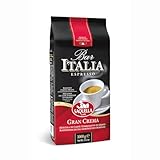
- AUTHENTIC ITALIAN ESPRESSO EXPERIENCE: From Saquella Caffè, family coffee roasters in Italy since 1856 — blending heritage, passion, and quality in every bean.
- FULL-BODIED & CREAMY FLAVOR: A signature Arabica and Robusta blend that delivers a bold espresso with a thick, velvety crema and lingering chocolate notes.
- MEDIUM-DARK ROAST: Carefully roasted for a rich aroma and balanced taste — smooth yet intense, ideal for espresso, cappuccino, or macchiato.
- CONSISTENT QUALITY: Beans are slow-roasted and expertly blended to ensure uniform extraction and a true Italian café-style experience at home.
- MADE IN ITALY: Imported directly from Italy — Saquella Bar Italia Gran Crema is the choice of professional baristas and espresso lovers worldwide.
Coffee-to-water ratio
This is how much coffee grounds you use versus how much liquid espresso you get out. For a strong shot, you want a relatively low ratio. A common starting point is 1:2. That means for every gram of dry coffee grounds, you get two grams of liquid espresso. So, 18 grams of coffee for 36 grams of espresso. Play with this to find what you like best.
Cleanliness/descale status
A dirty machine is a flavor killer. Old coffee oils build up and turn rancid. Scale from hard water clogs things up and affects temperature. Regularly clean your portafilter, basket, and brew head. Descale your machine according to the manufacturer’s instructions. This is crucial for consistent, good-tasting espresso.
Step-by-step (brew workflow)
1. Weigh your coffee beans.
- What to do: Use a scale to measure your whole beans. For a double shot, start with 18-20 grams.
- What “good” looks like: Precise measurement. This is the foundation for consistency.
- Common mistake: Guessing the amount. This leads to wildly different results. Avoid it by getting a cheap digital scale.
To ensure consistency, a digital coffee scale is essential. It allows for precise measurement of your beans, which is the foundation for a great shot.

- Barista-Level Precision: A 0.1g high-precision sensor with a rapid refresh rate responds instantly to changes in weight, helping you achieve consistent results across espresso, pour over, drip coffee, Chemex, V60, and filter coffee brewing.
- Integrated Brew Timer: A built-in count-up and count-down timer tracks bloom, extraction, and espresso shots. Ideal for dialing in espresso, timing Chemex and V60 pour over recipes, or steeping tea. Auto-shutoff helps preserve battery life between brews.
- Durable Waterproof Silicone Cover: The heat-resistant, dishwasher-safe silicone cover helps protect the coffee scale's spacious 5.25" x 5.25" weighing surface from splashes, spills, and hot equipment. The grooved surface provides added stability and makes cleanup quick and easy.
- Versatile Measurement Options: Quick-tare and 6 unit options make it easy to weigh coffee beans, espresso shots, matcha portions, and more. Choose from g, ml, lb, lb:oz, oz, and fl oz for added flexibility in the kitchen and coffee bar.
- Intuitive Design: A bright dual-color LCD display clearly separates weight and timer readings, while simple controls make daily brewing easy. Includes 3 AAA batteries and is backed by 5 years of coverage, with support from our St. Louis-based team whenever you need a hand.
2. Grind your beans.
- What to do: Grind the weighed beans immediately before brewing. Use a burr grinder for consistency.
- What “good” looks like: A fine, fluffy grind that looks like powdered sugar or slightly coarser.
- Common mistake: Using pre-ground coffee or a blade grinder. This results in uneven particle sizes and stale flavor. Invest in a burr grinder.
3. Dose the portafilter.
- What to do: Transfer the ground coffee into your portafilter basket.
- What “good” looks like: An even distribution of grounds in the basket.
- Common mistake: Clumpy grounds or uneven settling. Gently tap the portafilter to even it out.
4. Distribute the grounds.
- What to do: Level the grounds in the basket. You can use your finger, a distribution tool, or WDT (Weiss Distribution Technique) tool.
- What “good” looks like: A flat, even surface of coffee grounds, free of mounds or divots.
- Common mistake: Leaving channels or high spots. This leads to uneven water flow (channeling). Use a distribution tool.
5. Tamp the grounds.
- What to do: Apply firm, even pressure to tamp the grounds. Aim for a level puck.
- What “good” looks like: A compact, solid puck of coffee. Consistent pressure is key.
- Common mistake: Uneven or too light tamping. This causes channeling and weak espresso. Tamp with confidence and a level wrist.
6. Clean the portafilter rim.
- What to do: Wipe away any stray grounds from the rim of the portafilter.
- What “good” looks like: A clean rim. This ensures a good seal with the group head.
- Common mistake: Leaving grounds on the rim. This can lead to leaks and affect the seal. A quick wipe does the trick.
7. Lock in the portafilter.
- What to do: Insert the portafilter into the espresso machine’s group head and lock it in place.
- What “good” looks like: A secure fit.
- Common mistake: Not locking it in firmly. This can cause the portafilter to dislodge during brewing.
8. Start the brew cycle and timer.
- What to do: Immediately start the brew cycle and a timer.
- What “good” looks like: The timer starts simultaneously with the water flow.
- Common mistake: Forgetting to start the timer. You need to track extraction time.
9. Observe the extraction.
- What to do: Watch the espresso flow into your cup. It should start as dark drips, then become a steady, syrupy stream.
- What “good” looks like: A slow, steady flow that looks like warm honey.
- Common mistake: Too fast or too slow flow. This indicates grind size or tamping issues.
10. Stop the brew cycle.
- What to do: Stop the brew cycle when you reach your target yield (e.g., 36 grams of liquid espresso). Aim for 25-30 seconds total extraction time.
- What “good” looks like: Reaching your target weight within the ideal timeframe.
- Common mistake: Over-extracting (too long) or under-extracting (too short). This leads to bitter or sour espresso. Adjust grind size if needed.
11. Taste and adjust.
- What to do: Taste your espresso. Is it strong enough? Bitter? Sour?
- What “good” looks like: A balanced, intense flavor that you enjoy.
- Common mistake: Not tasting critically. You won’t improve if you don’t evaluate.
12. Clean up.
- What to do: Remove the portafilter, knock out the puck, rinse, and wipe clean. Flush the group head.
- What “good” looks like: A clean machine ready for the next shot.
- Common mistake: Leaving grounds in the machine. This leads to stale coffee oils. Clean immediately.
Common mistakes (and what happens if you ignore them)
| Mistake | What it causes | Fix |
|---|---|---|
| Using stale coffee beans | Weak flavor, lack of crema, dull taste | Buy freshly roasted beans and store them properly. |
| Incorrect grind size | Too coarse: watery, sour. Too fine: bitter, choked. | Use a quality burr grinder and adjust fine-tuning. |
| Inconsistent tamping | Channeling, uneven extraction, weak espresso | Tamp with firm, consistent pressure and a level wrist. |
| Not distributing grounds | Channeling, uneven extraction, weak espresso | Use a distribution tool or WDT to level the coffee bed. |
| Using tap water | Off-flavors, scale buildup | Use filtered or bottled water. |
| Wrong coffee-to-water ratio | Too much water: weak. Too little: too intense. | Weigh your coffee and your liquid output for consistency. |
| Dirty machine | Rancid oils, off-flavors, poor performance | Clean your portafilter, basket, and group head regularly. |
| Not cleaning the portafilter rim | Leaks, poor seal, inconsistent extraction | Wipe the rim clean before every shot. |
| Over-extraction | Bitter, burnt taste | Stop the shot sooner, adjust grind finer if needed. |
| Under-extraction | Sour, thin taste, no crema | Stop the shot later, adjust grind coarser if needed. |
| Not preheating the machine | Inconsistent temperature, sour coffee | Let your machine fully heat up before brewing. |
| Using old or dirty filters | Off-flavors, poor flow | Replace disposable filters as needed; clean metal filters thoroughly. |
Decision rules (simple if/then)
- If your espresso tastes sour, then your grind is likely too coarse or your extraction time was too short because the water flowed through too quickly. Adjust your grind finer.
- If your espresso tastes bitter, then your grind is likely too fine or your extraction time was too long because the water struggled to get through. Adjust your grind coarser.
- If you see spurts or uneven flow from the portafilter, then you have channeling. This means your grounds weren’t distributed or tamped evenly. Redo the distribution and tamping.
- If your machine is taking a long time to heat up, then it might need descaling or maintenance. Check your manual or contact support.
- If you’re not getting enough crema, then your beans might be too old, or your grind/tamp might be off. Try fresher beans and refine your technique.
- If you’re getting too much crema or it dissipates too quickly, then your beans might be too fresh (just roasted) or your grind is too coarse. Let beans rest a few days or adjust grind finer.
- If your espresso shot pulls in under 20 seconds, then your grind is likely too coarse.
- If your espresso shot takes over 35 seconds to pull, then your grind is likely too fine.
- If your espresso tastes weak and watery, then you’re likely using too little coffee, too much water, or the grind is too coarse. Check your ratio and grind.
- If you can’t get a consistent shot, then double-check your weighing, grinding, distribution, and tamping steps. Consistency is built on precision.
FAQ
Q: What kind of coffee beans should I use for strong espresso?
A: Look for beans roasted for espresso, often darker roasts like Italian or French. Freshness is key; aim for beans roasted within the last 2-4 weeks.
Q: How fine should my espresso grind be?
A: It should be very fine, similar to powdered sugar or slightly coarser. It needs to be fine enough to create resistance, but not so fine that it chokes the machine.
Q: How long should an espresso shot take to brew?
A: For a standard double shot (around 1:2 ratio), aim for an extraction time of 25-30 seconds. This can vary slightly depending on your machine and beans.
Q: What is “channeling” and why is it bad?
A: Channeling happens when water finds an easy path through the coffee puck, leading to uneven extraction. It results in both bitter and sour flavors in the same shot.
Q: How do I know if my water is good enough for espresso?
A: If your tap water tastes unpleasant, it will affect your espresso. Using filtered water is generally recommended to avoid off-flavors and mineral buildup.
Q: My espresso machine is making weird noises. What should I do?
A: Unusual noises can indicate a problem. It might be related to pressure, water flow, or a component needing attention. Check your machine’s manual for troubleshooting.
Q: Can I use a French press for strong coffee?
A: While you can make strong coffee with a French press, it’s a different brewing method than espresso. Espresso requires high pressure and a fine grind for its concentrated flavor.
Q: How do I get more crema on my espresso?
A: Crema is influenced by bean freshness, roast level, grind size, and tamping. Fresh, darker roasted beans and a proper fine grind with good tamping usually yield more crema.
What this page does NOT cover (and where to go next)
- Specific espresso machine maintenance or repair guides. (Check your manufacturer’s manual or their support site.)
- Detailed comparisons of different espresso machine brands or models. (Look for reviews and buyer’s guides.)
- Advanced techniques like latte art or milk steaming. (Search for dedicated guides on milk texturing.)
- Recipes for espresso-based drinks beyond the basic shot. (Explore barista recipe books or online coffee communities.)
- The science of coffee roasting and bean varietals. (Dive into coffee science resources or books on coffee origins.)