
Baking With Coffee: Delicious Bread Recipes to Try
Quick answer
- Yes, you can absolutely make bread with coffee.
- Coffee can be used as a liquid in bread recipes, replacing water or milk.
- It adds a subtle, complex flavor and can enhance the browning of the crust.
- Strongly brewed coffee or espresso works best for a noticeable coffee flavor.
- Consider using decaffeinated coffee if you want the flavor without the caffeine.
- Adjust other liquid ingredients if the coffee is much hotter or colder than called for.
Who this is for
- Home bakers looking to experiment with new flavors in their bread.
- Coffee lovers who want to incorporate their favorite beverage into their baking.
- Anyone seeking to add depth and a unique twist to classic bread recipes.
If you’re a coffee lover looking to explore new flavors in your baking, this guide on baking with coffee is a great place to start.

- Amazon Kindle Edition
- Tosch, Christina (Author)
- English (Publication Language)
- 99 Pages - 08/02/2021 (Publication Date)
What to check first
Brewer type and filter type
The type of coffee brewer and filter used can impact the final flavor of your coffee liquid. Drip coffee makers with paper filters typically produce a cleaner, less oily brew, which is often preferred for baking. French presses, on the other hand, can result in a more full-bodied coffee with more oils and fine sediment, which might slightly alter the texture of your bread. For baking, a consistently brewed coffee without excessive sediment is usually ideal.
Water quality and temperature
The quality of your water is paramount, as it makes up a significant portion of your coffee liquid. Using filtered water can prevent off-flavors from chlorine or minerals found in tap water from affecting your coffee and subsequently your bread. The temperature of the liquid you use in your bread recipe is also critical for yeast activation. If your coffee is too hot (above 140°F), it can kill the yeast. If it’s too cold, the yeast may not activate properly. Aim for a lukewarm temperature, around 105-115°F, for optimal yeast activity.
Grind size and coffee freshness
The grind size of your coffee beans influences how much flavor is extracted. A medium grind is generally suitable for drip brewing, but if you’re brewing a concentrated coffee for baking, you might adjust this. Freshly roasted and ground coffee beans will yield the most vibrant flavor. Stale coffee can result in a dull, flat taste in your bread. For the best results, use beans that were roasted within the last few weeks and grind them just before brewing.
Coffee-to-water ratio
The ratio of coffee grounds to water determines the strength of your coffee liquid. For bread, you want a flavor that’s present but not overpowering. A good starting point is to brew your coffee a bit stronger than you would for drinking. For example, if a recipe calls for 1 cup of liquid, you might brew 1 cup of coffee using slightly more grounds than usual, or brew a concentrated shot of espresso and dilute it to the required volume with hot water. Experimentation might be needed to find your preferred coffee intensity.
Cleanliness/descale status
Ensuring your coffee maker is clean is vital. Residual coffee oils and mineral buildup can impart bitter or off-flavors into your brewing liquid. If you’re using coffee as the liquid in your bread, these unwanted flavors will transfer directly to your dough. Regularly cleaning your coffee maker according to the manufacturer’s instructions, and descaling it periodically, will help ensure a clean, neutral base for your baking liquid.
Step-by-step (brew workflow)
1. Prepare your coffee liquid: Brew a strong batch of coffee using your preferred method.
- What “good” looks like: You have about 1-2 cups of rich, flavorful coffee, brewed to your desired strength.
- Common mistake: Brewing weak coffee.
- How to avoid: Use slightly more coffee grounds than usual, or brew a concentrated shot and dilute.
2. Cool the coffee: Allow the brewed coffee to cool to a lukewarm temperature, ideally between 105-115°F.
- What “good” looks like: The coffee is warm to the touch but not hot, safe for yeast.
- Common mistake: Using coffee that is too hot.
- How to avoid: Test with a thermometer or by touching your wrist; it should feel comfortably warm.
3. Activate the yeast: In a small bowl, combine the lukewarm coffee with your yeast and a pinch of sugar (if the recipe doesn’t already include it).
- What “good” looks like: The mixture begins to foam and bubble within 5-10 minutes.
- Common mistake: Yeast not activating.
- How to avoid: Ensure coffee is at the correct temperature and that your yeast is fresh.
4. Combine dry ingredients: In a large mixing bowl, whisk together your flour, salt, and any other dry ingredients specified in the recipe.
- What “good” looks like: A homogenous mixture of dry ingredients.
- Common mistake: Not distributing salt evenly.
- How to avoid: Whisk thoroughly to ensure salt is dispersed throughout the flour.
5. Add wet ingredients: Pour the activated yeast mixture and any other liquid ingredients (like melted butter or oil) into the bowl with the dry ingredients.
- What “good” looks like: All ingredients are starting to come together into a shaggy dough.
- Common mistake: Adding liquids too quickly.
- How to avoid: Gradually add liquids, mixing until just combined to avoid over-hydrating.
6. Mix the dough: Stir or mix the ingredients until a shaggy dough forms.
- What “good” looks like: A cohesive mass of dough that pulls away from the sides of the bowl.
- Common mistake: Under-mixing.
- How to avoid: Continue mixing until the dough starts to form a cohesive ball.
7. Knead the dough: Turn the dough out onto a lightly floured surface and knead for 8-10 minutes until it’s smooth and elastic.
- What “good” looks like: The dough is smooth, supple, and springs back when gently pressed.
- Common mistake: Over-kneading.
- How to avoid: Stop kneading once the dough reaches the desired elasticity; over-kneading can make it tough.
8. First rise (proofing): Place the dough in a lightly oiled bowl, cover it, and let it rise in a warm place until doubled in size (about 1-2 hours).
- What “good” looks like: The dough has visibly increased in volume.
- Common mistake: Not allowing enough time for the first rise.
- How to avoid: Be patient and let the dough rise until it has doubled, even if it takes longer than expected.
9. Shape the dough: Gently punch down the dough, turn it out onto a lightly floured surface, and shape it into your desired loaf form.
- What “good” looks like: A uniformly shaped loaf ready for its second rise.
- Common mistake: Degassing the dough too much.
- How to avoid: Handle the dough gently to retain some of its airiness.
10. Second rise (proofing): Place the shaped loaf on a baking sheet or in a loaf pan, cover it loosely, and let it rise again until nearly doubled (about 30-60 minutes).
- What “good” looks like: The loaf has increased in size and looks puffy.
- Common mistake: Over-proofing the second rise.
- How to avoid: Watch the dough closely; it should look airy but not so fragile that it collapses when touched.
11. Bake the bread: Preheat your oven and bake the bread according to the recipe’s instructions.
- What “good” looks like: A golden-brown crust and an internal temperature of around 195-210°F.
- Common mistake: Not preheating the oven sufficiently.
- How to avoid: Ensure your oven is fully preheated to the specified temperature before placing the bread inside.
12. Cool the bread: Transfer the baked loaf to a wire rack to cool completely before slicing.
- What “good” looks like: The bread is fully cooled, making it easier to slice and enjoy.
- Common mistake: Slicing hot bread.
- How to avoid: Allow the bread to cool for at least an hour; this allows the internal structure to set.
For a delicious coffee bread recipe, make sure to prepare your coffee liquid first, aiming for a rich, flavorful brew.
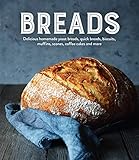
- Hardcover Book
- Publications International Ltd. (Author)
- English (Publication Language)
- 192 Pages - 12/30/2019 (Publication Date) - Publications International, Ltd. (Publisher)
Common mistakes (and what happens if you ignore them)
| Mistake | What it causes | Fix |
|---|---|---|
| Using coffee that’s too hot | Kills the yeast, preventing the dough from rising | Let coffee cool to lukewarm (105-115°F) before mixing with yeast. |
| Using stale coffee | Imparts a dull, flat, or bitter flavor to the bread | Use freshly roasted and ground coffee beans for the best flavor extraction. |
| Not brewing the coffee strong enough | The coffee flavor in the bread will be too weak or undetectable | Brew coffee with slightly more grounds, or make a concentrated shot and dilute to the required volume. |
| Over-kneading the dough | Results in a tough, dense bread with a gummy texture | Knead until the dough is smooth and elastic, then stop. Avoid excessive kneading. |
| Under-proofing the dough | The bread will be dense, with a tight crumb and may not rise sufficiently in the oven | Allow the dough to rise until it has visibly doubled in size in both rises. |
| Not preheating the oven | The bread may not rise properly in the oven and can have a pale, uneven crust | Ensure your oven reaches the target temperature before baking. |
| Slicing bread while hot | The internal structure is still setting, leading to a gummy texture and squashed slices | Let the bread cool completely on a wire rack before slicing. |
| Using coffee with strong additives | Flavors like artificial sweeteners or creamers can negatively impact baking | Stick to plain brewed coffee or espresso for baking. |
| Incorrect coffee-to-water ratio | Too much coffee can overpower other flavors; too little won’t be noticeable | Experiment with brewing strength to find the ideal balance for your recipe and taste. |
Decision rules (simple if/then)
- If the coffee is hotter than 115°F, then let it cool further because high temperatures kill yeast.
- If the coffee flavor is too subtle, then next time brew it stronger because a more concentrated coffee liquid provides more flavor.
- If the bread is dense, then check your yeast activation and kneading time because under-proofing or over-kneading can cause this.
- If the bread crust is pale, then ensure the oven is fully preheated because insufficient heat leads to poor browning.
- If you want a pronounced coffee flavor, then use espresso or a strongly brewed dark roast because these offer more intense coffee notes.
- If you want to avoid caffeine, then use decaffeinated coffee because it offers the flavor without the stimulant.
- If the dough is sticky and hard to handle, then add a tablespoon of flour at a time while kneading because this can help manage the dough consistency.
- If the bread has an off-flavor, then clean your coffee maker thoroughly because residual oils can affect taste.
- If the bread rises unevenly, then ensure your dough was shaped consistently and proofed evenly because uniform handling promotes even baking.
- If you’re unsure about the coffee strength, then start with a medium-strong brew and adjust for future bakes because you can always add more flavor next time.
FAQ
Can I use instant coffee granules instead of brewed coffee?
Yes, you can, but you’ll need to dissolve them in the amount of liquid called for in your recipe. Use a strong concentration of instant coffee for a noticeable flavor. Be aware that the flavor profile might differ from brewed coffee.
Will coffee make my bread taste bitter?
It can, if the coffee is brewed too strong or if you’re using very dark, bitter roasts without balancing them. However, when brewed correctly and used in moderation, coffee adds a pleasant depth and complexity rather than bitterness.
What kind of coffee roast is best for baking bread?
Medium to dark roasts often work well, as they have a richer flavor profile. However, a lighter roast can also be used if you prefer a more nuanced coffee note. Experiment to find what you like.
How much coffee should I use?
This depends on your recipe and desired flavor intensity. A good starting point is to replace water or milk with brewed coffee, aiming for a strength that is noticeable but doesn’t overpower other ingredients.
Can I use coffee as the only liquid in a bread recipe?
Yes, in many recipes, coffee can entirely replace water or milk. Just ensure the total liquid volume matches what the recipe calls for.
Does using coffee affect the yeast?
Coffee itself doesn’t harm yeast, but its temperature does. Ensure the coffee is lukewarm (105-115°F) to allow the yeast to activate properly.
Will coffee in bread affect the color of the crumb?
Yes, coffee can impart a slight brown or tan hue to the bread’s crumb, depending on the strength of the coffee used.
Can I add coffee grounds directly to the dough?
While some recipes might call for finely ground coffee for texture, it’s generally not recommended to add dry grounds directly to the dough unless specified. Brewed coffee liquid is the standard method.
What this page does NOT cover (and where to go next)
- Specific brand recommendations for coffee beans or brewing equipment.
- Next: Research coffee bean reviews or brewing guides for specific brewer types.
- Detailed scientific explanations of coffee extraction and its impact on gluten development.
- Next: Explore resources on the chemistry of baking or coffee science.
- Advanced techniques like sourdough starters infused with coffee.
- Next: Look for specialized articles or books on advanced bread making or fermentation.
- Recipes for coffee-infused pastries or cakes.
- Next: Search for dessert recipes that specifically call for coffee as an ingredient.