
Achieve Perfect Coffee Froth Without a Machine
Quick answer
- Use a French press for a quick, easy froth.
- A whisk and a jar can make decent foam with a little elbow grease.
- Warm your milk or milk alternative first for better results.
- Don’t overheat the milk; aim for around 140-150°F.
- Experiment with different milk types to find your favorite froth.
- A little patience goes a long way.
Who this is for
- The home barista who wants café-quality drinks without fancy equipment.
- Anyone who enjoys lattes, cappuccinos, or just a bit of creamy goodness on their coffee.
- Folks who are curious about simple, effective ways to elevate their morning brew.
What to check first
Brewer type and filter type
This guide focuses on adding froth after your coffee is brewed. So, whatever you use to make your coffee – drip, pour-over, AeroPress, even instant – it’s all good. The type of filter might affect your coffee’s body, but it won’t impact froth making.
Water quality and temperature
For your coffee, use good quality water. Filtered is usually best. For frothing milk, temperature is key. You want it warm, not boiling. Too hot, and it’ll scorch and taste funny. Too cold, and it won’t froth well. Aim for around 140-150°F. A quick check is if you can hold your finger in it for a few seconds without burning.
Grind size and coffee freshness
Again, this is for your coffee base. A good grind size for your chosen brewing method matters for flavor. Freshly ground beans are always superior. For froth, it doesn’t directly impact the milk, but a great cup of coffee makes a great latte.
Coffee-to-water ratio
This applies to your coffee, not your froth. Get your coffee base right, and then focus on the milk. A standard ratio is about 1:15 to 1:18 (coffee to water by weight).
Cleanliness/descale status
Make sure your coffee maker is clean. No one wants stale coffee residue in their fresh brew. For frothing, the tools you use – jars, whisks, French presses – should also be clean. This prevents off-flavors and ensures smooth results.
Step-by-step (brew workflow)
Here’s how to whip up some foam using a French press. It’s a solid go-to.
If you don’t have a French press, a dedicated manual milk frother can also achieve excellent results, giving you control over the foam’s consistency.

- Milk frother manual milk frother creates an airy foam in less that 30 seconds for a Cafe style Coffee you will love from the Comfort of your own home
- Glass carafe made of durable heat-resistant borosilicate glass Warm milk in the microwave after frothing
- Quick and easy beat the milk by moving plunger frother up and down about 60-90 times or until you feel milk getting thicker
- Durable design milk frother features a silk plastic lid with a deep rim to prevent foam from escaping the spout and a plunger handle that is comfortable to grip
- Servings frother holds 8 ounces of cold milk dishwasher safe
1. Brew your coffee.
- What to do: Make your coffee using your preferred method. Keep it simple.
- What “good” looks like: A delicious, hot cup of coffee ready for its creamy topping.
- Common mistake: Brewing weak coffee. You want a strong base to hold up to the milk.
- Avoid it: Use the right coffee-to-water ratio and fresh beans.
2. Warm your milk.
- What to do: Gently heat your milk or milk alternative in a saucepan or microwave.
- What “good” looks like: Warm milk, around 140-150°F. It should be steamy, not bubbling furiously.
- Common mistake: Overheating the milk. This can ruin the flavor and make it harder to froth.
- Avoid it: Heat it slowly and check the temperature frequently. If using a microwave, use short bursts and stir.
3. Pour milk into the French press.
- What to do: Pour the warmed milk into your clean French press. Don’t fill it more than halfway.
- What “good” looks like: Enough milk to allow for expansion when frothing, but not so much that it spills over.
- Common mistake: Overfilling the press. This will make a mess.
- Avoid it: Eyeball it. Leave plenty of room at the top.
4. Attach the lid and plunger.
- What to do: Put the lid on the French press, making sure the plunger is pulled all the way up.
- What “good” looks like: A secure lid, ready for action.
- Common mistake: Not having the plunger fully extended.
- Avoid it: Just give it a good pull upwards. Easy.
5. Pump the plunger vigorously.
- What to do: Hold the lid steady and rapidly pump the plunger up and down for 30-60 seconds.
- What “good” looks like: The milk will start to foam and increase in volume. You’ll hear a frothing sound.
- Common mistake: Pumping too slowly or not long enough. You need to agitate the milk.
- Avoid it: Go for it! Fast, consistent pumps are the name of the game.
6. Let it rest briefly.
- What to do: After pumping, let the press sit for about 30 seconds.
- What “good” looks like: The foam will start to separate from the liquid milk, creating distinct layers.
- Common mistake: Skipping this rest. It helps the foam stabilize.
- Avoid it: Just take a breather for half a minute.
7. Pour the froth over your coffee.
- What to do: Gently pour the frothed milk into your coffee. You might want to hold back the foam with a spoon initially, then spoon the thicker foam on top.
- What “good” looks like: A beautiful layer of creamy foam crowning your coffee.
- Common mistake: Pouring too quickly and mixing everything.
- Avoid it: Pour the liquid milk first, then spoon the foam. Or, use a spoon to control the pour.
8. Clean up.
- What to do: Rinse your French press immediately.
- What “good” looks like: A clean press ready for its next use. Milk residue is a pain if it dries.
- Common mistake: Letting the milk dry in the press.
- Avoid it: A quick rinse with hot water is all it takes.
Common mistakes (and what happens if you ignore them)
| Mistake | What it causes | Fix |
|---|---|---|
| Using cold milk | Poor frothing, thin foam, disappointing texture. | Warm the milk to 140-150°F before frothing. |
| Overheating the milk | Burnt taste, inability to froth, flat foam. | Heat slowly, check temperature, avoid boiling. |
| Not enough agitation (French press) | Weak foam, large bubbles, not enough volume. | Pump the plunger rapidly and consistently for at least 30-60 seconds. |
| Too much milk in the frothing vessel | Spills, messy counter, less efficient frothing. | Fill only halfway (French press) or use a vessel with ample headspace. |
| Using skim milk | Very thin foam, doesn’t hold structure well. | Use whole milk or a higher-fat milk alternative for best results. |
| Not cleaning equipment promptly | Lingering odors, off-flavors, residue buildup. | Rinse all frothing tools immediately after use with hot water. |
| Using a whisk too slowly | Inconsistent foam, small amount of froth. | Whisk vigorously in a circular or up-and-down motion to incorporate air. |
| Not letting milk rest (French press) | Foam and milk don’t separate well, less distinct layers. | Let the frothed milk sit for about 30 seconds before pouring. |
| Using stale coffee | Weak coffee base, poor overall drink quality. | Use freshly roasted and ground coffee beans for your brew. |
| Not experimenting with milk types | Missing out on the best texture/flavor for you. | Try whole milk, oat milk, soy milk, or even dairy-free creamers. |
Decision rules (simple if/then)
- If you want the quickest froth with minimal effort, then use a French press because it’s designed for agitation.
- If you don’t have a French press, then use a jar with a lid and shake vigorously because it’s a simple alternative.
- If your milk isn’t frothing well, then check if it’s warm enough because temperature is crucial for foam formation.
- If you’re getting large, airy bubbles, then pump the plunger a bit slower or let the milk rest longer because this helps break down larger bubbles.
- If your froth is collapsing quickly, then try using a milk with higher fat content because fat helps stabilize foam.
- If you’re making a latte for yourself, then a single serving of frothed milk is usually enough because you don’t want to overwhelm the coffee.
- If you’re aiming for a cappuccino, then you’ll want a thicker, more stable foam layer, so froth a little longer and let it rest.
- If you notice a burnt taste, then you likely overheated the milk, so start over with cooler milk.
- If your coffee tastes weak, then focus on improving your coffee brewing first because a strong base is essential.
- If you’re using a whisk and getting tired arms, then use a small, battery-operated frother because they do the work for you.
- If you want to avoid a “milky” taste in your froth, then ensure your milk is fresh and hasn’t been sitting in the fridge too long.
For an even easier method, consider a handheld milk frother; it’s a small, battery-operated tool that quickly whips milk into a perfect froth with minimal effort.
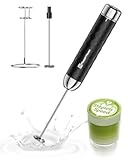
- 【Stepless Speed Control Design】Unlike traditional button-operated milk frother, this LunaFro 2.0 electric milk frother allows you to seamlessly adjust the frothing speed with unparalleled precision, ranging from 4500RPM to 10000RPM, simply by toggling the rotary switch. Experience the ultimate control as you craft the perfect froth for different beverages. Say goodbye to splashes and lackluster froth
- 【One Charging, 1440 Hours Ready】With a built-in 1200mAh lithium battery, this portable USB-C rechargeable milk frother provides up to 2 months of usage on a single charge(note: if use once per day). Fully charge the battery operated milk foam maker in just 2 hours with the included USB-C cable, eliminating the need for constant battery replacement
- 【Create Rich Creamy Foam in Seconds】Transform your morning coffee routine with our high-speed milk frother. Achieve smooth, creamy foam in just 10-15 seconds, perfect for busy mornings. Elevate your coffee experience with velvety milk foam every time
- 【Versatile for Various Beverages】 Beyond coffee, our LunaFro 2.0 milk frother excels at blending powdered supplements like protein into beverages and preparing mixed drinks. Its versatility makes it an essential tool for all your beverage-making needs, including Latte, Cappuccino, Matcha and cocoa powder
- 【Easy Cleaning and Storage】This Stepless Speed Control milk frother comes with two frothing whisks for easy replacement. Cleaning is straightforward—simply detach the whisk and wash it in water. The included compact stainless steel stand provides convenient storage and organization
FAQ
What kind of milk is best for frothing?
Whole milk generally produces the richest, most stable foam due to its fat content. However, oat milk and soy milk are also excellent alternatives that froth well. Experiment to see what you like best.
Can I use non-dairy milk?
Absolutely! Many non-dairy milks, especially oat and soy, froth beautifully. Some almond milks might produce a thinner foam, but it’s still worth trying. Look for barista-blend versions if you can find them.
How do I know if the milk is the right temperature?
The ideal temperature is around 140-150°F. If you don’t have a thermometer, it should feel hot to the touch but not scalding. You should be able to hold your finger in it for a few seconds without burning.
Why isn’t my milk frothing?
Several reasons: it might be too cold, too hot, or you might not be agitating it enough. Also, the type of milk can play a role. Skim milk tends to produce less stable foam.
How long should I froth for?
For a French press, aim for 30-60 seconds of vigorous pumping. For a whisk or handheld frother, it can take a minute or two until you achieve the desired volume and texture.
Can I froth cold milk?
No, you need to warm the milk first. Cold milk won’t incorporate air effectively to create foam.
What’s the difference between foam and froth?
Technically, they’re often used interchangeably. Froth refers to the bubbly, airy layer, while foam can sometimes imply a denser, more stable microfoam. The methods described here aim to create a good, drinkable froth.
How do I get that latte art look?
Achieving latte art without a proper steam wand is tricky. Focus on creating a smooth, glossy microfoam and pouring steadily. You might get some basic swirls, but don’t expect intricate designs.
What this page does NOT cover (and where to go next)
- Using electric milk frothers or steam wands (these are dedicated tools).
- The science behind milk protein and fat interactions during steaming.
- Making complex coffee-based beverages beyond basic lattes and cappuccinos.
- Advanced techniques for achieving true microfoam for intricate latte art.
- Specific recommendations for coffee beans or roast profiles.